
 Apparently there was an uproar about Kathryn Stockett’s best-selling novel, The Help, about black maids oppressed by their white employees. Now that the movie’s out, the uproar is even louder. Tons of people (both white and black) have claimed the book is racist and historically inaccurate. Ms. Stockett isn’t doing too bad in spite of this—at a nearby speaking engagement, she was charging $65 for admission.
I pose the question, then, that my husband posed to me last night: why is it racist if a white woman writes about black women experiencing racism but not racist if a black woman writes about how white women treated black woman during a time of racism?
As a writer, I say Ms. Stockett is free to express her mind about her “fictionalized” book. (I’ve heard that The Help is really a fictionalized version of true stories from Mississippi.) It’s a novel which means that it’s fiction which means that it doesn’t need to be the most historically accurate book ever.
As a black woman, did The Help offend me? A little. I bristled during the first hundred pages of the book. Then I jumped to the end to see if the author had some kind of Afterword, which she did. I’m not sure I would have continued reading the book had I not read the Afterword. It makes me wonder whether Stockett was a little girl influenced by a black maid who just suddenly disappeared because her racist momma might have fired her and was atoning for her parents’ sins.
There is nothing Sambo-ish or overtly racist about this book. (Maybe the movie is different?) The main black women, Aibileen and Minny, are not idiots. I think Stockett happened to do a very good job of portraying black women who lived in the mundane: they were maids beholden to white employers who didn’t physically abuse them but still mistreated them. So these black women got back at them in a mundane way.
People complain that Skeeter is the white woman who “rescues” these black women. I see Skeeter as part of the majority ruling system that helped to make things right (again) in the a somewhat mundane way. She didn’t lobby Congress or hold hands with Minny and walk down the street in a march. She turned a racist institution upside down by publishing a book about black maids dishing on what it’s like to work in white households. Skeeter would have been nothing without the black maids who shared this information with her so no, they weren’t necessarily beholden to the “white woman” to “rescue” them.
America is a free country last I checked, and Stockett is free to write about black women as she imagines them just as Alice Walker is free to write about white women as she imagines them without being racist. Was there a lot about the civil rights movement that was left out? Heck yes! It’s very much (as Melissa Harris Perry argued against) Real Housewives of Jackson, Mississippi with a definite focus on the white women in the households. But there’s a lens that focuses in on the maids in those households too.
Black people are rarely (if ever) satisfied when white people write about racially sensitive times such as the early 1960s. White people don’t ever seem to get it right because they don’t seem to “understand” the plight of black people from those eras. But that’s what imaginations are for. And with the millions of black women in America during the 1960s, it leaves a world of possibilities.
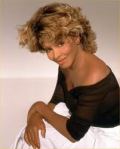 1. Tina Turner
 Back in the early 80s when American Bandstand’s Dick Clark asked a young Madonna what she wanted to do, she declared, “I want to rule the world.” Indeed, Ms. Ciccone has done pretty much that. People debate her talent but no one can debate her shrewdness and clever marketing ability. (Lady Gaga watched a master at work here.) Madonna, now well into her 50s, has shown consistent dedication and discipline in evolving, not only as a fashion and pop music icon, but also as a woman with staying power. She may not enjoy all the success she once enjoyed in her prime but she’s managed to remain relevant—something very few of her peers have been able to successfully do.
 During the early 90s, I remember Ms. Clinton taking tons of heat for trying to introduce universal health care legislation to Congress because it wasn’t what a First Lady was “supposed” to do. Republicans may have hated her from that point on, but the former First Lady garnered my respect ever since. I admired Ms. Clinton’s ability to use her high-profile position to lobby for health care reform and watched her become vilified and forced into the traditional meek First Lady role. During my brief internship, I was able to see what the former New York Senator did first-hand as she brought grants for firefighters and policemen to various towns in the state of New York (including my hometown!), fought to keep military bases open so that cities wouldn’t be shut down and hundreds of people would be put out of work, and championed hard for SCHIP (State Children’s Health Insurance Program). As Secretary of State, Ms. Clinton has represented America with a gentle yet firm hand, handling her mistakes with the grace befitting a former First Lady. Her strength and dedication to serve Americans inspires me again and again.
 I’ll admit, I had my doubts about Barack Obama’s wife as she stood by his side on the campaign trail before he was elected president but she has pleasantly surprised me by stepping into her role as First Lady with grace and ease I never saw before. She has become a tireless champion in getting America to eat healthier, advocating for communities to eat fresh and eat local by way of connection with local farmers, and encouraging children to exercise more and eat right in the battle against obesity. While I don’t always agree with her stance on everything, she is encouraging Black communities to take ownership of their lives and their future—and I cannot begrudge that at all.
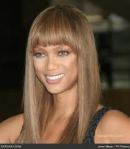 Ms. Banks has navigated the modeling arena with a down-to-earth attitude, incredible business savvy, and bright enthusiasm in a world that can be bleak with drugs and eating disorders. Her success is a generational mirror reflecting that of another female pioneer, Oprah Winfrey. Ms. Banks’s talk show, Tyra, has proven that she is not a dumb, air-headed woman—that she is, in fact, just like the rest of us with body insecurities, crazy moments, and tons of generosity. She has been beaten down for her fluctuating weight by tabloids and fought back by encouraging women to embrace their bodies and develop a positive body image.
 This Journey Is My Own