You Are Not Alone. I Am Here With You.

(I think this is the month for Michael Jackson quotations. I mean, after all, he did pass away during the month of June.)

Where do I begin?

If you’re reading this after having recently commented on my last post, Heaven Can Wait, thank you. I always felt alone and as though I didn’t really matter in the world. Then came a storm of warrior moms (I can see why they call y’all warrior moms now!) to my rescue. They encouraged me that things will get better. That this too shall pass. That I am not alone.

The sun is beginning to peek through the overcast sky in my life. I’m feeling worlds better than Tuesday. And even better than when Saturday when I replied to many of your comments.

I am working with a therapist at the Postpartum Stress Center in Rosemont, PA and we have come up with a solution that can make me an even better mom: have someone else care for my son part-time. Whether that means part-time daycare or a part-time nanny, it will allow me the space and opportunity to take of myself while supporting my family. While I was pregnant, my husband and I decided that I should be a “full-time” stay-at-home mom and work part-time (I work at a library 2 to 3 days a week). Now, it’s looking as though I will be a “part-time” stay-at-home mom who also works part-time. Perhaps getting another caregiver to help me with my son is not me being a bad mom; it’s a way for me to keep my sanity, keep myself alive, and keep myself involved in my son’s life.

I have a call in to my psychiatrist to see him sooner than July 29. I had been doing so well…

I don’t know how many warrior moms are reading this, but I can’t say thank you enough to everyone for their encouragement. It means a lot to hear from other women who have been where I am and tell me to keep going.

Also, Postpartum Progress is a major resource that I’ve been able to use (and raise funds for!). I also want to send a shout-out to Lauren H. (@unxpctdblessing) who runs #PPDChat on Twitter. That group of women was there for me before I even got help.

I had hoped to participate in a local Climb Out of the Darkness in my area, but I don’t know if that will happen. In the meantime, here’s a video celebrating many of the warrior moms who have reclaimed their lives against perinatal and postpartum mood disorders.

Speechless

Speechless, speechless, that’s how you make me feel… —Michael Jackson

If I could rewrite my very first blog post on this blog, I’d start out by quoting Michael Jackson’s song “Speechless.” Because, really, speechless is how that intimidating, blinking cursor makes me feel. I have nothing to say. No words come to mind. In fact, I originally wrote this post on paper and transferred it to the computer by typing it out. There’s something about the feel of a pen gliding across paper that puts me at ease and allows me to express my thoughts more freely.

So in the end, I guess I’m not so speechless after all, eh?

10 Songs That Comprise the Soundtrack of My Life

I’ve put together a musical playlist of my life and what I hope my future entails. The following 10 songs express some kind of hope, things that I’ve gone through, or how I feel. They are in no particular order.

  1. This Journey Is My Own: Sara Groves – The title of my blog. I’m still trying to live and breathe for an audience of one.
  2. Paperback Writer: The Beatles – I hope to get a novel published someday!
  3. Real Bad News: Aimee Mann – This is the song I always think of when I stepped off the plane from college and received the news that my father had died.
  4. I Shall Believe: Sheryl Crow – I’m a hot mess in many ways but I resolve to believe in God even when it’s difficult.
  5. OK: Rebecca St. James – If I could have told my teenage self anything, it’s that life would get better. And everything will be okay.
  6. Gone Too Soon: Michael Jackson – In my opinion, my uncle and my father died much too soon. It’s a beautiful song that expresses loss.
  7. Show Love: Mary J. Blige – Too many people have hated on me in my life and tried to bring me down. This song encourages me to keep my head held high.
  8. In Christ Alone: Keith & Kristyn Getty – I want my hope and my life to be found in Christ alone.
  9. C.S. Lewis Song: Brooke Fraser – A hopeful song about waiting for God.
  10. Surrender: BarlowGirl – I have such a hard time giving up my dreams and desires to God, but this song reminds me that they are best left in his hands.

I originally had 25 songs listed (!) and cut it down to a top 10. I hope you click on some of the songs and enjoy.

My Top 10 Favorite Songs of All-Time

Here’s a list of some of my top 10 favorite songs of all-time in no particular order. It was hard to narrow it down to just 10, but they’re songs that I could listen to over and over and never get sick of. (I’ve tried to vary the artists since I could list whole albums by the same artist.)

  1. “Look What You’ve Done” by Bread
  2. “Nocturne” by Billy Joel
  3. “Shoot the Moon” by Norah Jones
  4. “Irish Sea” by Margaret Becker
  5. “This Journey Is My Own” by Sara Groves
  6. “Gone Too Soon” by Michael Jackson
  7. “Today’s the Day” by Aimee Mann
  8. “Linus and Lucy” by Vince Guaraldi Trio
  9. “Give Me Love (Give Me Peace on Earth)” by George Harrison
  10. “Dear Prudence” by The Beatles

The Cult of Michael Jackson

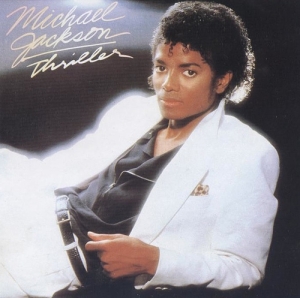
On the one-year anniversary of Michael Jackson’s death, I must admit that I’m part of the Cult of Michael Jackson (MJ).  (I will be playing his music ALL DAY tomorrow.) The immediate news of MJ’s passing crippled the Internet for hours and went on to dominate the media for weeks on end. What is the draw/appeal of Michael Jackson in both life and death?

I. The Freak Show

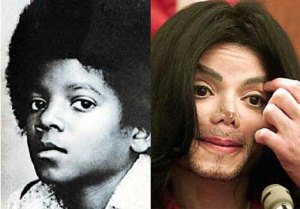
Anyone born before 1981 remembers what MJ looked like naturally. Anyone born before 1986 remembers what MJ looked like with relatively dark skin. Anyone born before 1994 remembers when he was still of musical relevance. Anyone born afterward probably cannot disassociate MJ from allegations of child molestation. The fact of the matter is that MJ was the train wreck we all loved and hated to watch. His nose frequently changed. Then there was the sudden lightening of skin color. Rumors of hoarding the Elephant Man’s bones, spending time with his monkey friend Bubbles, and sleeping in a hyperbaric chamber. He seemed so normal then suddenly became… so weird — “Wacko Jacko.” The moonwalk was a cool dance move; the crotch grabbing… eh, not so much. It’s always easier to make fun of the person who stands out and seems a little off rather than express care and concern.

II. The Magic

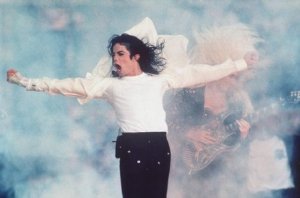
In spite of the freak show status that surrounded Jackson, the Elizabeth Taylor-dubbed “King of Pop” infused new life  into entertainment. Jackson was a creative genius, a brilliant mind who is emulated by many R&B stars in song and dance today and helped solidify MTV (for a little over a decade anyway) as the place to turn for innovative music videos. His concerts were nothing short of amazing and nothing was too over-the-top to be used on stage. *NSYNC, Madonna, Lady Gaga, Britney Spears, and Xtina (to name a few) have all taken cues from his spectacular ability to put on a mind-blowing show.

III. The Madness

Jackson grew up in front of the spotlight, working hard as a child star. When most boys were outside running around or playing with trucks and toy soldiers, Jackson was running through rehearsals or performing in front of audiences. As a child, all he did was work — he was never able to have a childhood. Once he grew up and established solo success, he craved the childhood he’d been robbed of. He founded children’s organizations, created Neverland, and loved to play childish games. At a point where most adults had matured and accepted the responsibilities of adulthood, Jackson reverted to a childlike mind with juvenile mannerisms. In American society, such behavior is not tolerated or accepted and shunned. And it’s this behavior that would unfortunately bring him legal trouble and rumors of child molestation, tarnishing his reputation forever.

A year after Michael Jackson’s passing, he still has devout fans (of which I am one). These fans loosely comprise a cult which will rival that of Elvis Presley’s. Why is this so? Continue reading “The Cult of Michael Jackson”

In search of an identity… race.

After Michael Jackson’s sudden death, BET announced that it would feature a Michael Jackson tribute on its annual awards show. Curious to see how this tribute would turn out, I asked my husband to flip the TV channel to BET the night of the awards show.

Jamie FoxxI watched hoping to see a well-done opening act only to find Jamie Foxx, butchering the Moonwalk and doing a poor imitation of Michael Jackson’s dance moves. I smiled, assuming Foxx was being comedic and doing the best he could. When Foxx was done, he went on a mini-rant about how Michael Jackson was a “black man” and “he belonged to us.” My husband immediately flipped the channel and said, “I am not watching anymore of this racist garbage.” He subsequently went on to ban BET from our home.

The BET Awards just shed another light on an issue that I’ve been struggling with recently—the issue of race and how it relates to my identity.

I’ve always had issues with my racial identity but the problem reared its ugly head continuously during the 2008 presidential election in which I publicly chose not to support Democratic candidate Barack Obama’s bid. Ever since, I’ve struggled with what it means to a Black Christian female and how race plays into who I am.

One question I grapple with: Does race matter? And I think, yes, for the most part, it does.

Race matters:

  • When I need to get my hair done. I need a hairdresser who can style ethnic hair. The hairdresser can be black or white but she needs to know how to wash, style, and properly treat black hair. In that sense, race matters.
  • When it comes to medical issues, there are some medications that have been proven to work better in one race than in another. Genetically, race matters.

But when it comes to my personality, does race matter? No, it does not.

In the black community, race is not just a color; it’s become a culture. Black or African American culture. (While the terms Black and African American have become interchangeable and most people seem to prefer African American, my immediate heritage is Caribbean so I’m more comfortable simply using Black.)

What comprises Black culture?

  • Music: Blues, rap, hip-hop, R&B.
  • Religion: Style of worship.
  • Race: Racial discrimination has been a part of Black history for so long that it cannot be ignored.
  • Art: There is a definitive African influence here.
  • Entertainment: Comedy and movies.
  • Food: Soul and Caribbean
  • Politics: You’re a Democrat.
  • Language

With the exception of music, race, food, and politics, I’ve never been exposed to much of Black culture. I’m an only child and grew up in a nice, suburban area of the New York metropolitan area. While the area around me was highly diverse, no one in particular influenced me; I gravitated toward whatever I thought was interesting.

I suppose in my parents’ attempt to assimilate into American culture, the culture they adopted was one influenced by whites. I went to Roman Catholic schools from K-12 and attended predominantly white parishes until I became a born again Christian at age 16. Even then, I had a white pastor.

I grew up around mostly white kids and played with the white Barbie dolls. Maybe I was reared to be who other black people call a “sellout.” Continue reading “In search of an identity… race.”

Michael Jackson ‘a tortured, tortured soul’

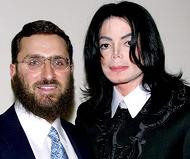
Rabbi Shmuley Boteach and Michael JacksonCampbell Brown recently interviewed Rabbi Shmuley Boteach, an Orthodox rabbi who used to be friends with Michael Jackson. Back in 2004 after Jackson was cleared of the molestation charges, he expressed worry that MJ’s life would be “cut short like Janis Joplin, like Elvis.” (See CNN’s 2004 article here.) I think Campbell’s recent interview gives some insight into Michael Jackson’s sad and lonely world.

Brown: Thank you for being here. I want to ask, you were so concerned by what you saw of Michael Jackson’s drug use that all the way back in 2004, you told CNN you thought he’d die young.

I mean, what did you see that made you feel that way?

Boteach: Well, there was no one around to stop him. … People … are not going to interfere with what Michael was trying to do. And what he was trying to do was curb pain.

Michael always thought that he had ailments of the body. He always had a neck that hurt, a foot that was twisted. Really, he had an affliction of his soul. He was extremely lonely, he was extremely unhappy. He felt purposeless, he felt lethargic. And the way he dealt with that pain — and he was especially afraid of evasion, of that perhaps his best years are behind him.

And instead of reinventing himself and entering a new phase, he decided to medicate away his pain. And no human body was going to — would be able to sustain that kind of assault. This was inevitable, it was shocking, it’s tragic. But it could have easily been averted.

Brown: You — we’ve heard people talk about his use of Demerol, of OxyContin.

Did you talk to him about his drug use? Did you ever tell him you were worried?

Boteach: Are you kidding me?

–snip–

Michael — you know, we think that he wasn’t afraid of crowds but as I said, I think because he gave the public a key to his own self esteem, because he substituted love for attention, he was. This was always an issue before he went in front of crowds.

And I would say to him, “This is poison. This is killing you. You need to be razor sharp, Michael.” And he knew that it was bad for him. …

Brown: So, that’s amazing to me. That he would get high and then he would be medicated before he would perform, essentially, in front of a crowd. Was he under the influence of drugs around his kids, also?

Boteach: Well, let me make something absolutely clear: I never saw Michael before a concert. I never saw him in a concert.

I’m speaking specifically as the years went on, I think Michael lived with a profound fear of rejection. And Michael told me once — and this is a heartbreaking conversation between us — “Shmuley, I promise I’m not lying to you,” he said. “I’m not lying to you.” He said that twice. “But everything I’ve done in pursuing fame, in honing my craft” to quote his words, “was an effort to be loved because I never felt loved.” And he used to say that to me all the time.

And you can imagine if you’re trying to get love from the crowd and you’re not sure how they’re going to react to you because time is going on, they [call you] “wacko-jacko,” — you’ve become a tabloid caricature. You live in phenomenal fear. And I think that a lot of this — the prescription drugs — was used to address and alleviate the anxiety. And it was just tragic to watch.

And a lot of questions need to be asked about who facilitated this. …

Brown: You talk about the people around him and that that needs to be followed up on. Who were the good guys? I mean, was his family trying to get him help? I mean, obviously you talked to him but what could have been done?

Boteach: Well, let’s be honest. If we in America want to have an honest conversation about Michael Jackson — who the good guys are.

Look, Michael brought out some of the worst qualities in all of us — in the media, in good people.

Very few people are around that level of attention. And to be around it … [it]made you feel special. And you could see a lot of good people who started with Michael and little by little the corruption just grew. So even people who were good guys didn’t necessarily remain that way.

If you look at the media circus, we’re not even mourning the death of man anymore. We’re just sort of thinking about an icon. So all of us are conflicted in this if you want to be honest about it.

So, but the good guys? I tried to be one of the good guys. Being a good guy meant if you had to risk your relationship with Michael, that you had to put your relationship on the line — you had to look him in the eye and say, “Michael, you are killing yourself,” or “Michael, you have — there’s no normality in your life,” or “Michael, you have lost spiritual anchor.”

Brown: So what did he say — when you confronted him, when you said these things to him, how did he react to you?

Boteach: Well, for a year he listened to me and used to tell me how much he loved me and cared about me and we were very close.

I mean, I cannot begin to describe the degree of friendship that existed between us. I tried to be a Rabbi to him. But after a year — and I believed there was a lot of progress in that year. You know, Michael came with me to synagogue. He was never going to become Jewish but he needed some sort of spiritual base. He used to come for regular Sabbath dinners at our home.

But after a year he really began to see me almost as a nuisance. I would speak to him and I could see a complete difference in body posture. He would begin to cringe. He would almost curl up, evolve into an embryonic position. He was unaccustomed to hearing any kind of criticism.

And — but then he would get his managers to sort of try to stop me and it came to a head one day in his hotel room. We went to give out books to parents of low-income families in Newark, New Jersey.

And on the way back I could see Michael was angry at me, although he never had a temper so he wouldn’t show it, but he was withdrawn. So, I said, “What’s wrong?” So, his manager says to me, in front of him, “Shmuley, you want to make Michael accessible and normal. Don’t you understand he’s famous because he’s not normal? And then I understood the full tragedy of his existence. Michael was terrified that the moment he became average that the public would forget him.

And that was the end of our relationship. I knew I could not help him and I — there was no choice but to sever the relationship.

But at that stage — you asked who the good guys are — you have a choice. You can either hang on as a hang-along, or you can move on. Because the orbit of a superstar is just too great to be in there partially. It’s an all or nothing sum game.

Brown: Rabbi Shmuley, I mean, there have been so many rumors with regard to this story. What’s the one thing that you’ve heard that you want to clear up about Michael Jackson? What should the public know?

Boteach: More than anything else, I want people to understand as they read all of these very unfortunate stories about Michael. And let’s face it, Michael may have — I don’t know — but may have been guilty of very serious, serious crimes.

I want people to understand that even if it were true and I have no idea if it is or it isn’t, that this was a tortured, tortured soul, who from the earliest age did not know love because he felt that he had to perform to earn love. He lived in permanent insecurity. He was one of the most tortured souls I ever came across.

After all the fame and fortune there was a part of him that we almost could not reach and I would hope that the public, in judging and assessing Michael Jackson, would do so … knowing that that child star suffered these terrible, terrible things.

That’s why all you parents out there, when you’re sitting with your kids and they show you their report card and it’s not an A, please don’t say to them immediately, you could have done better. That’s what happened with Michael. And so he always had to perform and that’s what ultimately killed him.

Campbell, honestly, when they announced these concerts I thought the end was near. He was in no state to do 50-odd concerts. Not a psychological state, emotional state. Michael was burned out. He was just going to get more medication to deal with his inability to live up to his former glory of self and the outcome was going to have to be tragic.

Michael Jackson is the true epitome of a people-pleaser. No one can ever be happy that way.

Will You Be There?

I’ve been feeling really sentimental lately with all these celebrity deaths. As a result, it’s gotten me thinking of my father who passed away in 2001. I was at PCC and he died on Sunday, December 9. It was the week of finals and my family (mother and my dad’s two sisters) thought it’d be better to let me finish up my finals without distractions so they didn’t tell me until they were driving me home from the airport on Saturday, December 14. I got 104 (extra credit) on Mr. Zila’s History test and knew my dad would love to hear that since he loved any grades that were 100+. Instead, I suddenly found myself preparing a eulogy for my father’s funeral on December 17.

Most of you know by now that I’m a huge Michael Jackson (MJJ) fan. Well, you can thank my dad for that. Back in 1992 around the time the Free Willy movie came out, MJJ came out with a song called “Will You Be There.” My father loved that song TONS and back then said he wanted it played at his funeral. Well since I had no hand in funeral preparations (and I was still in the clutches of IFBism), it was never played. It’s something I regret not fighting for. To make up for it, I chose to walk down the aisle to “Will You Be There” as a tribute to my father.

All that to say that 8 years later, I still miss my dad. I’m over the bitterness about my family not telling me my father died sooner because I know they did it in my best interest. (Apparently when my uncle died of AIDS in the early ’90s, they had to give me a sedative to get me to calm down because I was so hysterical. They figured if that’s what happened with my uncle, I’d be ridiculous upon my father’s death. I wasn’t.) I talk to my husband about him but I feel like I’m talking about some imaginary person who never existed. (BTW, I know that’s a redundant phrase.) I don’t know how to keep his memory alive. What makes things worse is that I really lost my dad a long time ago. My father struggled with schizophrenia/paranoia and so the father that I had at 12 was radically different from the father I ended up with when I was 16. He passed away from a heart attack when I was 19. My mom said she watched his eyes fly open and gasp for air. He started foaming out the mouth and couldn’t breathe. She watched him die on their bed in their bedroom. She couldn’t bring herself to talk to me about his passing until a few years later.

Many of the memories I have of my father are fading and that scares me. We used to go to the park and toss around a football even though I was hopelessly nonathletic. (I still enjoyed it immensely.) One Christmas when all my parents could afford was one gift, he found out which CD I wanted the most that year and got it for me (Alanis Morissette’s Jagged Little Pill). When MJJ’s Live in Bucharest concert was being played on VH1 (wow – remember when they used to play music videos?!) after we first got cable, he called me in from my bedroom because he knew I’d love to see it. (His “Smooth Criminal” choreography always amazes me but I found out he stole it from Fred Astaire.) I’m writing this out, hoping it stays with me.

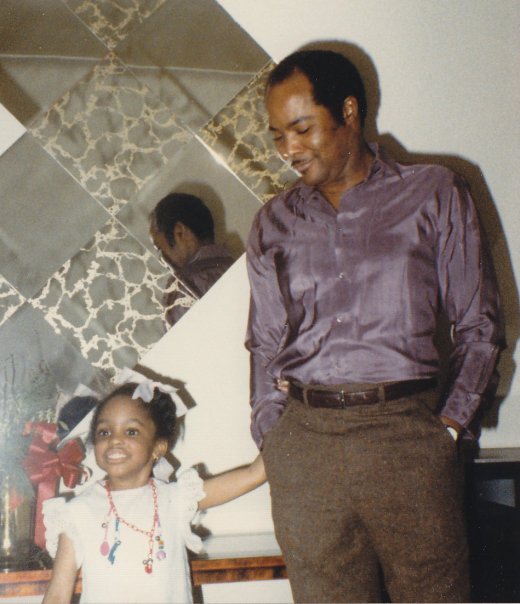
Me and DaddyAnyway, I wrote all that as a partial vent and also to ask how do you keep the memories of your loved ones alive. My husband will never know my father on this earth. My kids (if I ever have any) will think of my dad only as some kind of fairy tale. Pictures of him are limited but here’s one I found and scanned into my computer. I just try to think that he’s still looking down at me and smiling—whether I’m perfect or not.