I’ve put together a musical playlist of my life and what I hope my future entails. The following 10 songs express some kind of hope, things that I’ve gone through, or how I feel. They are in no particular order.
Real Bad News: Aimee Mann – This is the song I always think of when I stepped off the plane from college and received the news that my father had died.
I Shall Believe: Sheryl Crow – I’m a hot mess in many ways but I resolve to believe in God even when it’s difficult.
OK: Rebecca St. James – If I could have told my teenage self anything, it’s that life would get better. And everything will be okay.
Gone Too Soon: Michael Jackson – In my opinion, my uncle and my father died much too soon. It’s a beautiful song that expresses loss.
Show Love: Mary J. Blige – Too many people have hated on me in my life and tried to bring me down. This song encourages me to keep my head held high.
My years in the independent fundamental Baptist (IFB) denomination encouraged me to think that practically all music except for the old-time hymns were bad. This came after 16 years of listening to virtually any and every musical genre I wanted. I attended a strict, legalistic Christian college in which all music submitted was evaluated by those in authority to see if the music met the college’s criteria of something that could be listened to during the school term. If it did not meet the college’s criteria, the album was held until the end of the term then returned to the owner.
I spent quite a bit of time in which I listened to nothing but songs and hymns that would fall very much under the genres of classical, choral, and non-percussion instrumental. While I enjoy listening to these genres at various times, limiting myself to these genres alone proved trying. At times, I found classical or choral music quite boring and sleep-inducing while non-percussion instrumental music could contain brass instruments making the song loud, distracting, and downright annoying.
At that time, I really believed that classical, choral, and non-percussion instrumental were sinful and harmful to listen to. I discarded all of my secular albums, ripped up my Beatles and Michael Jackson posters, and thought I was doing my best to be obedient to God. But my actions certainly weren’t motivated by an attitude of love and grace; I did those things in obedience to the commandments of men (Matt. 15:9).
Granted, the general principle behind the legalistic rules is not bad:
Finally, brothers, whatever is true, whatever is honorable, whatever is just, whatever is pure, whatever is lovely, whatever is commendable, if there is any excellence, if there is anything worthy of praise, think about these things. —Philippians 4:8
A great many songs in the secular realm do not meet the criteria above hence the radical fundamentalist view of shunning “worldly rock music.” But then again, a lot of songs that pass for what is called “Christian” don’t meet the criteria above either.
After leaving IFB churches (perhaps even a bit before that), I began to listen to a variety of songs again and discovered how much these songs could positively impact my mood. Here are a few personal examples:
Lady Gaga’s “Just Dance” has an infectious electronic melody and beat that gives my mood an upswing, often pulling me out of sadness or depression for a moment, encouraging me (briefly) to dance my cares away.
Mary J. Blige’s “Show Love” is an upbeat R&B song that encourages the listener to not to worry about what others think or say about them but to keep living as best they can and be thankful for what they have.
Sara Groves’s “This Journey Is My Own” is a low-key, somber melodic song in which she expresses how she struggles with her need for man’s approval and how ultimately, the only approval that really matters is the one that comes from God.
Those are only a few examples of how various songs (Sara Groves being the only overtly Christian song on the list) minister to me that would never meet the criteria outlined by my old Christian college and old IFB churches. (Yes, that includes the Sara Groves song.)
A lot of the songs above don’t fly for a lot of Christians. It may be that the songs don’t meet their musical preference (ie, don’t like the sound or lyrics) or that they’re not godly enough. That’s okay as long as they are the ones determining what’s good for them and not someone else. Continue reading “Musical Discernment”→
Sarah McLachlan, Lilith Fair organizer and main headliner
One of the fondest memories of my teenage years was attending Lilith Fair.
At Jones Beach, NY about 12 years ago, I attended the festival in celebration of women in music. Lilith Fair couldn’t have been timed any better. At this time in 1998, women like Brandy, Madonna, Sarah McLachlan, Mariah Carey, and Shania Twain dominated the charts. Alternative and folksy female artists like Paula Cole, Shawn Colvin, Jewel, and Alanis Morissette also proved to be a powerhouse during this time paving the way for more current artists like Colbie Caillat, Sara Bareilles, and Michelle Branch. At the fair, I had the privilege of discovering artists like Antigone Rising, Sixpence None The Richer, and Heather Nova.
But perhaps the time of women wearing Birkenstocks and bopping to 4 Non Blondes has come and gone.
Amid a poor economic climate and struggling sales, Lilith Fair was forced to cancel the last leg of its tour and other poorly selling dates. Some media outlets are reporting that the tour is suffering from “embarrassingly low attendance.” Names like Norah Jones, Kelly Clarkson, The Go-Gos, Mary J. Blige, Rihanna, Sheryl Crow proved to be an initial draw but many of those artists were only performing in select regions and have since dropped out due to various reasons (in the case of Jones, Clarkson, The Go-Gos, and Rihanna). While it’s not unusual for acts to drop out of a tour this massive, it’s unfortunate many of them had to be some of the bigger names.
At this time, the pop music charts are dominated mostly by men and of the three women currently there (Katy Perry, Ke$ha, and Lady Gaga), only one was originally booked to perform at Lilith (Ke$ha) — and even she was relegated to being a supporting act instead of a main headliner.
The appeal of Lilith Fair has always been discovering some of the smaller, lesser-known acts while being able to connect with familiar favorites. When familiar favorites aren’t available, the smaller acts suffer as well. So what does Lilith Fair need to revamp in the hopes of continuing this next year?
1. Obtain several current, big names for each city.
Sure, Sarah McLachlan is considered a big name , performs in each city, and is the largest reason people attend the tour, but let’s face it: Ms. McLachlan hasn’t had a Top 10 hit since Lilith Fair ended in the last decade. When people pay money for multiple acts, they want to see several acts they’re interested in. Booking artists like Katy Perry, Carrie Underwood, Lady Gaga, Lady Antebellum, or Miley Cyrus would draw in a mix of old and young, generating significant sales and, in turn, revenue. Upon the initial Lilith Fair lineup announcement, I was disappointed to discover that Sheryl Crow was only performing in Northwest America (Canada and US), Rihanna and Ke$ha were relegated to Salt Lake City, and Mary J. Blige was doing a Midwest circuit. The biggest name for the Philly area (apart from Ms. McLachlan) was Kelly Clarkson. For the NYC area (one of the largest music markets), no one on the lineup has a current Top 10 hit. That needs to be rectified for Lilith Fair to be successful next year.
2. Keep up with the diversity.
I’ll give Lilith Fair credit — it’s done an amazing job of getting acts spanning all races for the 2010 reboot and it needs to do it again. My only complaint from the original Lilith Fair was the lack of diversity in the lineup. Like Jessica Herman said in Slate’s “Why Do We Need Lilith Fair Anymore?”, the festival indeed felt like “a bunch of white chicks strumming their acoustic guitars.” For Lilith 2011, I’d like to see acts that draw a multiracial audience rather than just mostly white women. Lilith needs to continue reflecting the changing landscape among women in North America.
3. Make itself relevant again.
Possibly a restatement of #1 above but Lilith Fair in the 90s had the mission of breaking down barriers for women in music. In Sarah’s absence, women have indeed proven they can do just that. Twelve years later, the mission statement can’t be the same and the big draws of the 90s (eg, Indigo Girls, Suzanne Vega) can’t continue to be relied upon now. What’s Lilith’s goal now? Simply celebrating female talent? Honoring legends and showcasing future acts? Whatever it is, Lilith needs to find its footing and make that clear.

 Image from paducahtruth.blogspot.com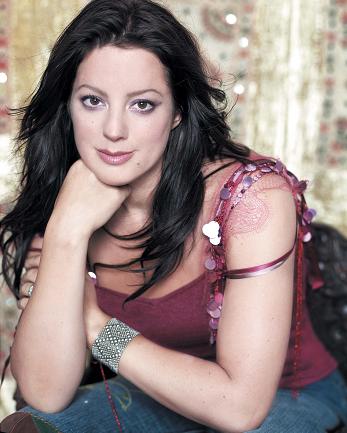
 Amid a poor economic climate and struggling sales, Lilith Fair was
  Sure, Sarah McLachlan is considered a big name , performs in each city, and is the largest reason people attend the tour, but let’s face it: Ms. McLachlan hasn’t had a Top 10 hit since Lilith Fair ended in the last decade. When people pay money for multiple acts, they want to see several acts they’re interested in. Booking artists like Katy Perry, Carrie Underwood, Lady Gaga, Lady Antebellum, or Miley Cyrus would draw in a mix of old and young, generating significant sales and, in turn, revenue. Upon the initial Lilith Fair lineup announcement, I was disappointed to discover that Sheryl Crow was only performing in Northwest America (Canada and US), Rihanna and Ke$ha were relegated to Salt Lake City, and Mary J. Blige was doing a Midwest circuit. The biggest name for the Philly area (apart from Ms. McLachlan) was Kelly Clarkson. For the NYC area (one of the largest music markets), no one on the lineup has a current Top 10 hit. That needs to be rectified for Lilith Fair to be successful next year.
 This Journey Is My Own