I went to a Pride event over the weekend to support my church, and my elder, Sophia, who was selling her art. I glanced over her art, mostly deciding to observe and not buy.
Then I saw a piece of art titled “Audience of One.”
If you wonder why this piece of art struck me and spoke to me, please scroll to the top of this blog and look at my tagline.
I attended a prayer meeting at my church last Tuesday and it’s named “Prophetic Prayer and Worship.” Definitely lots of worship. We did some praying but my prayers were mostly self-centered.
I am too blessed to be here.
Everything is going right in my life. Other people need prayer more than I do.
I don’t deserve to be here
I decided that once the meeting had ended, I would slip out quietly and alone, as I usually tend to do.
Sophia saw me from across the room and came over to welcome me. I exchanged words with her briefly before a woman in the Children’s Ministry came over to me and said, “I have a Word for you.” I stared at her, baffled, because I had no idea what that meant.
She said, “God told me to tell you that ‘he hears you, he sees you, he loves you, and he is with you.’ Does that mean anything?”
And in a few minutes, I was crying because those were all of the things that I felt like God wasn’t doing. I cried for quite a bit, but it’s something I needed. God could’ve chosen anyone else in the world to talk to. But he chose me. Or even if it wasn’t “God,” the lady felt compelled to tell me those things out of everyone else in the room.
So I’ve been seeing God’s hand in different things and speaking to me in different ways ever since.
So when I came across the painting above, I definitely knew that wasn’t a coincidence—that was God speaking to me in the most important way he knew how.
Signs and symbols are different for everyone, but God knows just how to speak to me and reach me.
He hears me. He sees me. He loves me. He is with me.
[This is the FINAL part of a multi-part series on Rob Bell’s book, Love Wins.]
Indeed, the end is here! And I know you and I are probably both glad for it.
Bell gives his testimony of how he came to know God’s love and invites his readers to trust God and that “the love we fear is too good to be true is actually good enough to be true.” Bell reminds his readers that the decisions they make today will impact the future, the hereafter.
This invitation to trust asks for nothing more than this moment, and yet it is infinitely urgent. Jesus told a number of stories about this urgency in which things did not turn out well for the people involved. One man buries the treasure he’s been entrusted with instead of doing something with it and as a result he’s “thrown outside into the darkness.” Five foolish wedding attendants are unprepared for the late arrival of the groom and then end up turned away from the wedding with the chilling words “Truly, I tell you, I don’t know you.” Goats are sent “away” to a different place than the sheep, tenants of a vineyard have it taken from them, and weeds that grew alongside wheat are eventually harvested and “tied in bundles to be burned.”
This paragraph begs for an explanation, begs for elaboration because of all the images and stories presented here. But Bell only offers this:
These are strong, shocking images of judgment and separation in which people miss out on rewards and celebrations and opportunities.
Bell glosses over the striking imagery presented in each of the parables he quickly presents, completely ignoring the deeper meaning and symbolism that lies in each because the explanation wouldn’t support his purpose in writing the book. It’s a shame because that large paragraph (not typical for Bell; I’ve done my best to adhere to his short line breaks) prompts more questions than Bell will ever be inclined to answer.
Love is why I’ve written this book, and
love is what I want to leave you with.
I walked away from this book with more frustration and unanswered questions rather than love and peace the fills the soul.
[This is part XIII of a multi-part series on Rob Bell’s book, Love Wins.]
Image from covdevotions2010.blogspot.com
Heading into Chapter 7, the reader gets the sense that Bell is wrapping things up. He details the parable of the Prodigal Son very much in Tim Keller-like style, giving equal attention to the elder and young brothers. But then he also focuses on the attributes of the father in how he dealt with his sounds:
The father redefines fairness. … Grace and generosity aren’t fair; that’s their very essence. The father sees the young brother’s return as one more occasion to practice unfairness. The younger son doesn’t deserve a party—that’s the point of the party. That’s how things work in the father’s world. Profound unfairness.
The odd thing as I read that is that well, yes, I agree. God is unfair. And somehow I see this as evidence that bolsters a Reformed theologian’s argument rather than Bell’s idea of religious universalism.
People get what they don’t deserve.
Bell and I still agree.
Parties are thrown for younger brothers who squander their inheritance.
I put on brakes here not because I disagree with the statement as it’s written, but I worry that the implication is that it’s okay to “squander” an inheritance because a party gets thrown anyway. (Romans 6 warns against this.)
As Bell continues to develop his idea of this widely known parable (shifting away from Keller), Bell seems to redefine “hell” as a person living in the enslavement of his or her own selfish attitudes and vices in the presence of a loving and generous God.
Jesus puts the older brother right there at the party, but refusing to trust the father’s version of the story. Refusing to join in the celebration.
Hell is being at the party.
That’s what makes it so hellish.
… In this story, heaven and hell are within each other,
intertwined, interwoven, bumping up against each other.
If the older brother were off, alone in a distant field,
sulking and whining about how he’s been a slave all these years and never even had a goat to party with his friend with, he would be alone in his hell.
But in the story Jesus tells, he’s at the party, with the music in the background and the celebration going on right there in front of him.
Later on, Bell says:
We create hell whenever we fail to trust God’s retelling of the story.
The odd thing is, I see Bell’s connection. But I fear that his conclusion is simply just a leap. This idea is not easily pulled from the text, and when you frame the parable of the prodigal son in the context of a book on heaven, hell, and fate, sure, it somewhat makes sense. But out of the context of Love Wins (and in context of the rest of the Bible), I don’t know that Bell’s interpretation of the story holds up. And therefore, ultimately, I think it falls apart as a whole.
Bell later on admits that people who reject God do suffer punishment:
We’re at the party,
but we don’t have to join in.
Heaven or hell.
Both at the party.
… To reject God’s grace,
to turn from God’s love,
to resist God’s telling [of our story],
will lead to misery.
It is a form of punishment, all on its own.
This is an important distinction, because in talking about what God is like, we cannot avoid the realities of God’s very essence, which is love. It can be resisted and rejected and denied and avoided, and that will bring another reality. Now, and then.
We are that free.
This is the part where I imagine Reformed Christians chafing at the collar at that last statement. But Bell continues on to unequivocally state that yes, hell exists and people can create it. But I fear Bell is too equivocal in what that hell is (negative attitudes and vices).
When people say they’re tired of hearing about “sin” and “judgment” and “condemnation,” it’s often because those have been confused for them with the nature of God. God has no desire to inflict pain or agony on anyone.
God extends an invitation to us,
and we are free to do with it is [sic] as we please.
Saying yes will take us in one direction;
saying no will take us in another.
… We do ourselves great harm when we confuse the very essence of God, which is love, with the very real consequences of rejecting and resisting that love, which creates what we call hell.
I’ll end this chapter analysis with a quote I liked (in light of the parable of the two sons):
Our badness can separate us from God’s love,
that’s clear.
But our goodness can separate us from God’s love as well.
Neither son understands that the father’s love was never about any of that. The father’s love cannot be earned, and it cannot be taken away.
After rambling on some random rabbit trail about “mystics” and the “Force,” Bell asserts that “Jesus is bigger than any one religion.”
Ah, durr. But then we get to Jesus’ claim in John 14 of being “the way and the truth and the life. No one comes to the Father except through me.”
Remember that acquaintance of mine I quoted from Goodreads who said that she encountered people more hung up on this statement than on hell? I said I agreed with her.
What he doesn’t say is how, or when, or in what manner the mechanism functions that gets people to God through him.
John 3, John 16.
He doesn’t even state that those coming to the Father through him will ever know that they are coming exclusively through him.
John 14:6-7; John 17.
He simply claims that whatever God is doing in the world to know and redeem and love and restore the world is happening through him.”
I agree with the overall idea of the statement but I’m not sure it’s as “simplistic” as Bell makes it sound. Jesus has consistently proven to be accessible to the multitudes in a simple manner with a highly complex undertone in his parables and teaching—so complex that even the disciples who were with him rarely “got” what he was speaking of without Jesus having to explain himself first. So let’s watch Bell tackle Jesus’ bold statement of being the only way to God using mental gymnastics (because really that’s what it feels like to me).
And so the passage is exclusive, deeply so, insisting on Jesus alone as the way to God. But it is an exclusivity on the other side of inclusivity.
Dude, what?!
After explaining that exclusivity defines the traditional view of hell (“in or out”) and inclusivity is universalism (all roads lead to the same God), Bell says:
And there is an exclusivity on the other side of inclusivity. This kind insists that Jesus is the way, but holds tightly to the assumption that the all-embracing, saving love of this particular Jesus the Christ will of course include all sorts of unexpected people from across the cultural spectrum.
As soon as the door is opened to Muslims, Hindus, Buddhists, and Baptists from Cleveland, many Christians become very uneasy, saying that then Jesus doesn’t matter anymore, the cross is irrelevant, it doesn’t matter what you believe, and so forth.
Not true.
Absolutely, unequivocally, unalterably not true.
What Jesus does is declare that he,
and he alone,
is saving everybody.
And then he leave the door way, way open. Creating all sorts of possibilities. He is as narrow as himself and as wide as the universe.
He is as exclusive as himself and as inclusive as containing every single particle of creation.
Bell is careful to write “Jesus is the way” omitting the oft-used word “only” or forgoing the italicization of “the.” (Just an observation. Jesus does not use the word “only” here although one could argue that it’s implied.) The problem here, which Bell raises by bringing in Buddhism, Hinduism, Islam, etc., is that Bell affirms Jesus is present in all of these different religions that claim to be salvation or divine attainment in some form. It’s like reverse religious universalism, in a way. Instead of all paths leading to the same God, Bell appears to be saying that Jesus is present in all of these paths.
So Jesus is the prophet Mohammad to Islam.
Jesus is nirvana—the place of Enlightenment.
Jesus is Vishnu, Brahma, Shiva, Shakti, or any of the number of Hindu gods.
For some reason, this idea seems really offensive to me. As if Jesus isn’t accessible in his own form, in his own way, he must materialize in different forms like a shape-shifter of the universe. I think I’d be just as offended if a Muslim told me that Mohammed was a shape-shifter who appears as Judeo-Christian Messiah to bring salvation to Jews and Western Gentiles. My mind can’t fully grasp the idea Bell is throwing out here.
Again, we’re back to religious universalism: yes, all paths do lead to the same God because as Bell seems to say since Jesus is present in all these religions, everyone in these religions reaches the same God.
It’s the most astounding mental gymnastics I’ve ever encountered.
Jehovah God, the Old Testament God was clear that many of the gods and idols that non-Israelites set up were not Him and that He was not present or blessing any of those rituals. (“Baal” is a notable god that Jehovah had a special holy hatred for.) Jehovah was pretty exclusive about that.
But the inclusivity on the side of exclusivity is that He was willing to draft Gentiles who were willing to believe in him (Rahab, Ruth, and Job being prominent examples).
There’s your mental gymnastics from me, but I think Bell wins the gold medal in this competition.
So how does any of this explanation of who Jesus is and what he’s doing connect with heaven, hell, and the fate of every single person who has ever lived?
Bell’s essential answer is that since Jesus is everywhere and in everything, believers in Christ need not worry about the eternal destination of others because “God’s got this.” (Not a Bell quote.)
We are not threatened by this,
surprised by this,
or offended by this.
Sometimes people use his name;
other times they don’t.
I agree that Jesus can be encountered in different ways by different people and perhaps he may not even be known to some people as Jesus or Yeshua. But we must also consider that Jesus warned his disciples about false prophets in Matthew 7 and Matthew 24 (speaking of exclusivity, one of those verses has Jesus mentioning “the elect” whoever and whatever that means).
So while “none of us have cornered the market on Jesus, and none of us ever will,” I don’t believe Jesus was as vague or confusing with his statements as Bell makes him out to be. I do, however, wholeheartedly agree with the following quote from Bell:
It is our responsibility to be extremely careful about making negative, decisive, lasting judgments about people’s eternal destines.
So is Gandhi in hell? Do we know this for certain? No, I don’t think we do. But we can all hazard guesses for now.
Additional note:
Bell goes on to say that Jesus says “he ‘did not come to judge the world, but to save the world’ (John 12)” but if you continue to read on in that same passage, Jesus speaks of an ultimate judge (the assumption from other Biblical texts is God the Father) who issues judgment or (as the NIV puts it) condemnation. Another way Bell is able to raise questions and ably dodge them because his readers are unable to ask all of the questions he raises by completely ignoring their existence.
[This is part XI of a multi-part series on Rob Bell’s book, Love Wins. Note: Chapter 6 is two parts.]
Image from communities.canada.com
I really want to push through chapter 6 for fear I’ll dwell here for days on end like I did with chapters 3 and 4 (which were major chapters really), but I do have a few things I want to point out and we’ll see where things take us.
Bell is pretty straightforward in this chapter, and as the title says, Bell indeed talks about rocks. He details the story in Exodus 17 in which the Israelities are thirsty and can’t find water. God tells Moses to strike the rock and the rock produces water. Bell and his readers jump to I Corinthians 10 in which Paul explains to his audience that “those who traveled out of Egypt ‘drank from the spiritual rock that accompanies them, and that rock was Christ.'”
Paul, however, reads another story in the story, insisting that Christ was present in that moment, that Christ was providing the water they needed to survive—that Jesus was giving, quenching, sustaining.
Jesus was, he says, the rock.
According to Paul,
Jesus was there.
Without anybody using his name.
Without anybody saying that it was him.
Without anybody acknowledging just what—or, more precisely, who—it was.
… Paul finds Jesus there,
in that rock,
because Paul finds Jesus everywhere.
From this brief passage, one gets the sense that Bell is making two points here:
The Israelites were saved in the wilderness by Christ who is the “living water” (John 4:10-15), which Bell really could’ve and, in order to strengthen his argument, should’ve mentioned here. Before the Israelites even knew who was saving them from physical death, the Messiah was already present providing them with the water of life.
Christ can be present in nearly anything, anywhere; the implication being that the saving work of Christ can be present in almost any form. This starts to get loaded.
Here’s the deleted portion of the previous passage:
Paul’s interpretation that Christ was present in the Exodus raises the question:
Where else has Christ been present?
When else?
With who else?
How else?
This opens up a can of worms, in a way. In Velvet Elvis, Bell is careful to show that Paul finds secular truth in Greek philosophy and poetry and doesn’t hesitate to incorporate it into one of his sermons.
[Paul] is speaking at a place called Mars Hill (which would be a great name for a church) and trying to explain to a group of people who believe in hundreds of thousands of gods that there is really only one God who made everything and everybody. At one point he’s talking about how God made us all, and he says to them, “As some of your own poets have said, ‘We are his offering.'” (ENDNOTE!: Acts 17:28) He quotes their own poets. And their poets don’t even believe in the God he’s talking about. They were talking about some other god and how we are all the offspring of that god, and Paul takes their statement and makes it about his God. Amazing.
Paul doesn’t just affirm the truth here; he claims it for himself. He doesn’t care who said it or who they were even saying it about. What they said was true, and so he claims it as his own.” (Velvet Elvis, p. 079)
And I’m with Bell with the ability to affirm truth wherever it is because God exhibits truth and truth is an extension of God.
But I tread carefully on the ability to find Jesus’ saving work in anything because God can do anything and use anything He pleases for salvation. But the Bible is clear that God isn’t present in everything so Bell’s questions make me a bit iffy on the ways Christ has been present, can be present, and in what ways he can be present. I won’t make any definitive assertions except to say that while I don’t believe God is present in sin or evil, He can (and often does!) use the outcome for good that can lead to salvation.
Jesus died and rose again. As a result of that action, he has forever reconciled us to God the Father.
This is not controversial stuff.
As a result, there’s not much that I need to ponder over or challenge because in this chapter, Bell lays out Jesus’ sacrifice and he does it in a way that is typically Bell-esque: with original analogies and beautiful images. (When Bell says something clearly, it’s like bursting into a magnificent, clear blue sky after having endured dark shadows and lingering gray storm clouds.)
Bell makes an interesting point that I’ve never heard of before (but find interesting): he speaks of John (the Gospel writer) numbering signs all throughout his gospel. In John 11, Lazarus’s resurrection from the dead is the seventh sign of Jesus outlined in the gospel.
Now ask: Is the number seven significant in the Bible?
Does it occur in any other prominent place?
Well, yes, it does. In the poem that begins the Bible. The poem speaks of seven days of creation.
But there’s one more sign in John’s Gospel. In chapter 20 Jesus rises from the dead. Now that’s a sign. The eighth sign in the book of John. Jesus rises from the dead in a garden. Which, of course, takes us back to Genesis, to the first creation in a . . . garden.
I’d never thought of things that way. Reading that blew my mind. Either John was a very clever fiction writer or God is the most amazing storyteller I’ve ever read.
What is John telling us?
It’s the eighth sign, the first day of the new week, the first day of the new creation. The resurrection of Jesus inaugurates a new creation, one free from death, and it is bursting forth in Jesus himself right here in the midst of the first creation.
… John is telling a huge story,
one about God rescuing all of creation.
I love it. John continually points his readers back to Genesis, constantly linking Jesus to God the Father, Creator of all things from the get-go (Jn 1:1) and here it is even in the final chapters of John and I totally missed it. It’s beautiful to see.
As I’m breathless and taken away by this beauty of discovering the symbolism in everything Jesus does, Bell kind of ruins it for me in “wait-a-minute-this-is-a-book-about-heaven-hell-and-the-fate-of-every-person-who-ever-lived-moment.”
How many people, if you were to ask them why they’ve left church, would give an answer something along the lines of, “It’s just so . . . small”?
No one I know really. They’d have tons of other reasons but it wouldn’t be that.
Of course.
A gospel that leaves out its cosmic scope will always feel small.
A gospel that has as its chief message avoiding hell or not sinning will never be the full story.
A gospel that repeatedly, narrowly affirms and bolsters the “in-ness” of one group at the expense of the “out-ness” of another group will not be true to the story that includes “all things and people in heaven and on earth.”
And I think to myself, this is not the gospel. No one I know or have ever heard in Biblical Protestantism (ok, and Anabaptism) preaches a message like this. (I’m not sure whether to classify this as a false dichotomy.) The main message of the gospel, which can often be “ye must be born again,” is always Christ and Him crucified.
Why was Christ crucified? To reconcile us to God. Why do we need to be reconciled to God? That’s a question, or more accurately, a tension we can be free to leave fully intact.
[This is part IX of a multi-part series on Rob Bell’s book, Love Wins. Note: Chapter 4 has been broken up into four parts. Chapter 4, part I can be found here, part II can be found here, and part III can be found here.]
Let’s work on closing out Chapter 4 of this book.
“Many people find Jesus compelling, but don’t follow him, because of the parts about ‘hell and torment and all that.’ Somewhere along the way they were taught that the only option when it comes to Christian faith is to clearly declare that a few, committed Christians will ‘go to heaven’ when they die and everyone else will not, the matter is settled at death, and that’s it. One place or the other, no looking back, no chance for a change of heart, make your bed now and lie in it . . . forever.
Not all Christians have believed this, and you don’t have to believe it to be a Christian. The Christian faith is big enough, wide enough, and generous enough to handle that vast a range of perspectives.“
“Speaking of Jesus, I don’t find many non-Christians that are hung up on the idea of hell. Most I know are hung up on the idea that Jesus is the only way. And that the Bible says seemingly contradictory things and you’d be stupid/silly to believe it. “
Doctrinally, I’d say that’s been my experience too. In general, I’d say non-Christians tend to be averse to Christianity because of the hypocrisy that runs rampant among many of its believers. (Side note: Tim Keller makes a great point in regard to why this behavior occurs among Christians in Chapter 4 of The Reason for God.)
As for the bolded part about not having to believe in eternal punishment/torment/hellfireandbrimstone to be a Christian, I start to get a little twitchy. Because even though the basic rule of being a Christian is being an obedient (“as best as you can”) follower of Jesus, there are all these doctrines and tenets that have kind of been hung around his neck as part of the package and it’s difficult to distinguish whether you can have Jesus without hell.
[This is part VIII of a multi-part series on Rob Bell’s book, Love Wins. Note: Chapter 4 has been broken up into four parts. Chapter 4, part I can be found here and part II can be found here.]
The other issue I have with Bell here about the talk of restoration, renewal, and if you will, “second chances,” is that gives people no real need to come to Jesus. If all things will be restored in the end anyway, what does it matter if I murder someone I don’t like? Even if I get fried in the electric chair, I still eventually go to heaven maybe after a brief punishment for my sins.
Although hell is an unlikable place to be or to think about (if you take it seriously), the purpose of it is for judgment. When a criminal is deemed guilty in a court of law and sentenced to life in prison, he is sent to jail until death. Hell is the jail that never ends.
But let’s take a step back. And we’ve got to follow Bell’s suppositions (maybe? he is careful to never outright say he believes these things) about what ultimately brings God glory in the end: restoration, reconciliation, and renewal.
Think of a terrible, gruesome time during the 20th century. I’ll give you a hint of where I’m going with this: think of a specific dictator who murdered tens of millions of people. There are at least three you can choose from.
1 . . .
2 . . .
This is kind of like an annoying email forward now, isn’t it?
3.
I’ll choose Hitler since Stalin and Tse-Tung (Zedong) don’t seem to strike the same kind of terror into Westerners’ hearts.
Adolf Hitler is estimated to be responsible for at least 12 million murders during World War II. When Hitler shot himself in the head on April 30, 1945, his soul plunged into eternity.
Now, tell me:do you think it brings God more glory to simply excuse such heinous and irresponsible actions and allow Hitler into heaven on the basis of restoration and reconciliation or does it bring God more glory to judge Hitler and punish him for the atrocities he committed while he was on this earth? Because remember, he was never tormented in the way that he tormented so many others (not just the Jewish and the Polish but anyone who either opposed him or didn’t fit his ideal Aryan race).
Maybe I’m a cold, heartless bitch, but I want God to make Hitler pay for the things that he never had to pay for on earth. It’s a little disappointing to think that Hitler could toy with the lives of 12 million people and after death still be reconciled to God after maybe a “season” in hell.
God is God, and yes, He could totally restore Adolf Hitler to himself in the era of restoration to come, but I just don’t see humans (who would have exacted the harshest sentences possible on Hitler before executing him) being more lenient than God.
Then Bell says things that make me wonder, Does this jive with scripture?
“To be clear, again, an untold number of serious disciples of Jesus across hundreds of years have assumed, affirmed, and trusted that no one can resist God’s pursuit forever, because God’s love will eventually melt even the hardest of hearts.”
Maybe. But again, it doesn’t necessarily mean that it remains that way forever. I think specifically of Pharaoh who had a rather hard heart against the people of Israel who wanted to be freed and even “repented” (!) of his temporarily “melted” heart (after a series of wearying plagues) and decided to go after them as they made their way out of Egypt. The Bible gives no indication that Pharaoh ever repented of his re-hardened heart.
“Could God say to someone truly humbled, broken, and desperate for reconciliation, ‘Sorry, too late’? Many have refused to accept the scenario in which somebody is pounding on the door, apologizing, repenting, and asking God to be let in, only to hear God say through the keyhole: ‘Door’s locked. Sorry. If you have been here earlier, I could have done something. But now, it’s too late.’
As it’s written in 2 Timothy 2, God ‘cannot disown himself.'”
These many who have refused need to reread the Parable of the Ten Virgins in Matthew 25:1-13. Not that I like the idea of a door being shut permanently, but if we’re going off of scripture, we have to seriously consider what it says.
“At the center of the Christian tradition since the first church have been a number who insist that history is not tragic, hell is not forever, and love, in the end, wins and all will be reconciled to God.”
And in Christianity, there are some people who choose not to directly align themselves with views they believe so that they may not be tied directly with these specific beliefs therefore they speak of themselves in generalities so that it is almost impossible to pin them down with what they believe.
Dollhouse image from cutiebeauty.com, House images from hpadesign.com
Whenever I beat myself senseless over my sinfulness and wretchedness, I need to quote this to myself:
For this reason I bow my knees before the Father…so that Christ may dwell in your hearts through faith; and that you, being rooted and grounded in love, may be able to comprehend with all the saints what is the breadth and length and height and depth, and to know the love of Christ which surpasses knowledge, that you may be filled up to all the fullness of God. —Ephesians 3:14, 17-19
Humans are awful, sinful, wretched people—before God and others. There is truth in “worm theology,” but a Christian cannot stay there. A Christian must move past the idea of being a horrible, terrible person (an idea on which I tend to dwell) and move into the light of God’s grace and forgiveness. Yes, my sin is big but the love of God is so much bigger.
Think of your sin as being the size of a dollhouse. Now think of the magnitude of the bedroom that the dollhouse stays in. That’s pretty big, right? Now, imagine the house that holds the room (and other rooms) that the dollhouse resides in. The house is enormous compared to the size of the dollhouse. The dollhouse dwarfed by the size of the house; it is swallowed up and certainly not a major focal point in the home.
This is a feeble human analogy in how God’s love swallows up our sin. In God’s love, our sin is not a major focal point even though it is there. Just as someone walking into a home would not dwell on a small dollhouse in a large home, so God does not want us to dwell on our sin in comparison to His great love.
Yes, this is what I have learned today, and that’s the verse I have been challenged to memorize.
Ashes were used in ancient times, according to the Bible, to express mourning. Dusting oneself with ashes was the penitent’s way of expressing sorrow for sins and faults.
I had planned on going to an Ash Wednesday service at a local Roman Catholic Church today but for various reasons, won’t be able to do so.
In 1998 when I became a born-again Christian in an independent fundamental Baptist (IFB) church, the pastor (a former Roman Catholic) bashed Catholicism in nearly every possible way. Even though I finished my schooling in a Roman Catholic school 2 years later, I walked away with a dismal view of Catholicism, its doctrines, and practices.
In 2007, I joined the Presbyterian Church of America (PCA). The PCA is a Christian denomination that still holds to Bible-based preaching but offers a liturgical structure similar to that of the Roman Catholic Church. After nearly a decade of being away from a liturgical service, my first experience back was a little jarring. After years of making the Bible as my only authority for Scriptural practices as an IFB, becoming a Presbyterian had me reconsidering church traditions as a supplement (not a replacement) to the Bible for Scriptural practices. (Let me state here that the Bible’s authority takes precedence over church traditions and church traditions clearly in conflict with Scripture should be modified or discarded.)
An acquaintance on a message board who went from born-again Protestant Christianity to Roman Catholicism once suggested that Catholicism may appeal to me again in the future. The likelihood of my becoming a Roman Catholic again is slim, but in a way, he was prophetic: the structure, reverence, and church traditions within Catholicism have reappealed to me and continue to do so the older I get (in age and in faith). Continue reading “Ash Wednesday and the Beginning of Lent”→
On Twitter, there’s a semi-joke in which someone will mention a problem (usually trivial) in his or her life followed by the hashtag, #firstworldproblems, meaning that the problem is most likely to occur in a Westernized country, ie, “Ran out of coffee grounds; Gonna be a rough morning. #firstworldproblems.” I’d like to propose the idea, however, that Westernized Christians, typically Americans (as I am one), deal with #firstworldXtianproblems.
During the past few months, I’ve been mulling over the idea that American Christians do not face the same problems as early Christians, Christians in other parts of the world, or even American Christians of yesteryear. The challenges American Christians—who I’ll refer to as ACs from now on—face are unique to this era and country. In fact, the problem for ACs is that… there’s no problem at all. We are much too comfortable.
As I sit comfortably in my bed in the cushy suburbs of Philadelphia, I think of people suffering in growing Christian churches in places like China or Iran. The suffering they experience so much more real than wondering whether I should go to church today because I’m so tired. By admitting Christ and him resurrected, they put their lives on the line for their beliefs. (And their belief in Christ is so real that many of them are martyred for their faith.) I highly believe that 90% of ACs would crack under that pressure if put into the same situation. How real is our suffering? How real is our faith?
When Jesus calls his followers to suffer for him, to give up their lives for him, to follow him, American Christians often think back to the Christians of the early church who were martyred, became fugitives, or met together secretly. ACs (except foreign missionaries) know nothing about fearing for their lives because of their faith, needing to hide their faith from their neighbor or government due to physical repercussions, or meeting in secret because of widespread federal and/or societal persecution. Here are some of the problems ACs typically face:
I don’t like this pastor. I think I’ll find a new church.
No one talks to me here. I could go in and out of church on a Sunday unnoticed.
This church is too big; I want to find one smaller.
There’s not enough activities for my children here.
It’s a dying congregation! Everyone’s old.
No women pastors for me. I’ll find something else.
I don’t like praise and worship bands. This place is too contemporary.
I don’t like that boring piano and organ. Those hymns make me sleepy. I need to find something upbeat!
Ew! They use the NIV [or Bible translation said person doesn’t like] here!
Granted, there are some legitimate concerns ACs may have with churches, ie, if a church isn’t using a Bible as its main source text for the service and sermon, it’s not a real (or good) Christian church. But most of the issues ACs have are trivial.
So what does it mean to forsake all and follow Jesus as ACs? Does it mean not investing in 401(k)s (for future security) in order to donate to a charitable organization that will help others in the here and now? Does it mean giving up the dream of owning a home in order to adopt a child and transform that kid’s life?
As ACs, we face many trivial problems that in the grand scheme of things, aren’t really a big deal. What we consider to be suffering, in many ways, is really just our way of complaining that we’re no longer comfortable. (First-world response: “The heater broke in our church! I’m not going to go to church to freeze my ass off.” A better response: “The heater’s broken at church so we need to bundle up a bit more to ensure that we can stay warm during the service.”)
Any ideas on what true suffering for American Christians looks like? Or do ACs not know what suffering for the sake of Christ really is?
So far, atheism FAIL for me. Seriously. The em-phah-sis has decidedly been put on the Christian aspect so far. (Also, I have no issues splitting infinitives in case you didn’t know.)
The ironic thing about trying to live as if God doesn’t exist is that my mind has decidedly shifted to constantly thinking about God. For example, I catch myself doing “Christian” things when I don’t want to:
Reading my daily devotional and trying to decode some secret message from it (it’s just text, really)
Saying “praise the Lord” during a particular upbeat moment of the day (what atheist praises God?!)
Purchasing the following (Christian) books for my birthday gifts:
These certainly are not the actions of someone who wants to be an atheist or even thinks atheistically.
One could argue that I’m just following habits and that habits, including Christian ones, are hard to break. But why am I developing Christian habits once I’ve decided to try and abandon my faith for a week?
Or perhaps, a likelier scenario: these habits have been here all along and I’ve been so consumed with perfectionism in the Christian life (trying to “do” things on my own) that I’ve never noticed them.
One of my struggles as a Christian has always not been doing enough for God. I’m always frustrated by how I’m not doing the MAJOR things in life, ie, converting masses of degenerates to the praise and glory of God!!! (Sorry, I couldn’t resist the fundy Baptist term “degenerates.”)
On a more realistic, practical level, I am frustrated that I haven’t accomplished the following:
Organizing seminars and workshops through my church that ministers to the practical needs of women in the community, ie, shortcuts and tips to navigating a computer; 30-minute meals (or 15 for when the kids are screaming); audiobooks & e-readers: why use them and how?
Setting up a breakfast/soup table on a Saturday in a poorer area to minister to the people of that community
Spearheading events for women who need monthly fellowship to relax, unwind, or discuss issues that are weighing on their hearts (à la “Mental Health Anonymous”)
Those are a few practical ideas I have in mind (inspired by library events) that I think could be a good part of church outreach. Perhaps they’re middle-class-ish, but I don’t think too many women would be put off by prayer at the beginning and end of a seminar if they can walk away with some useful and valuable tips that make their lives easier or more enjoyable.
These are things I haven’t done and want to do. As a result, I constantly count my missteps rather than my steps:
Didn’t do devotions today!
Didn’t pray today!
Didn’t bless a Shih Tzu today!
Didn’t do the sign of the cross while driving past St. Katherine’s today! (Oops, wrong denomination.)
You get the point. I’m so busy focusing on all the things that I don’t do as a Christian that I begin overlooking the things that are good and right and noble and all those nice things that are somewhere in the Bible. (And because I’m a demi-atheist, I am not looking up the chapter and verse which is probably somewhere in Philippians 4:8.)
And perhaps—just maybe—some Christians trying to live as atheists for a day may improve their relationship with God (as mine seems to be slowly doing; ugh!). Maybe by actively avoiding God, some Christians will be drawn closer to Him instead of trying to passively grow closer to Him.
I’m not talking about Holy Eucharist or Lord’s Supper communion. I’m talking about all that sweet fellowship pious Christians like to go on and on about. When was the last time you had communion with the Lord?
Merriam-Webster defines “communion” as “an act or instance of sharing.” Communion is also defined as “intimate fellowship or rapport.” (M-W suggests also looking up communication.) I can’t remember any recent time when I’ve been consistent in my communion with God other than, oh, 10 years ago?
I’m currently in the process of revising my novel to make my main character more complex. She is challenged to have communion with God by another character, but she is in a place of deep hurt, anger, and resentment against God. She rails on the Lord:
I’m feeling angry. I’m feeling hurt, and I’m feeling abandoned. God is love, God is just, blah, blah, blah. God doesn’t give a shit about me or my family. … He hated José, he hates me, and he hates my family. If He really cared, José would’ve lived. If God really cared about me or what I think, He would’ve answered the countless prayers I have made in the past three years. God doesn’t listen. God doesn’t care.
My character doesn’t realize it, but that still counts as communion with God. She is not only telling other people in the room how she feels, but she’s expressing her angst and frustration to God.
In writing my novel, I am reminded that communion with God doesn’t need to come from a light, fluffy place. God doesn’t need a fake “oh, thou dear heavenly Father that created the sun, moon, and stars to shine”; God wants to hear where I genuinely am right now. And if I’m angry, hurt, upset, or frustrated with Him or at life in general, that’s what I should share with Him.
Communion with God can be very sweet fellowship with words of praise or gratitude. But communion with God can be a time of pouring out your heart to Him in a way that you would never express to anyone else. This is true intimate fellowship.
I had a hard time trying to enjoy God today. I spent most of the day depressed, teary, and angry at God.
But I do love snow. I know, I know the Northeast has really been hammered this year but the awe and wonder of snow never fails to delight me. I feel like a 5-year-old every time I see a snowflake. And when I heard thundersnow, I thought to myself, Well, if that don’t beat all…
My husband worked from home today as I ran back and forth on the emotional treadmill of my hormones. He played a wonderful role as comforter in the best way he could. Although my issues make me feel isolated and alone, my husband was a reminder that he was there to comfort and console me through the grief I experience in life.
I know God does that. I know God can do that. I just wasn’t able to enjoy Him that way today.
I never thought about creativity as a way to enjoy God but why not? Since I believe that God is the creator of all things, I also believe He’s the ultimate source of all things creative.
For example, God has shown Himself to be a spectacular artist in nature who constantly receives rave reviews and an eloquent writer (by inspiration of the Holy Spirit) through men.
So why would it be odd for me to enjoy one of the gifts that God gave me with the written word?
Today I had a rare burst of creativity. I got to to work on revising my manuscript, totally revamping the voice and attitude of my main character. I’m happier with Chapter 1 than I’ve ever been since I first wrote the novel in November 2007. And I owe it all to God. I recognize that the same God who painted beautiful sunrises and sunsets with various shades of color can also impart to me the ability to craft beautiful scenes with varying degrees of intensity. I’m thankful for the days when creativity flows from my brain to my fingers and onto the computer screen without intensive thought. (Writer’s block is a bear and something I hope not to experience anytime soon.)
—
Of course, I always discover these things about God just before midnight—the deadline for my daily posts. Maybe one day I’ll learn something about God (and post it) before 7 in the evening.





 Let’s work on closing out Chapter 4 of this book.
 Dollhouse image from cutiebeauty.com, House images from hpadesign.com
 Image from goldenspikelutheran.files.wordpress.com
 On Twitter, there’s a semi-joke in which someone will mention a problem (usually trivial) in his or her life followed by the hashtag, #firstworldproblems, meaning that the problem is most likely to occur in a Westernized country, ie, “Ran out of coffee grounds; Gonna be a rough morning. #firstworldproblems.” I’d like to propose the idea, however, that Westernized Christians, typically Americans (as I am one), deal with #firstworldXtianproblems.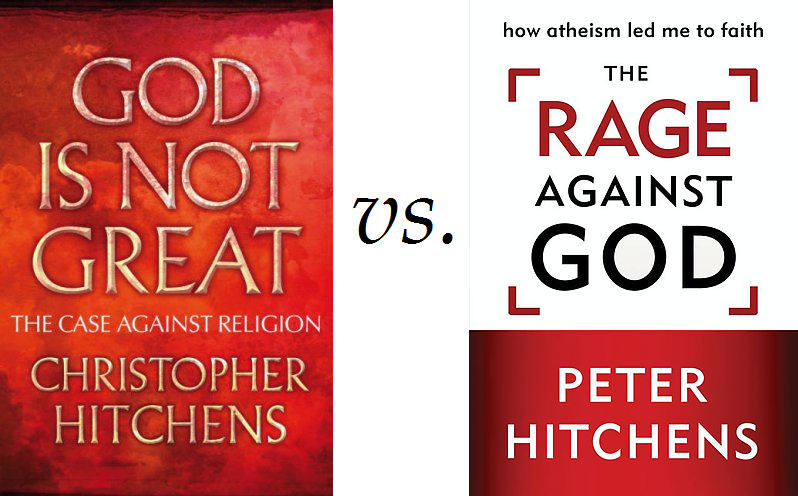
 Image from canbelievable.com
 Image taken from
  I never thought about creativity as a way to enjoy God but why not? Since I believe that God is the creator of all things, I also believe He’s the ultimate source of all things creative.
 This Journey Is My Own