After hearing a good friend’s testimony on Saturday, I was reminded of an important truth. Maybe it wasn’t so much a reminder as it was a revelation: “my” children won’t belong to me. They will be “on loan” from God. As a result, only He only will choose when to lend me His creation. Just like library materials aren’t completely mine or Netflix movies aren’t mine but I’m fully responsible for them when they’re in my possession, so it is with the children bestowed upon me. I must remember that God is not withholding anything that is “rightfully mine.” (Technically, nothing is.) I should look at motherhood as a privilege God will allow me to partake in rather than something I inherently deserve simply because of my gender.
I hope I can remember this as I struggle with childlessness each month.
I’m trying to institute the discipline of praying consciously every evening. I really suck at regularly praying: praying for myself and for others so I’ve reverted to the basics—“Our Father” also known as the Lord’s Prayer.
Our Father in heaven, hallowed be your name. Your kingdom come, your will be done, on earth as it is in heaven. Give us this day our daily bread, and forgive us our debts, as we also have forgiven our debtors. And lead us not into temptation, but deliver us from evil. —Matthew 6:9-13
I grew up in the Catholic Church for the majority of my youth and I attended Roman Catholic school from K through 12 so the ending phrase, “For Yours is the kingdom and the power and the glory forever” is not easy for me to remember or natural to me since it was not taught. Depending on what feels comfortable and genuine, I either give the addition to the Lord’s Prayer a shot (which I inevitably screw up) or leave it out.
But the Our Father is so second nature to me (and many others with a Christian background), it could be vain repetition. I could easily recite this prayer without putting any thought into it. But I’m trying really hard not to. I’m doing my best to consciously say the Our Father while thinking through what I’m saying. Another good way to do this is to paraphrase a few lines (without the Message Bible!).
And Jesus says to “pray like this,” not necessarily “this is the definitive answer on what you should pray.” He encourages us to pray along these lines addressing the following:
To whom we are praying
Where this God is
An important attribute of this God
A promise from this God
Something that prevailsfrom this God over us as humans
Where this God’s kingdom extends
Request to provide for our daily needs (not wants)
Repentance with God
Repentance with others
Request to exhibit one of God’s attributes (such as remaining holy and pure)
Request to avoid Satan or evil deeds
I’m confident there’s more to the Lord’s Prayer than that, but I’m not a Bible commentator. I’m just a layperson trying to force myself to first establish the discipline of speaking to God daily with words I can speak subconsciously before moving on to crafting thoughtful, original prayers. Daily prayer goes against my nature, but especially when engaging in spiritual battle, it’s extremely necessary.
I am able to active think about what I pray even though it could be rote.
I do this task at least once a day. (Usually before sleep for me.)
I pause with each phrase to let the words fully sink in and make sure I understand what I’m saying to God before continuing on with my prayer.
At the end, I will tack on requests for others that I remember. Maybe even include a request for myself.
Establishing discipline is not easy, especially when it comes to prayer—a habit that is not natural to most people. But for many people, mindful, daily recitation of the Our Father is a good place to start.
I’d love to hear other people’s thoughts on establishing the discipline of daily prayer, especially for those new to the faith or uncomfortable with prayer.
I am ADHD central. If you check out my sidebar, you’ll see I’m reading several books at once. I’ll read a few pages in one book then read a few pages in another before jumping to another book. It takes me a long time to finish books this way but it satisfies the variety of information my attention span craves. (I suppose that says I have little to no attention span.)
So I’m not up for reading particularly long Bible passages on most days. In fact, I’m usually averse to it. (The Bible can be so dry and dull in some areas!) But what I do each day—and any Christian can do this—is read one Bible verse. A full sentence. I use YouVersion’s Top Verses to Memorize reading schedule plan for this. Or you can flip open to any book in the Bible. Or go chronologically. Your choice.
I usually find that I’ll read a few more verses to get a proper context and then be done. Some chapters are very long and that often discourages me. But one Bible verse, one simple nugget from God’s word counts as Bible reading and don’t let anyone tell you any different.
If people can read five chapters in a day or the Bible in a year, good for them. Maybe you’re like me—you’re lucky to even crack the holy book open. But just one verse can do it.
But don’t do it mindlessly either. Make that verse count. Read it and think about it. If it’s an odd verse about dashing your enemy in pieces or so-and-so begat so-and-so that doesn’t resonate with you, flip to another verse that makes sense to you. (The Psalms and Proverbs are always good for this.)
Image from my.opera.com (user: yulenka)
When you read about the heavens declaring the glory of God (Ps. 19:1), think about how awe-inspiring it is to see the heavens from the cabin of an airplane. Or the rays of sun floating above the clouds at 40,000 feet above ground. When you read Jonah, see if you find yourself needlessly angry (as he did) or neglectful of any duties you’ve been assigned to. The Bible isn’t mindless and a brief reading of it doesn’t need to be either.
One way I’ve been able to get Biblical truth is by reading books based on Scriptural truth. It’s nice and it’s helpful, but it’s not the Bible. Reading snippets of Charlie Sheen’s recent crazy quotes are comical and (yes, even) awesome, but when you watch the context those snippets came from, the quotes are actually sad. Original context changes everything so one really needs to go straight to the source instead of relying on quotes elsewhere that have the potential to change the meaning.
Just one verse a day: available on BibleGateway.com, Bible.com, Christianity.com, and a whole host of other Bible-based sites. Make a conscious effort to get into the daily habit of reading one verse. You may read more but read at least one verse actively and meditate on it afterwards.
Just like savoring a really delicious, decadent dessert can be more satisfying than scarfing down a burger and fries on the fly, understanding one Bible verse is better than mindlessly flying through the Bible in a year.
Again, to belabor my point:
read one verse,
meditate on it,
then digest it (allow it to affect your life somehow).
For the first time since 2003, I let my LiveJournal Paid account status expire. It’s sort of an end of an era for me because I’d bee paying for and using LiveJournal shortly before I began dating my now husband.
My car that I purchased in September of 2003 is also breaking down. It’s really on its last legs, and I need to get a new one, like, yesterday.
While I’m sad about those things, I’m happy to say that my husband (who appeared in my life around the same time as LiveJournal and my car) is still very much active in my life and showing no signs of leaving me anytime soon or reverting to “Basic (unpaid)” status. (At least, he better not!)
It’s just a small reminder to me that while material things are nice, they all come to an end at some point. Only God and people really matter.
Facebook and Twitter are two social media tools that feed into a person’s habit of self-absorption. (Blogs do a great job of that too.) For me, Facebook and Twitter feed into my delusion of self-importance, one I will attempt to curb. Continue reading “My Fight with Facebook and Twitter”→
God commissions Jonah to preach repentance from sin to the town of Nineveh (or else God will bring calamity upon the town). Jonah, an Israelite, hates the Ninevites who are enemies of Israelites. Jonah’s not really happy about this commission from God because He knows God won’t act ruthlessly against these people so he runs.
He flees. He does all he can to get away from God and the mission he’s been sent to do.
After causing grief in the lives of some sea men who are caught in a tempest, they throw him into the water where he gets swallowed up by a whale for three days and three nights. Jonah repents of his attempt to escape God and his mission and the whale vomits him out on to land.
Jonah, eager to get his mission over with, completes a three-day journey to Nineveh in one day. He walks into the city crying, “Yet forty days and Nineveh will be overthrown.” From what readers can tell, Jonah does not elaborate on this statement; he only repeats that Nineveh’s doomed in 40 days.
And what Jonah expected to happen happens. The Ninevites repent and turn to the God of Israel, asking for forgiveness from their wicked ways.
How frustrating for Jonah. This turn of events makes God spare the lives of these people.
In the last chapter of the book, Jonah sits outside of the city waiting for what he knows will not happen: the destruction and complete annihilation of Nineveh. He rants at God angrily for having the following attributes:
Being gracious
Being merciful
Being slow to anger
Abounding in steadfast love
Relenting from disaster
Jonah hates the fact that God extends these attributes to people he can’t stand and begs for death. God answers him and challenges him:
“Do you have good reason to be angry?”
At first, Jonah doesn’t answer. God leaves it alone.
Then the sun and scorching heat bear down on Jonah and God allows a plant to grow over him to give him some relief. This makes Jonah happy.
Then God allows a worm to kill the plant overnight, leaving Jonah back in the sun and heat again. Again, Jonah puts his life back on the table, begging to die. God calmly asks:
“Do you have good reason to be angry about the plant?”
Jonah rages now: “Yeah, I got good reason to be angry. So angry I want to die!”
God declares checkmate against Jonah, challenging Jonah’s care of a dead plant that he did not labor to produce against God’s care for the people and animals of a big city that He created.
That’s the end of the chapter. No further response from Jonah. My supposition is that either Jonah was probably too pissed off to continue writing what occurred after or that Jonah was too embarrassed by his subsequent reaction that he didn’t record it. Perhaps God, in His loving compassion, didn’t require him to.
In the reading of this chapter, I discover that I am very much like Jonah. I run and flee from God. I don’t like the tasks He’s put before me and I’d rather do something else. And Tuesday night, I was angry—angry unto death.
Like Jonah, I need to accept what God’s mission is for me (job) rather than the mission I want to create for myself (motherhood). To quote Adam Savage from the hit TV show “Mythbusters,” I’ve been telling God:
“I reject your reality and substitute my own!”
It is clear in a variety of ways that God’s mission for me right now is to focus on my job. He is blessing in me in that realm through agent interest, independent contracting, further education, increased job responsibilities, and possibly a new position. I’ve been a complete fool to overlook the ways that God is blessing me in this area.
And while I’d love to become a mother, it’s clear that’s not what God wants for me right now. While it makes me sad and it’s okay for me to grieve over the death of this dream monthly, I need to press forward with the mission God has charged me with rather than trying to run away in an opposite direction, causing grief to those around me. Am as I happy about my mission as Jonah? Probably, since I’ve been hoping for my mission to come to fruition for a while. But I’ll try to accept where God has me and what He wants me to do before I become a mother (should that ever happen).
It should be no secret to anyone on this blog that I suffer from bipolar disorder (formerly manic depression), although more along the lines of the depressive spectrum. I’m pretty positive that this affects my outlook on nearly everything and how I deal with life sometimes.
I can be a real downer. For days, perhaps even weeks, at a time. I am not a sparkling ray of sunshine 365 days a year although you’d never know it if you met me at my job. I’m pretty much Bubbly Betty or Cheerful Charlene.
For a lot of people, it’s disconcerting to meet someone who’s constantly down on themselves and their lives when they’ve got so many blessings and things to be thankful for. But let’s face it: we all have our own problems and our own sinkholes to patch up. Some are a bit more expressive than others.
I am none of those things tonight. I have none of those things tonight. I am empty. I will press forward with life as I struggle to understand how God fits into the every day of life and namely, where He specifically is in mine.
Walking the path of orthodox Christianity is not easy. Yet somehow, every day this is what I inadvertently choose.
I am either a damned fool or bloody brilliant.
All my plans fell through my hands,
They fell through my hands.
All my dreams,
It suddenly seems,
It suddenly seems…
Empty.
“Growth in character and changes in behavior occur in a gradual process after a person becomes a Christian. The mistaken belief that a person must “clean up” his or her own life in order to merit God’s presence is not Christianity. This means, though, that the church will be filled with immature and broken people who still have a long way to go emotionally, morally, and spiritually. As the saying has it: ‘The church is a hospital for sinners, not a museum for saints.'” —Tim Keller, “The Church is Responsible for So Much Injustice” from The Reason for God, p. 55
This quote really spoke to me when I read it. It was one of those quotes in which I sat back and thought, Wow. This is revolutionary. This is why Redeemer Presbyterian in New York City has been so successful. This statement is virtually contrary to what I experienced when I became a born-again Christian.
I entered Christian fundamentalism at 16. One of the key things stressed upon my conversion was repentance. I needed to immediately turn away from my sins and turn to God.
And I think this is one of the key things about Christianity that keeps many people away: not only do they not see a need to turn away from their sins, but even if they did, fundamental Christians capitalize on emotional momentum and force them to “make a decision.”
What I like about what Mr. Keller says here is that full repentance—turning away from sin and to God—is a gradual process. Is it a requirement to be sorry for one’s sins and living in disobedience against God upon conversion? Absolutely. But to expect instantaneous change from a new believer is wrong. If instant change happens, that’s nice but no expectation of immediate change should be placed upon the new believer (which is something that happens all too often). The new believer should be discipled and bathed in the words of the Bible to be able to come to an understanding on his or her own of what God requires. Out of that understanding, through God’s love, and the leading of the Holy Spirit, will a new believer be able to gain ground to turn away from sin. While mature believers should counsel younger ones in the faith in love and according to Scripture, no one likes to be told what to do from someone with a smug and judgmental attitude.
Overall, Mr. Keller’s chapter on “The Church is Responsible for So Much Injustice” in The Reason for God gives great insight into why Christians seem to suffer from gross moral failings opposed to their irreligious counterparts. (A trend I’ve noticed but have always wondered about.)
Since August 2009, I put my life on hold, hoping that our family would have expanded by now. As of February 2011, it hasn’t. And as of February 2011, I realized that I keep putting my life on hold for something that isn’t here and is nowhere close. So I’m moving forward with my life, come what may.
The more I try to plan my life, the more God messes with my plans. I had my life figured out at 18: get married at 25 and children at 30. I got married at 23, but I guess I’m on track for children at 30.
I’ve said before that I don’t adapt well to change. I also don’t really like for God to screw with my plans. (I know, it’s like a 5-year-old telling the 45-year-old, “My way or the highway!” It just doesn’t work.)
So for once, I’m going to try to go along with “the road map on the ground,” as Elizabeth Edwards liked to say. I had a planned road map but it didn’t match the ground so my ideal map needs to change to reflect reality.
I’m contemplating pursuing a Master’s in Library Science, specifically in the field of digital libraries. I enjoy my job at the library immensely and hope this is something I can continue to do at 65 or 75 when I’m old and grumpy. I’m going to take my GRE, apply for scholarships, and hope that I can start a Master’s in the Spring of 2012.
I’ll also plow ahead on my novel. I will rewrite it and revise it this year and begin submitting queries to agents by the end of the year. Just in time before I become swamped with fifteen credits of classes for nearly 2 years.
I am moving forward, adapting my map to match the ground, and open to God screwing with whatever’s in my head. (He does anyway; I’m just going to make a more concerted attempt to not resist Him anymore.)
On Twitter, there’s a semi-joke in which someone will mention a problem (usually trivial) in his or her life followed by the hashtag, #firstworldproblems, meaning that the problem is most likely to occur in a Westernized country, ie, “Ran out of coffee grounds; Gonna be a rough morning. #firstworldproblems.” I’d like to propose the idea, however, that Westernized Christians, typically Americans (as I am one), deal with #firstworldXtianproblems.
During the past few months, I’ve been mulling over the idea that American Christians do not face the same problems as early Christians, Christians in other parts of the world, or even American Christians of yesteryear. The challenges American Christians—who I’ll refer to as ACs from now on—face are unique to this era and country. In fact, the problem for ACs is that… there’s no problem at all. We are much too comfortable.
As I sit comfortably in my bed in the cushy suburbs of Philadelphia, I think of people suffering in growing Christian churches in places like China or Iran. The suffering they experience so much more real than wondering whether I should go to church today because I’m so tired. By admitting Christ and him resurrected, they put their lives on the line for their beliefs. (And their belief in Christ is so real that many of them are martyred for their faith.) I highly believe that 90% of ACs would crack under that pressure if put into the same situation. How real is our suffering? How real is our faith?
When Jesus calls his followers to suffer for him, to give up their lives for him, to follow him, American Christians often think back to the Christians of the early church who were martyred, became fugitives, or met together secretly. ACs (except foreign missionaries) know nothing about fearing for their lives because of their faith, needing to hide their faith from their neighbor or government due to physical repercussions, or meeting in secret because of widespread federal and/or societal persecution. Here are some of the problems ACs typically face:
I don’t like this pastor. I think I’ll find a new church.
No one talks to me here. I could go in and out of church on a Sunday unnoticed.
This church is too big; I want to find one smaller.
There’s not enough activities for my children here.
It’s a dying congregation! Everyone’s old.
No women pastors for me. I’ll find something else.
I don’t like praise and worship bands. This place is too contemporary.
I don’t like that boring piano and organ. Those hymns make me sleepy. I need to find something upbeat!
Ew! They use the NIV [or Bible translation said person doesn’t like] here!
Granted, there are some legitimate concerns ACs may have with churches, ie, if a church isn’t using a Bible as its main source text for the service and sermon, it’s not a real (or good) Christian church. But most of the issues ACs have are trivial.
So what does it mean to forsake all and follow Jesus as ACs? Does it mean not investing in 401(k)s (for future security) in order to donate to a charitable organization that will help others in the here and now? Does it mean giving up the dream of owning a home in order to adopt a child and transform that kid’s life?
As ACs, we face many trivial problems that in the grand scheme of things, aren’t really a big deal. What we consider to be suffering, in many ways, is really just our way of complaining that we’re no longer comfortable. (First-world response: “The heater broke in our church! I’m not going to go to church to freeze my ass off.” A better response: “The heater’s broken at church so we need to bundle up a bit more to ensure that we can stay warm during the service.”)
Any ideas on what true suffering for American Christians looks like? Or do ACs not know what suffering for the sake of Christ really is?
You say you’ll give me eyes in the moon of blindness / A river in a time of dryness /A harbour in the tempest / All the promises we make / From the cradle to the grave / When all I need is you ~ U2, “All I Want Is You” ~
The past few days have been a bit strange. I’ve gotten the sense that even though I’ve tried to turn my back on God and walk away from Him, it’s like I’m in His hand and if I run to jump off the edge, He simply cups the other hand underneath to catch me when I fall so I’m still securely within His grasp.
Rinse and repeat.
I’ve been angry, indifferent, frustrated… a variety of emotions that have me “shaking my fist at God,” so to speak. I try to say, “Look, God, don’t want You, don’t need You, go away” as He’s patiently listening, letting me think I’m escaping for a bit when I suddenly realize that He’s still there, right behind me. In a sense, it’s frustrating.
But on the other hand, rather liberating.
Because as I struggle through this spiritual depression, He’s made it very clear to me that He’s still near. In this odd time of feeling faithless and reading the Bible on and off, I’ve got the oddest assurance of salvation through Jesus Christ. (Considering that assurance of salvation is something I struggle with, this is no small feat.)
My pastor, counselor, and friends have challenged me in my faith and through this struggle, for which I am very thankful. I am still stressed and overwhelmed, but am very much getting the sense that God is here—somewhere—with me.
I haven’t blogged for two days because other pressing matters took my attention on Thursday and then Friday, I was simply too exhausted. But my atheism pretty much ended on Thursday after I nearly got into accident and went into “Thank You, Jesus” mode for being spared. (Mini Coopers should NOT be on the roads!)
In any event, my atheism ended that day, and I decided that I’d probably slowly get back into Christianity. The odd thing is, once I decided that, I haven’t done my devotions or prayed since because I stopped actively thinking about how to avoid God and became a passive Christian again.




 Image from
 Image from blog.sevnthsin.com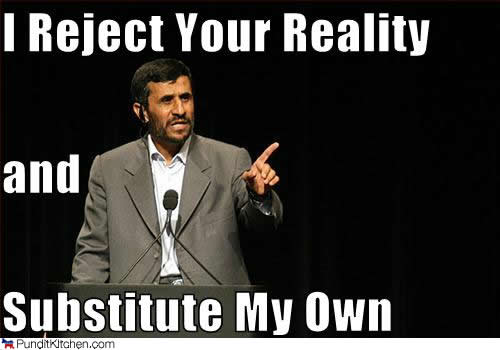


 Image from maps.google.com
 On Twitter, there’s a semi-joke in which someone will mention a problem (usually trivial) in his or her life followed by the hashtag, #firstworldproblems, meaning that the problem is most likely to occur in a Westernized country, ie, “Ran out of coffee grounds; Gonna be a rough morning. #firstworldproblems.” I’d like to propose the idea, however, that Westernized Christians, typically Americans (as I am one), deal with #firstworldXtianproblems.
 This Journey Is My Own