American Christians Don’t Know How to Suffer for Christ

On Twitter, there’s a semi-joke in which someone will mention a problem (usually trivial) in his or her life followed by the hashtag, #firstworldproblems, meaning that the problem is most likely to occur in a Westernized country, ie, “Ran out of coffee grounds; Gonna be a rough morning. #firstworldproblems.” I’d like to propose the idea, however, that Westernized Christians, typically Americans (as I am one), deal with #firstworldXtianproblems.

During the past few months, I’ve been mulling over the idea that American Christians do not face the same problems as early Christians, Christians in other parts of the world, or even American Christians of yesteryear. The challenges American Christians—who I’ll refer to as ACs from now on—face are unique to this era and country. In fact, the problem for ACs is that… there’s no problem at all. We are much too comfortable.

As I sit comfortably in my bed in the cushy suburbs of Philadelphia, I think of people suffering in growing Christian churches in places like China or Iran. The suffering they experience so much more real than wondering whether I should go to church today because I’m so tired. By admitting Christ and him resurrected, they put their lives on the line for their beliefs. (And their belief in Christ is so real that many of them are martyred for their faith.) I highly believe that 90% of ACs would crack under that pressure if put into the same situation. How real is our suffering? How real is our faith?

When Jesus calls his followers to suffer for him, to give up their lives for him, to follow him, American Christians often think back to the Christians of the early church who were martyred, became fugitives, or met together secretly. ACs (except foreign missionaries) know nothing about fearing for their lives because of their faith, needing to hide their faith from their neighbor or government due to physical repercussions, or meeting in secret because of widespread federal and/or societal persecution. Here are some of the problems ACs typically face:

  • I don’t like this pastor. I think I’ll find a new church.
  • No one talks to me here. I could go in and out of church on a Sunday unnoticed.
  • This church is too big; I want to find one smaller.
  • There’s not enough activities for my children here.
  • It’s a dying congregation! Everyone’s old.
  • No women pastors for me. I’ll find something else.
  • I don’t like praise and worship bands. This place is too contemporary.
  • I don’t like that boring piano and organ. Those hymns make me sleepy. I need to find something upbeat!
  • Ew! They use the NIV [or Bible translation said person doesn’t like] here!

Granted, there are some legitimate concerns ACs may have with churches, ie, if a church isn’t using a Bible as its main source text for the service and sermon, it’s not a real (or good) Christian church. But most of the issues ACs have are trivial.

So what does it mean to forsake all and follow Jesus as ACs? Does it mean not investing in 401(k)s (for future security) in order to donate to a charitable organization that will help others in the here and now? Does it mean giving up the dream of owning a home in order to adopt a child and transform that kid’s life?

As ACs, we face many trivial problems that in the grand scheme of things, aren’t really a big deal. What we consider to be suffering, in many ways, is really just our way of complaining that we’re no longer comfortable. (First-world response: “The heater broke in our church! I’m not going to go to church to freeze my ass off.” A better response: “The heater’s broken at church so we need to bundle up a bit more to ensure that we can stay warm during the service.”)

Any ideas on what true suffering for American Christians looks like? Or do ACs not know what suffering for the sake of Christ really is?

“All I Want Is You”

You say you’ll give me eyes in the moon of blindness / A river in a time of dryness /A harbour in the tempest / All the promises we make / From the cradle to the grave / When all I need is you
~ U2, “All I Want Is You” ~

The past few days have been a bit strange. I’ve gotten the sense that even though I’ve tried to turn my back on God and walk away from Him, it’s like I’m in His hand and if I run to jump off the edge, He simply cups the other hand underneath to catch me when I fall so I’m still securely within His grasp.

Rinse and repeat.

I’ve been angry, indifferent, frustrated… a variety of emotions that have me “shaking my fist at God,” so to speak. I try to say, “Look, God, don’t want You, don’t need You, go away” as He’s patiently listening, letting me think I’m escaping for a bit when I suddenly realize that He’s still there, right behind me. In a sense, it’s frustrating.

But on the other hand, rather liberating.

Because as I struggle through this spiritual depression, He’s made it very clear to me that He’s still near. In this odd time of feeling faithless and reading the Bible on and off, I’ve got the oddest assurance of salvation through Jesus Christ. (Considering that assurance of salvation is something I struggle with, this is no small feat.)

My pastor, counselor, and friends have challenged me in my faith and through this struggle, for which I am very thankful. I am still stressed and overwhelmed, but am very much getting the sense that God is here—somewhere—with me.

Thanks to all who have prayed/are praying.

Day 5 (and veritable ending) in the Life of a Christian Atheist

I haven’t blogged for two days because other pressing matters took my attention on Thursday and then Friday, I was simply too exhausted. But my atheism pretty much ended on Thursday after I nearly got into accident and went into “Thank You, Jesus” mode for being spared. (Mini Coopers should NOT be on the roads!)

In any event, my atheism ended that day, and I decided that I’d probably slowly get back into Christianity. The odd thing is, once I decided that, I haven’t done my devotions or prayed since because I stopped actively thinking about how to avoid God and became a passive Christian again.

My faith in practice is rather frustrating.

Day 32 of Enjoying God: Faith (or lack thereof)

If you’re reading this, you probably have no idea how difficult it has been for me to write this series during the past two weeks. I’m contemplating changing the title to “Not Enjoying God.” (Not really, but that’s how I’ve been feeling recently.)

My faith right now is a little shaky. When it rains, it pours. For example, my husband and I are in the midst of being financially drained with this car (and soon, a new[er] one). My husband feels upset, angry, and isolated as if God doesn’t really care. I keep trying to have faith, keep trying to defend that God really is there but really… I’m starting to lose hope myself. There are other issues that pile on top of this that begin to make everything seem very overwhelming.

In the grand scheme of things, we’re not suffering from the worst afflictions in the world: my mother doesn’t have terminal cancer; I don’t have a 4-year-old daughter who drowned in a pool; and none of my immediate family members have been raped (to my knowledge), shot, or killed in a car accident.

But life is life. And there are various issues that I carry in my head and my heart that sometimes make me break down and cry about how unfair everything is. And I pray and pray, hoping that God will hear and rectify the situation but He doesn’t. It’s as if He gives me a polite pat on the back with an unsympathetic smile and tells me to “keep on’ keepin’ on.”

It’s tough to keep my eyes focused on the eternal when the temporal is so damn shitty. I have older friends who desire marriage but God hasn’t brought a potential spouse into their lives; it’s possible He never will. I have friends who desire children and He has repeatedly closed the door on their being able to conceive or adopt. I know people who are looking for a permanent job that will pay the bills and give them some decent health coverage but feel as though they are fighting against a riptide that will soon take them under.

These prayers are part of the mundane but they are ones that have gone on for years. God is God and He can do whatever He wants but it would be nice if He could just answer a few prayers:

  • Give a job with benefits to the woman who just had an emergency hysterectomy so she’s not on the hook for all those hospital bills.
  • Help the family keep their house from foreclosure because they were able to make their mortgage payments just fine until a round of pay cuts were doled out.
  • Make that fertility treatment work for the couple that’s been trying to have a child for 6 years so they’ll finally be able to realize their dream of expanding their family.

I’ve seen God answer my minor prayers. Something as trivial as catching a subway train so I don’t stand out in the cold for an extra 5-10 minutes. Why is He holding out on the bigger ones? I can’t help feel like I’m just a dumb pawn in God’s big chess game:

“Move here, move there. Oops, you shouldn’t have gone there. Here, let me kill you off. In fact, let me just exterminate the whole lot of you.”

“Haha, you! Miserable down there? Want to die? No, I think I’ll just keep you alive and torture you for a bit.”

I believe there’s a God all right, but I’m starting to think He’s really damn cruel no matter what the Bible says.

Day 24 of Enjoying God: Transcendent

Andromeda Galaxy image from apod.nasa.gov

As humans, people are capable of reason and understanding. But I also believe that people are finite and incapable of understanding everything.

Which is why I’m always amused by some atheists or people who believe that humans can perfectly know and understand everything. (I’m also amused by Christians who act similarly as God does not reveal everything through the Bible.) Did the Big Bang really happen? Maybe. But why couldn’t God have been behind the cataclysmic event? Why do science and religion need to constantly be at odds? Why can they not compliment one another?

I enjoyed reading Evolution, Me, & Other Freaks of Nature by Robin Brande. A teenage girl, who used to be part of a fundamental Christian church, is challenged by the theory of evolution in her science class. Her faith is challenged by science and she discovers that science and her faith do not need to contradict each other, but rather that Biblical text can even support scientists’ theories and assertions.

But does everything need to agree? Do humans need to know and understand everything there is to know and understand? I don’t believe so, and I believe it’s rather arrogant for humans to think that it’s possible to know all and understand all.

From a Christian point of view, I have always thought it very odd for finite beings to try and decipher an Infinite Being. It doesn’t make sense to me that something with limits would be able to fully grasp knowledge of something that is limitless.

God has revealed a portion of Himself to us through holy words, through some dreams and visions, through prophets, and most importantly, through His son Jesus. But if there’s more to God that He hasn’t revealed to us, is it absolutely essential that we know what that is? The transcendence of God means that He is beyond (human) comprehension. So instead of constantly trying to figure out who He is and what He’s up to beyond what He’s already told us, let’s simply enjoy Him as He has made Himself known to us.

Anne Rice and association with Christianity

On July 28, famed author Anne Rice posted the following on her Facebook page:

For those who care, and I understand if you don’t: Today I quit being a Christian. I’m out. I remain committed to Christ as always but not to being “Christian” or to being part of Christianity. It’s simply impossible for me to “belong” to this quarrelsome, hostile, disputatious, and deservedly infamous group. For ten years, I’ve tried. I’ve failed. I’m an outsider. My conscience will allow nothing else. [source]

As I said below, I quit being a Christian. I’m out. In the name of Christ, I refuse to be anti-gay. I refuse to be anti-feminist. I refuse to be anti-artificial birth control. I refuse to be anti-Democrat. I refuse to be anti-secular humanism. I refuse to be anti-science. I refuse to be anti-life. In the name of Christ, I quit Christianity and being Christian. Amen. [source]

After quoting a number of verses from Matthew, I Corinthians, and John, she concludes her rejection of Christianity with this:

My faith in Christ is central to my life. My conversion from a pessimistic atheist lost in a world I didn’t understand, to an optimistic believer in a universe created and sustained by a loving God is crucial to me. But following Christ does not mean following His followers. Christ is infinitely more important than Christianity and always will be, no matter what Christianity is, has been, or might become. [source]

I’m not a fan of Rice mainly because I’ve never read her books but I’ve followed her developments and statements with minimal interest since she shifted from atheism to Catholicism. Such extreme pendulum swings in faith never fail to intrigue me. With Rice’s most recent statement, I’m forced to evaluate what it is about Christianity that’s so abhorrent that she’s chosen to renounce Christ?

Before her public repudiation, it’s clear that she was struggling with many unfortunate issues Christianity is associated with. A few Facebook posts from last Tuesday:

Gandhi famously said: “I like your Christ, I do not like your Christians. Your Christians are so unlike your Christ.” When does a word (Christian)become unusable? When does it become so burdened with history and horror that it cannot be evoked without destructive controversy? [source]

Since some of you mentioned the Westboro Baptist Church in comments below, I thought I’d publish this recent news story about them. This is chilling. I wish I could say this is inexplicable. But it’s not. That’s the horror. Given the history of Christianity, this is not inexplicable at all. —Link to “How Young Is Too Young to Learn Hate?” an article about Westboro Baptist Church [source]

This shocking link was provided by a poster below. No wonder people despise us, Christians, and think we are an ignorant and violent lot. I don’t blame them. This kind of thing makes me weep. Maybe commitment to Christ means not being a Christian. —Link to “GOP-linked punk rock ministry says executing gays is ‘moral’” an article about an anti-gay Christian nonprofit [source]

These things associated with Christianity in America are unfortunate not to mention the personal travails Ms. Rice has encountered (losing a daughter to leukemia, losing her husband of 41 years, and watching her other son — a gay rights activist — endure hate-filled rants and threats in the name of Christ). I’ve never experienced any of the things she’s experienced but it makes me understand why she would choose to “quit being a Christian… in the name of Christ.”

I’ve read a lot of posts by Christians questioning whether a person can tell Christ that she loves him but doesn’t want to be part of his Bride (that is, the universal body of Christ—commonly known as the Church). The common conclusion is that no, you can’t love Christ and not be part of his Bride.

But let’s look at this example: let’s say my husband had a close friend and this close friend of his saw me spewing bigoted remarks at other people and talking about killing people who I didn’t believe lived up to my husband’s ideal of how people ought to be. I think my husband’s friend would have every right to say, “Man, I like hanging out with you but I can’t be around when your wife is around. She acts so terrible, it reflects badly on who I am.”

Christians think that the Bride is above criticism because Christ instituted the Church. Jesus loves the Church, yes, but he sees our warts and flaws and knows it is comprised of sinners. And because Christians can be so pompous about what the Bible teaches (right or not), we sometimes drive those within our body away.

Do I agree with Rice’s decision? No, I don’t, but I respect it. I’ve read some other people argue that she should have stayed in the Church (in her instance, the Roman Catholic Church) and tried to effect change from within.

Another personal example, if you’ll allow me: After Obama’s historical election to the presidency in 2008, I chose to leave the Democratic Party. I am a staunchly pro-life (that is, anti-abortion, anti-death penalty) citizen and discovered that the Democratic Party’s stance on abortion had become so relaxed (with President Obama having the most relaxed abortion policies I’ve ever heard of) that there was no way staying in the party would allow me to effect change from within. Even though I am mostly a Democrat in other respects, to continue to be a part of an institution that I had such a fundamental disagreement with would have caused me more harm than good.

However, I’m still a Christian because I believe Jesus has called me to be a part of his Church no matter how many gripes I have with my fellow believers. I believe in the cause of Christ more than I believe in his followers. And I believe that Christ’s message of love and repentance is not just for a certain group of sinners but for all people. Jesus came not to call the righteous but sinners to repentance. He came for those who are sick, not those who are well.

Like I said, I don’t agree with Ms. Rice’s decision but I respect it. They are too many Christians who think that they’re righteous and well just because they claim the name of Christ. Ms. Rice will only return to the Church once she sees more Christians admitting that they’re sickly sinners.

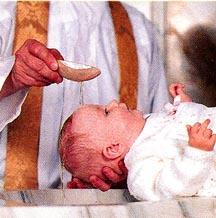
How I see it: paedobaptism (aka infant baptism)

In the discussion of paedobaptism (aka infant baptism), I’ve debated in my head whether I find the practice to be Biblically justified. It’s not that I don’t want to understand how it’s a Biblical practice, I just don’t see how. For the past three years since becoming a member of the Presbyterian Church in America (PCA), I’ve read several articles and discussions at length and have listened to a full sermon on why a church says the practice is Biblical. The issue has gained theological steam in my mind as I watch several church members and dear friends baptize their infants. These events have me contemplating whether this is a necessary event I would like my family to participate in should I ever be blessed with a baby. (Heaven knows I won’t be up to the task of figuring this deep theological stuff out with pregnancy brain.)

After much thought, prayer, and deep discussion with my spouse, I’ve decided I do not support the practice of paedobaptism. While I wouldn’t leave my church over it (I joined knowing this) or rail on anyone who administers baptism to infants (I’m so past those days), it’s a practice I disagree with until I can be convinced otherwise. (My husband is also against the practice, if you’re wondering.)

Here are my reasons why I do not support infant baptism: Continue reading “How I see it: paedobaptism (aka infant baptism)”

Thoughts on He Talk Like A White Boy

I recently completed reading Joseph C. Phillips’s book, He Talk Like A White Boy. You may best remember Mr. Phillips as Lt. Martin Kendall, Denise’s husband, on The Cosby Show.

Now, I gotta be honest. I picked up the book for two reasons:

  1. He was one of few black men I always thought looked handsome (even as a kid!).
  2. The title.

I don’t remember how I initially happened upon it but a few years back, I stumbled across the book, saw the title, and thought to myself, This is on my must-read list before I die. I’m glad to say I wasn’t disappointed.

The title of He Talk Like A White Boy juxtaposed with the image of a black man resonated a chord with me. I instantly thought, I have got to read this. Black people have told me all my life that I talk like a white person. I can identify with this.

And identify I did.

Although 20 years of age separate us, it’s amazing how he was able to relate his experiences from things that occurred in the 60s and 70s, only for me to identify with much of it having grown up in the 80s and 90s.

The book seems to be a collection of essays that he’s written in the last decade (the book was published in 2006) so it was divided up into five primary sections:

  1. Character
  2. Family
  3. Faith
  4. Idealism
  5. Identity

But before I even cracked open the book, I read the book jacket. Apart from acting, Phillips also works as a conservative commentator and was a heavy supporter of George W. Bush. Knowing that made me cringe. (If I’m honest, I still do.) But I determined that I would give Phillips a chance to speak to me on politics. Even though I’m not wholly a conservative, I feel that black conservatives are some of the most disdained members in the political arena. Keeping this in mind, I decided to be, you know, tolerant.

While I enjoyed reading the first three sections, I most enjoyed the latter two. (Although, admittedly, the book got progressively better going through each section.)

Once I stumbled upon the essay Black Conservatism, Black Pride at the beginning of the Idealism section, I took a deep breath before I began. Be tolerant and open-minded, I told myself. You never know what you might learn.

I indeed learned quite a bit. Despite the fact that I am not a Dubya fan, I am willing to give credit where credit is due. Phillips pointed out that Bush II had the most racially diverse presidential administration in the nation’s history up until the Obama administration. And despite all cries that Dubya was a committed racist, he consistently had a black Secretary of State during each term he held. (He could have easily replaced a white person in Colin Powell’s spot after Mr. Powell resigned.) So I’ll give Dubya credit for having the most diverse administration of his day.

Phillips also goes on to speak about Dubya’s journey to Africa and the money he pledged to fight HIV/AIDS and terrorism in the country. For a president who many cried were racist (especially as a result of Katrina), Bush II appeared to be more of a friend to black people than he is given credit for.

*Discuss Black Conservatism, Black Pride – how he could not be a Republican back in the civil rights era, how it’s okay for blacks to believe whatever they want on the political spectrum (my view)

*Discuss Reparations, Affirmative Action, how he attacks inherent racism in Hollywood and liberals

*Then speak of identity – how it impacted me and how I was able to relate to it: Black & White, especially.

Exploring my meaning and purpose in life

Who am I?

As a product of the instant gratification generation, I want to know the answer to who I am and why I’m here NOW. The two basic questions I grapple with on a daily basis are:

  1. What is my meaning in life?
  2. What is my purpose?

And when I say daily basis, I mean, daily as in every single day. Usually the standard answer I give myself is the first Q&A from the Westminster Shorter Catechism:

What is the chief end of man? To glorify God and to enjoy Him forever.

I’m not sure how those in the Reformed faith applied that practically in 1646 but I’m trying to figure out what that looks like in 2010.

Does that result in a list of do’s and don’ts? There’s a call to holiness: how do I live that out? I’m called to be a Christian witness 24/7 but often feel like a practical atheist—speak of God, am interested in the things of theology but do not really talk about my faith outside of… my faith. Quite the impractical faith. But I’m not trying to get into a discussion of evangelism and witnessing right now. I’m trying to figure out how to accomplish my meaning and purpose in life by glorifying God and enjoying Him forever.

Glorifying God and enjoying Him look different for each person. We are not all the same and we are not called to be alike. While we all have the same chief end, how that plays out looks different in an individual’s life.

So in my life, what does glorifying God look like? Well, to be quite honest, I’m not so sure. As a Christian though, there are certain things I am called to:

  • Being a good wife
  • Seeking after God through prayer, Bible reading, worship with His community, and the preaching of His word
  • Exercising my spiritual gift of mercy (and supposedly encouragement) to those who need it (in and out of the body of Christ)

And how do I enjoy Him? You’ve got me. I know how to enjoy His creation but enjoying Him is an entirely different matter.

Three Lessons I Learned Today

1. I am prideful. My husband pointed out that it’s a trait I get from my mother, attempting to look like I have it all together. “Well, when you put it that way…” I said with a shiver running down my spine. My mother’s need to look like she had it all together kept my father from getting treatment for his paranoia/schizophrenia and kept his sisters out of the dark for too many years. Knowing that quality exists in me is a rather scary thought.

I went to a prayer retreat today and again, tried to act like I had it all together. Truth be told, I’ve been going through a spiritual drought. My prayers have consisted of nothing but “why” questions and I earnestly began to pray that I would seek to “know God more than my need to understand Him.” Through the guidance and counseling of two wonderful Christian friends, they prayed with me and reminded me of God’s promises through Scripture. My faith began to see the beginnings of restoration. Continue reading “Three Lessons I Learned Today”

Ashamed to be Haitian

I used to be ashamed to be of my Haitian descent for the longest time. In a lot of ways, I’m not fully over it.

What good have I ever had to say about the country my parents came from? The Haitian government receives aid, money, and supplies and simply squanders it. The Haitian Creole (Kreyol) language is not popular. Eighty percent of the Haitian people are poor. In fact, Haiti, which shares an island with the Dominican Republic, is the poorest country in the Western Hemisphere. My parents came from a third-world country. Once I learned that, I figured there was nothing to be proud of in that.

So many times I wished I was something else, something cool. Like, oh say, Hispanic. It’s cool to be Hispanic. Spanish is a useful language to know, especially in America.

Now, it’s suddenly cool to be Haitian. Haiti, devastated by a recent earthquake, is at the forefront of the world’s mind. Suddenly, this tiny, pathetic country is huge, taking up space on the airwaves, dominating news, and pressing upon people’s hearts. Blink-182 had their signature rabbit running with the Haitian flag on a T-shirt and Lady Gaga created a T-shirt with the word “Haiti” and Haitian flag colors dominating throughout. As I type this, “Hope For Haiti Now” is on TV with the biggest and brightest of superstars lending their support to raise funds for a country that has none. People who never gave a damn before give a damn now.

I can lift my head up a little higher when I speak to people about my heritage now. Everyone seems to want to connect with a Haitian. A country that no one cared about—a throwaway nation—is suddenly front and center. When I used to tell people that my parents were from Haiti, at times, I received baffled looks, sometimes accompanied with a “Where’s that?” Everyone had heard of Cuba; Haiti? Not so much.

When the earthquake first occurred and aid poured into Haiti, I initially got upset at everyone, including myself. “Oh NOW, suddenly you care about Haiti?” Haiti has never been okay, Haiti has never been doing fine, and no one cared to assist a country that was sorely in need. Now that hundreds of thousands of people have died, the world’s eyes have been opened.  The plight of the Haitian people has come before the world and moved it to compassion by giving generously to a country that may never be able to give back.

But 10 days later after the great 7.3-magnitude Haiti earthquake, I’m at a point where I can reassess and think, “Wow. People actually care. This shows the best of people. The world is moved to assist a country that it never cared about before or even knew existed.” And I must thank God. I’m not happy that so many people had to die for the world to notice Haiti. But I’m humbled by seeing the outpouring of love and support from other nations including one that I am a citizen of—the United States. I am humbled by seeing both old and young being pulled alive out of rubble days after they should have been dead. I know only a merciful God can sustain them.

The faith of the Haitian people has humbled me. To hear stories of Haitians singing “How Great Thou Art” in spite of death and decay humbles me. Yes, there is voodoo common throughout the country but Haitians are a people of faith—a people who believe in God. In fact, they refer to Him as “bon Dieu” (translated as “good God”) in almost everything. A common saying tacked on at the end of many plans is “si Dieu veux” (translated to “God willing”). Perhaps it’s superstitious and embedded in the culture but it’s there. A belief in God—not just any god but a good God—is pervasive. And it’s the faith that has carried many Haitians through, it’s the faith that has carried many buried people found alive, and it’s the faith that will help rebuild the country.

And that is something I can be proud of.

—————-
Now playing: David Nevue – How Great Thou Art
via FoxyTunes

Still searching for an identity… part 4

Faith, religion, God.

I’m currently reading Joel Osteen‘s latest book, “It’s Your Time” and annoying the Twitter world with my #ItsYourTime-related tweets. I subscribe to a brand of Christianity that does not subscribe to Osteen’s brand of Christianity. So why am I reading this book if I don’t agree with him? Several reasons actually:

  1. Curiosity. It’s fun to make fun of what we know of the guy but has the message changed?
  2. Legitimate criticism. I tire of Christians panning books they’ve never read and never intend to read. I want to legitimately pan–or extol (unlikely, though)–Osteen’s book.
  3. Amusement. His optimism amuses me. He’s easy to make fun of and his anecdotes are sometimes hilarious.
  4. Thought-provoking. In a twisted mode of thought, I enjoy finding verses and passages that are distorted or examples that are taken out of context. Makes me feel like a mini-theologian. 🙂

The trouble with Osteen’s book, however, is that there’s a lot of truth in it but there’s enough wrong to make it bad.

I’ve been assuming the majority of my readers are Christians who know about Joel Osteen in some way. Maybe you’re not a Christian or you’re simply not familiar with Mr. Osteen. Well, let me introduce you.

Osteen, in a nutshell, is considered by his supporters as “America’s voice of hope and encouragement” while his critics deem him as a proponent of the prosperity “health and wealth” gospel. Indeed, I can see truth from both sides.

Osteen writes in a very personable way, which makes it feel as though he’s speaking specifically to each reader. If a person is feeling discouraged, no doubt, Osteen has the gift of encouragement. (Even renowned evangelical Mars Hill pastor Mark Driscoll has said such!) Osteen is the ultimate optimist. (Sometimes, he’s so optimistic, it’s sickening.) I’m very much a cynic and a pessimist. I really have no business reading this book.

But there are scriptural truths that he does point out that I, as a pessimist, tend (and prefer) to overlook. For example, God tells us to ask Him for anything. (Matt. 7:7-11) And Osteen can even legitimately use Matthew 21:22 (“And whatever things you ask in prayer, believing, you will receive”) if he so desires. I’d argue in favor of Osteen if someone tried to tell me Matthew 21:22 wasn’t a straightforward verse. (Even taken in its context.)

However, where Osteen errs is by leading readers to believe that God will “fulfill all the desires of your heart.” (Psalm 37:4) If we look at the entire verse, which says, “Delight yourself also in the LORD, and He shall give you the desires of your heart,” it implies first “delighting in God.” When believers delight themselves in God (and the things He’s after), the desires of their heart will align with the desires of God’s heart, not the desires of our sinful lusts. James 4:2-3 again confirms this by saying:

You lust and do not have. … You do not have because you do not ask. You ask and do not receive, because you ask amiss, that you may spend it on your pleasures.

Christians sometimes have this fallacious belief that God does not answer prayer. Not so! God does answer prayer with a yes or no. Sometimes he doesn’t always answer right away but he does eventually answer our requests. Often, some people take a “no” response to really mean “no answer” because we keep hoping He’ll say “yes.” I can pray my little heart out to be as rich as Bill Gates one day. It’s legitimate to ask for it since I can ask for anything. However, I must also realize it’s legitimate for God to flat-out–or take His time in saying no.

Has Osteen’s book helped me to dream a bit bigger? Well, yes–cautiously.

Osteen has a pretty big God and I think Osteen’s critics sometimes view through the lens of cynicism and try to make God so much smaller than He really is. Truth is, no one can contain God–not you, not me, not Osteen, and definitely not Osteen’s book or sermons. Can God bestow much wealth and restore full health upon you? He sure can; I believe that. Will He? I don’t know but the likelihood of obtaining exceptional wealth is slim. (When I mean “wealth” here, I’m referring to the Americanized definition of “massive accumulation of wealth,” which is the language Osteen uses.)

And that’s where I have a problem with Osteen. Can God do anything? Yes. Will He do anything and everything simply because I ask Him to? No. God is not a magic genie we must rub the right way. This becomes a works-based, legalistic theology. People must obey God simply because He is God. He created all things and therefore gets to make the rules whether we like it or not.

But Osteen tells his readers if they believe they’ll receive whatever they ask for and have enough faith, it will happen. He can support this with Matthew 21:22, remember? How do you refute that?

Osteen’s book so far has challenged me to have more faith in what I pray for. Not some lackadaisical half-hearted faith (“Well, I’ll pray for it, but it likely won’t happen.”) but a real, bold faith that could position me for embarrassment if it doesn’t happen (“I prayed for it and have NO DOUBT it’ll come to pass!”). I’m challenged to pray with confidence, not expecting disappointment but with a realistic mindset that my prayers may not be answered exactly the way I’d like them to be. (I prayed fervently for an Italian husband and got NOWHERE CLOSE to that. But I wouldn’t trade my husband of Anglo-Sax/German heritage for any other man.) God’s ways and wisdom are so much higher than mine. He’s a better judge of good things that I could ever be.

Relationship with God.

Lately, I’ve felt like a Christian in name only (CINO). I hear all these stories of how Christians are told by non-Christians that they “are different” and that “there’s something special” about them they’d like to also have. That has never, ever happened to me. I’ve never been able to “lead” one person to the Lord. Does that make me a terrible Christian?

I know Christians are supposed to be “in the world and not of it.” I always got the impression that the life of a Christian would look different than that of a non-Christian–in a positive way. However, when I evaluate my life, I’m troubled that I can’t tell a marked difference than that of my neighbor who doesn’t go to church. And I don’t mean simply n a public level; I also take my private life into consideration. I don’t get on my knees by my bed to pray every night. In fact, my prayers are sometimes quick requests made in passing throughout the day. I don’t have consistent devotions daily. (There’s that lack of consistency thing again.) I can sometimes go days without talking to God or reading His word. I know my eternal salvation doesn’t depend on me (and thank God it doesn’t because I’m doing a lousy job right now) but James emphasizes “faith without works is dead” (2:17, 26). What good is the salvation I have if I don’t put it into action? My life in Christ needs to be alive and vibrant–and I’m at a total loss as to how to do that. (Remember my little problem with consistency and regularity?)

I want to be different for God. I want to be a God-honoring Christian. I want to put my faith in action. I want to have a close, personal relationship with God. I want to revere God better than I revere any celebrity but I also want to be comfortable with Him like He’s my “homie.” So comfortable I can cry, “Abba, Father, Daddy” (Rom. 8:15, Gal. 4:6) in the most personal and familiar of terms.

Until then, I feel as though I am back at square one like when I was Catholic 12 years ago–CINO. I am hungry and desperate for a savior. I want–perhaps need–to accept Jesus all over again. Maybe daily.

Isn’t consistency key?
—————-
Now playing: Sara Groves – Maybe There’s A Loving God
via FoxyTunes

Still searching for an identity… part 1

Topics running through my mind:

1. Motherhood
2. Writing
3. Blogging
4. Career
5. Job with contract company
6. Faith/religion/God
7. Lack of consistency/discipline
8. My personality–always desiring to be someone I’m not

My mind is all over the place so let’s cover all of these topics–though not necessarily in the order listed and definitely not all in this post. I ended up handwriting this post first (over the course of 2 hours) which amounted to about 22 pages on 7″ x 10.5″ paper. So this will end up being a series posted during the next couple of days.

Desiring to be someone who I’m not.

So I follow all these pastors, read their works, and am a HUGE fan, ie, Driscoll, Piper, and Packer. And sometimes I find myself wishing I could be a pastor. But it’s not a dream I can entertain myself with since I’m a woman and believe the Bible says only men are called to be pastors. (Yes, I know female pastors exist but I don’t agree with them.)

I find myself thinking, “Lord, why didn’t you make me a guy?” But then I realize guys don’t have it easy. My husband has to answer to God for the spiritual direction of our family. No, thank you. It’s hard enough being responsible for myself!

I used to look at other women and wish I could be them–wish I could have their lives or attractive personalities. For example, my older cousin whom I love to pieces. I used to look up to her. In a lot of ways, I still do. She’s strong, she’s a leader, she’s independent, and she’s self-sufficient. But she’s not married and doesn’t have any good prospects in the wings (that I know of). Do I really want to trade my husband just so I can have all those awesome qualities I am so envious of?

Funny like one of my friends. I wish I was like that. I wish I was sweet and likable like my former co-worker. I wish I didn’t care what anyone thinks of me like my hairdresser. Who looks at me and gets envious? But I guess we can all find something to envy about each other, right?

Materialism.

I’m not incredibly materialistic but hoo boy am I definitely tied to the things of this world. Money–something I use, not necessarily for material possessions (although my current obsession is IKEA), but to make myself feel worth something.

Yes, I tie my worth to whether I make money. Problem is, I don’t know how to “untie” it.

When a month or two go by and I haven’t heard from the company I contract for regularly, I self-deprecate and get negative:

“What if they never call me again?”

“What if my work from last time was sloppy and they just don’t want me back?”

“I’m not earning any money so I’m worthless and useless and my life and existence is pointless.”

But when I work, I suddenly have worth again. I feel I can legitimately complain about how the government uses taxpayer money because 30 percent of what I make goes to state and federal taxes each quarter. (That’s what happens when you’re self-employed in the U.S.!)

But what will happen when my full-time job becomes mother? How will I assess my worth then? Will I be worthless as a citizen of the U.S. with a purposeful existence as a mother? Will I be more useful than I’ve ever been?

My husband argues that his money is my money. I don’t see it that way. I have access to his earnings and he can have access to mine (I make significantly less than he does so he rarely has any need to) but I treat our earnings separately. I tithe off of whatever I make and don’t ever touch his. I don’t feel right taking his money–that he worked 40+ hours during the week to earn–and acting like it’s mine. I didn’t earn it. I never showed up to code a software program; he did. It’s not mine. And buying a gift with his money just seems so lame; I’d rather buy nothing at all. I can inherit it if he dies–just like I inherit my mother’s house–but it’s not mine until then. I’ll use it with his permission but I’ll always feel indebted to him. (Out-of-context verse time!) The borrower is slave to the lender.

Motherhood.

I don’t like to publicly discuss this in detail since I never wanted kids before last year and still really wrestle with the prospect of being a responsible, mature mom. As a result, I’ll be brief: I’m impatient, I’m disappointed every time I find out I’m not expecting, and I wonder if motherhood is what God has for me.