Jesus died and rose again. As a result of that action, he has forever reconciled us to God the Father.
This is not controversial stuff.
As a result, there’s not much that I need to ponder over or challenge because in this chapter, Bell lays out Jesus’ sacrifice and he does it in a way that is typically Bell-esque: with original analogies and beautiful images. (When Bell says something clearly, it’s like bursting into a magnificent, clear blue sky after having endured dark shadows and lingering gray storm clouds.)
Bell makes an interesting point that I’ve never heard of before (but find interesting): he speaks of John (the Gospel writer) numbering signs all throughout his gospel. In John 11, Lazarus’s resurrection from the dead is the seventh sign of Jesus outlined in the gospel.
Now ask: Is the number seven significant in the Bible?
Does it occur in any other prominent place?
Well, yes, it does. In the poem that begins the Bible. The poem speaks of seven days of creation.
But there’s one more sign in John’s Gospel. In chapter 20 Jesus rises from the dead. Now that’s a sign. The eighth sign in the book of John. Jesus rises from the dead in a garden. Which, of course, takes us back to Genesis, to the first creation in a . . . garden.
I’d never thought of things that way. Reading that blew my mind. Either John was a very clever fiction writer or God is the most amazing storyteller I’ve ever read.
What is John telling us?
It’s the eighth sign, the first day of the new week, the first day of the new creation. The resurrection of Jesus inaugurates a new creation, one free from death, and it is bursting forth in Jesus himself right here in the midst of the first creation.
… John is telling a huge story,
one about God rescuing all of creation.
I love it. John continually points his readers back to Genesis, constantly linking Jesus to God the Father, Creator of all things from the get-go (Jn 1:1) and here it is even in the final chapters of John and I totally missed it. It’s beautiful to see.
As I’m breathless and taken away by this beauty of discovering the symbolism in everything Jesus does, Bell kind of ruins it for me in “wait-a-minute-this-is-a-book-about-heaven-hell-and-the-fate-of-every-person-who-ever-lived-moment.”
How many people, if you were to ask them why they’ve left church, would give an answer something along the lines of, “It’s just so . . . small”?
No one I know really. They’d have tons of other reasons but it wouldn’t be that.
Of course.
A gospel that leaves out its cosmic scope will always feel small.
A gospel that has as its chief message avoiding hell or not sinning will never be the full story.
A gospel that repeatedly, narrowly affirms and bolsters the “in-ness” of one group at the expense of the “out-ness” of another group will not be true to the story that includes “all things and people in heaven and on earth.”
And I think to myself, this is not the gospel. No one I know or have ever heard in Biblical Protestantism (ok, and Anabaptism) preaches a message like this. (I’m not sure whether to classify this as a false dichotomy.) The main message of the gospel, which can often be “ye must be born again,” is always Christ and Him crucified.
Why was Christ crucified? To reconcile us to God. Why do we need to be reconciled to God? That’s a question, or more accurately, a tension we can be free to leave fully intact.
[This is part IX of a multi-part series on Rob Bell’s book, Love Wins. Note: Chapter 4 has been broken up into four parts. Chapter 4, part I can be found here, part II can be found here, and part III can be found here.]
Let’s work on closing out Chapter 4 of this book.
“Many people find Jesus compelling, but don’t follow him, because of the parts about ‘hell and torment and all that.’ Somewhere along the way they were taught that the only option when it comes to Christian faith is to clearly declare that a few, committed Christians will ‘go to heaven’ when they die and everyone else will not, the matter is settled at death, and that’s it. One place or the other, no looking back, no chance for a change of heart, make your bed now and lie in it . . . forever.
Not all Christians have believed this, and you don’t have to believe it to be a Christian. The Christian faith is big enough, wide enough, and generous enough to handle that vast a range of perspectives.“
“Speaking of Jesus, I don’t find many non-Christians that are hung up on the idea of hell. Most I know are hung up on the idea that Jesus is the only way. And that the Bible says seemingly contradictory things and you’d be stupid/silly to believe it. “
Doctrinally, I’d say that’s been my experience too. In general, I’d say non-Christians tend to be averse to Christianity because of the hypocrisy that runs rampant among many of its believers. (Side note: Tim Keller makes a great point in regard to why this behavior occurs among Christians in Chapter 4 of The Reason for God.)
As for the bolded part about not having to believe in eternal punishment/torment/hellfireandbrimstone to be a Christian, I start to get a little twitchy. Because even though the basic rule of being a Christian is being an obedient (“as best as you can”) follower of Jesus, there are all these doctrines and tenets that have kind of been hung around his neck as part of the package and it’s difficult to distinguish whether you can have Jesus without hell.
[This is part VIII of a multi-part series on Rob Bell’s book, Love Wins. Note: Chapter 4 has been broken up into four parts. Chapter 4, part I can be found here and part II can be found here.]
The other issue I have with Bell here about the talk of restoration, renewal, and if you will, “second chances,” is that gives people no real need to come to Jesus. If all things will be restored in the end anyway, what does it matter if I murder someone I don’t like? Even if I get fried in the electric chair, I still eventually go to heaven maybe after a brief punishment for my sins.
Although hell is an unlikable place to be or to think about (if you take it seriously), the purpose of it is for judgment. When a criminal is deemed guilty in a court of law and sentenced to life in prison, he is sent to jail until death. Hell is the jail that never ends.
But let’s take a step back. And we’ve got to follow Bell’s suppositions (maybe? he is careful to never outright say he believes these things) about what ultimately brings God glory in the end: restoration, reconciliation, and renewal.
Think of a terrible, gruesome time during the 20th century. I’ll give you a hint of where I’m going with this: think of a specific dictator who murdered tens of millions of people. There are at least three you can choose from.
1 . . .
2 . . .
This is kind of like an annoying email forward now, isn’t it?
3.
I’ll choose Hitler since Stalin and Tse-Tung (Zedong) don’t seem to strike the same kind of terror into Westerners’ hearts.
Adolf Hitler is estimated to be responsible for at least 12 million murders during World War II. When Hitler shot himself in the head on April 30, 1945, his soul plunged into eternity.
Now, tell me:do you think it brings God more glory to simply excuse such heinous and irresponsible actions and allow Hitler into heaven on the basis of restoration and reconciliation or does it bring God more glory to judge Hitler and punish him for the atrocities he committed while he was on this earth? Because remember, he was never tormented in the way that he tormented so many others (not just the Jewish and the Polish but anyone who either opposed him or didn’t fit his ideal Aryan race).
Maybe I’m a cold, heartless bitch, but I want God to make Hitler pay for the things that he never had to pay for on earth. It’s a little disappointing to think that Hitler could toy with the lives of 12 million people and after death still be reconciled to God after maybe a “season” in hell.
God is God, and yes, He could totally restore Adolf Hitler to himself in the era of restoration to come, but I just don’t see humans (who would have exacted the harshest sentences possible on Hitler before executing him) being more lenient than God.
Then Bell says things that make me wonder, Does this jive with scripture?
“To be clear, again, an untold number of serious disciples of Jesus across hundreds of years have assumed, affirmed, and trusted that no one can resist God’s pursuit forever, because God’s love will eventually melt even the hardest of hearts.”
Maybe. But again, it doesn’t necessarily mean that it remains that way forever. I think specifically of Pharaoh who had a rather hard heart against the people of Israel who wanted to be freed and even “repented” (!) of his temporarily “melted” heart (after a series of wearying plagues) and decided to go after them as they made their way out of Egypt. The Bible gives no indication that Pharaoh ever repented of his re-hardened heart.
“Could God say to someone truly humbled, broken, and desperate for reconciliation, ‘Sorry, too late’? Many have refused to accept the scenario in which somebody is pounding on the door, apologizing, repenting, and asking God to be let in, only to hear God say through the keyhole: ‘Door’s locked. Sorry. If you have been here earlier, I could have done something. But now, it’s too late.’
As it’s written in 2 Timothy 2, God ‘cannot disown himself.'”
These many who have refused need to reread the Parable of the Ten Virgins in Matthew 25:1-13. Not that I like the idea of a door being shut permanently, but if we’re going off of scripture, we have to seriously consider what it says.
“At the center of the Christian tradition since the first church have been a number who insist that history is not tragic, hell is not forever, and love, in the end, wins and all will be reconciled to God.”
And in Christianity, there are some people who choose not to directly align themselves with views they believe so that they may not be tied directly with these specific beliefs therefore they speak of themselves in generalities so that it is almost impossible to pin them down with what they believe.
[This is part VII of a multi-part series on Rob Bell’s book, Love Wins. Note: Chapter 4 has been broken up into four parts. Chapter 4, part I can be found here.]
Image by dan | FreeDigitalPhotos.net
Bell continues to expound on the concept that “In the Bible, God is not helpless . . . powerless . . . and [not impotent].” Then he goes through a series of his Socratic questions about God’s attributes and why people were created. And he frames the discussion in a way where it’s either God gets what God wants by all people being saved or God doesn’t get what God wants because some do not.
“God in the end doesn’t get what God wants, it’s declared, because some will turn, repent, and believe, and others won’t. . . . Although we’re only scratching the surface of this perspective—the one that says we get this life and only this life to believe in Jesus—it is safe to say that this perspective is widely held and passionately defended by many in our world today.”
There’s your orthodox Christian view of hell.
“Others hold this perspective (that there is this lifetime and only this lifetime in which we all choose one of two possible futures), but they suggest a possibility involving the image of God in each of us.”
I have no idea what perspective this is. A Christian mystic perhaps?
“. . . And then there are others who can live with two destinations, two realities after death, but insist that there must be some kind of ‘second change’ for those who don’t believe in Jesus in this lifetime. . . . At the heart of this perspective is the belief that, given enough time, everybody will turn to God and find themselves in the joy and peace of God’s presence. The love of God will melt every hard heart, and even the most ‘depraved sinners’ will eventually give up their resistance and turn to God.”
Bell never comes right out and says it but the reader gets the sense that this is the view Bell aligns with. And this view sounds a bit like purgatory in the sense that there’s judgment for wrongs committed in this lifetime but that eventually God will soften a person’s heart and allow him or her to turn to God’s presence. It’s a nice view but one that I don’t see supported by the Bible despite Bell’s support of Jesus saying in Matthew 19 that “there will be a ‘renewal of all things’ and Paul in Colossians 1 says that through Christ “God was pleased to . . . reconcile to himself all things, whether things on earth or things in heaven.” (The context of Colossians seems to actually make Bell’s argument weaker because Paul mentions a few verses later “if indeed you continue in the faith” giving me the impression that one needs to believe in Paul’s teachings.)
To add further support to his argument, Bell drops heavyweight names like church fathers Clement of Alexandria and Origen from the third century and Gregory of Nyssa and Eusebius in the fourth century. Clement of Alexandria appears to have been a gnostic Christian (a Christian form widely rejected by mainstream and orthodox Christianity), Origen was Clement’s student, and Eusebius seems to have been a student of Origen (although Eusebius seems to be considered well-respected church father). Bell pushes the idea that “the ultimate reconciliation of all people to God” was a common belief in early church history. (Hence, how Bell gets away with saying at the beginning of the book that he’s not saying anything new.)
Although Bell tries to shift the wording slightly to attribute it to these early church fathers, the reader can tell that Bell’s leanings are in this category:
“Central to their trust that all would be reconciled was the belief that untold masses of people suffering forever doesn’t bring God glory. Restoration brings God glory; eternal torment doesn’t. Reconciliation brings God glory; endless anguish doesn’t. Renewal and return cause God’s greatness to shine through the universe; never-ending punishment doesn’t.”
I am really, really resisting the urge to fire Socrates-like hypothetical questions after that quote because it haughtily assumes that Bell knows the mind of God and what brings Him glory in the end. Do I want suffering, torment, anguish, and punishment to be what brings God glory? No. And does it? From my perspective, I don’t think so either. But I can’t determine anything from God’s perspective. Since I am not God, I cannot definitely determine or define what brings Him glory.
[This is part VI of a multi-part series on Rob Bell’s book, Love Wins. Note: Chapter 4 has been broken up into four parts. Chapter 4, part II can be found here.]
Bell starts off this chapter with actual statements from church websites:
“The unsaved will be separated forever from God in hell.”
“Those who don’t believe in Jesus will be sent to eternal punishment in hell.”
“The unsaved dead will be committed to an eternal conscious punishment.”
Then Bell notes what I’m assuming he considers a paradox:
“Yet on these very same websites are extensive affirmations of the goodness and greatness of God, proclamations and statements of beliefs about a God
who is
‘mighty,’
‘powerful,’
‘loving,’
‘unchanging,’
‘sovereign,’
‘full of grace and mercy,’
and “all-knowing.'”
Bell seems to pit these statements as either/or as though they contradict one another. God can’t be all of this good stuff and then do all this seemingly bad stuff that these websites claim. But the Old Testament God was a wrathful, violent (yes, I said it) God who also possessed immense mercy and love. When he brought judgment, it wasn’t because He did it out of spite or was a temperamental woman suffering from PMS; He would send out repeated warnings for repentance before executing judgment. There is justice for wrongdoing, and Bell seems to overlook that God is not only a loving parent but a fair and just judge. Later on, he writes:
“I point out these parallel claims:
that God is mighty, powerful, and “in control”
and that billions of people will spend forever apart from this God, who is their creator,
even though it’s written in the Bible that
‘God wants all people to be saved and to come to a knowledge of the truth’ (1 Tim. 2)
So does God get what God wants?
How great is God?
Great enough to achieve what God sets out to do,
or kind of great
medium great
great most of the time,
but in this,
the fate of billions of people,
not totally great.
Sort of great.
A little great. …
Will all people be saved,
or will God not get what God wants?
Does this magnificent, mighty, marvelous God fail in the end?”
First of all, why does God’s greatness need to be defined solely by our view of what great should look like? Just like the Bible verse that says that God will give us the desires of our heart… well, no. I haven’t gotten all the desires of my heart. God changes my heart to make my desires reflect his. I can’t inject my view of what my desires should look like and allege that God has failed me on this. In this, I think Bell’s view of God and His greatness is actually too small.
Bell continues on with scripture verses that support God’s affirmations of love and determination to save everyone. He quotes Paul in Philippians 2:
“‘Every knee should bow . . . and every tongue acknowledge that Jesus Christ is LORD, to the glory of God the Father.’
All people.
The nations.
Every person, every knee, every tongue.”
Agreed. But those actions may not necessarily be done willingly.
[This is part V of a multi-part series on Rob Bell’s book, Love Wins. Note: Chapter 3 on Hell has been broken up into two parts due to excessive length. You can find Part I on this chapter here.]
Image from Jesus-is-lord.com
Bell retells the parable of the rich man and Lazarus because it the most vivid description of hell we get from Jesus. Bell points out that the rich man is able to communicate from hell to Abraham in heaven. After ignoring the poor man Lazarus in his earthly life, the rich man in death wants Lazarus to serve him. He tells Abraham that he wants Lazarus to fetch him water then says that he wants Lazarus to warn his family of what’s in store for them in the afterlife. Bell’s perspective of this is insightful:
“The rich man wants Lazarus to serve him.
In their previous life, the rich man saw himself as better than Lazarus, and now, in hell, the rich man still sees himself as above Lazarus. It’s no wonder Abraham says there’s a chasm that can’t be crossed. The chasm is the rich man’s heart! It hasn’t changed, even in death and torment and agony. He’s still clinging to the old hierarchy. He still thinks he’s better.”
Bell expounds on this some more:
“Jesus teaches again and again that the gospel is about a death that leads to life. It’s a pattern, a truth, a reality that comes from losing your life and then finding it. This rich man Jesus tells us about hasn’t yet figured that out. He’s still clinging to his ego, his status, his pride—he’s unable to let go of the world he’s constructed, which puts him on the top and Lazarus on the bottom, the world in which Lazarus is serving him.
He’s dead, but he hasn’t died.
He’s in Hades, but he still hasn’t died the kind of death that actually brings life.
He’s alive in death, but in profound torment, because he’s living with the realities of not properly dying the kind of death that actually leads a person into the only kind of life that’s worth living.”
I don’t disagree with Bell at all. A few pages later, Bell says brilliantly:
“There is hell now,
and there is hell later,
and Jesus teaches us to take both seriously.”
With this statement, Bell does not deny the existence of hell “in this age or the age to come.” However, I do take issue with a few statements prior to this, mainly because they start to muddy the waters, making his belief in hell seem unclear.
When Bell talks about the rich man, he says that the rich man “hasn’t yet figured out… that the gospel is about a death that leads to life.”
Yet is an important word. Its implication is that even though something hasn’t happened, there’s a chance it will. I believe Bell is a man who chooses his words carefully so when he says that the rich man hasn’t yet figured things out, it’s because if he does (in due time), only then he’ll be able to live “the only kind of life that’s worth living.” Bell doesn’t give any indication that the rich man is forever shut out and utterly without hope. In fact, through Bell’s recounting of this parable, the dead rich man has more hope of life than I’ve ever heard before.
From pages 75-79, I infer that Bell thinks people can get a second chance after death if their heart changes. When Bell says that the “chasm… can’t be crossed [because] the chasm is the rich man’s heart,” I get the impression that if the rich man’s heart changes, then the chasm can be crossed.
So far, I’ve concluded that Bell believes hell exists (on earth and in the afterlife) and that people really do go there. It also seems that Bell says people can choose hell because they cling to an “old hierarchy” of belief but if that belief changes, they can move from death unto life even in the afterlife. Statements later on in the chapter give me the impression that Bell believes judgment for hell isn’t final, isn’t forever, and that God is a god of second and third and multiple chances until we get it right.)
“What we see in Jesus’s story about the rich man and Lazarus is an affirmation that there are all kinds of hells, because there are all kinds of ways to resist and reject all that is good and true and beautiful and human now, in this life, and so we can only assume we can do the same in the next.”
Is your head swimming yet? Because mine is.
Bell goes on to reference Ezekiel 16 in showing that Sodom and Gomorrah’s fortunes will eventually be restored and quotes Jesus in Matthew 10 in which he says, “It will be more bearable for Sodom and Gomorrah on the day of judgment than for you.”
Bell overall concludes that if there’s still hope for a place like Sodom and Gomorrah (widely thought of as being condemned forever) that no longer exists, then there’s hope for everyone outside of these towns.
“Failure, we see again and again, isn’t final,
judgment has a point,
and consequences are for correction.”
I don’t know how Bell lines up this thinking with Hebrews 9:27 which says “it is appointed for man to die once, and after that comes judgment.” Hence, the book raises a question for me that the author never addresses.
Bell begins to wrap Chapter 3 up by speaking of restoration and quotes how God over and over in the Old Testament, especially among the minor prophets, speaks of the restoration of His people. (Note: there is no wider context given among the 10 verses on restoration that Bell lists.)
Bell ends Chapter 3 with this summed-up definition:
“To summarize, then, we need a loaded, volatile, adequately violent, dramatic, serious word to describe the very real consequences we experience when we reject the good and true and beautiful life that God has for us. We need a word that refers to the big, wide, terrible evil that comes from the secrets hidden deep within our heats all the way to the massive, society-wide collapse and chaos that comes when we fail to live in God’s world God’s way.
And for that,
the word ‘hell’ works quite well.
Let’s keep it.”
Chapter 3 proved to be a rather challenging chapter on a variety of levels. It forced me to read critically and question nearly everything Bell said, especially since many things weren’t referenced. I’ve already challenged some of Bell’s statements in order to, perhaps, paint a fuller view of the issue, but really, I really just touched the tip of the iceberg.
On page 80, Bell uses Jesus’ statement from Matthew 26 in which he says those who “draw the sword will die by the sword” is used to depict Jesus a strictly non-violent, pacifist leader.
“To respond to violence with more violence, according to Jesus, is not the way of God.”
But in Luke 22, Jesus encourages his disciples to sell their cloaks and buy swords. When the disciples said they had two swords, Jesus replied, “It is enough.” (v. 38) If Jesus was extremely non-violent, he would’ve discouraged the disciples from even arming themselves. Even though Jesus worked through non-violent means, it doesn’t mean that his entire philosophy is non-violent. I think Jesus really embodies Ecclesiastes 3, but on this issue, his philosophy was probably more along the lines of verse 8’s “a time for war and a time for peace.” To paint Jesus as a total pacifist would be misleading.
Or perhaps let’s also tackle page 89 in which Bell says:
“‘Satan,’ according to Paul, is actually used by God for God’s transforming purposes. Whoever and whatever he means by that word ‘Satan,’ there is something redemptive and renewing that will occur when Hymenaeus and Alexander are ‘handed over.'”
Whoever and whatever? Of a lot of the things in this book, I have a serious problem with Bell flippantly referring to Satan as “whoever” and “whatever.” And it makes me extremely uncomfortable that a pastor of a Christian church (emergent, it may be) puts Satan’s name in quotes as if he’s not real, doesn’t exist, or is a figure of speech for something humans are not sure about. Having read Brian McLaren’s A New Kind of Christianity, this kind of talk gets dangerously close to how McLaren refers to evil.
Toward the end of the chapter, Bell pulls out the Greek dictionary again to translate words better, and I’m frustrated and annoyed. It’s not just Bell who does this though; many pastors do this. It’s as if they’re saying “the English translations we have aren’t good enough so let me translate this a little bit better for you.” Really, of the 25+ English translations out there, you couldn’t find one suitable to reference so you had to retranslate it for us yourself? Do people who don’t have access to the Greek worse off because they’re reading something that hasn’t been translated to its best extent in the English language? (Oh, this kind of stuff gets my rankles up.)
On the flip side, Bell sometimes says things that challenge my conceptions of how I traditionally view Christian teaching. If I can’t find anything scripturally that contradicts Bell, I pause to consider the truth in what he says. (Mind you, I will not take an opposing view against Bell simply to be belligerent.) I quote pages 82-83 because I think his view his striking:
“Many people in our world have only ever heard hell talked about as the place reserved for those who are ‘out,’ who don’t believe, who haven’t ‘joined the church.’ Christians talking about people who aren’t Christians going to hell when they die because they aren’t . . . Christians. People who don’t believe the right things.
But in reading all of the passages in which Jesus uses the word ‘hell,’ what is so striking is that people believing the right or wrong things isn’t his point. He’s often not talking about ‘beliefs’ as we think of them—he’s talking about anger and lust and indifference. He’s talking about the state of his listeners’ hearts, about how they conduct themselves, how they interact with their neighbors, about the kind of effect they have on the world.
Jesus did not use hell to try and compel ‘heathens’ and ‘pagans’ to believe in God, so they wouldn’t burn when they die. He talked about hell to very religious people to warn them about the consequences of straying from their God-given calling and identity to show the world God’s love.
This is not to say that hell is not a pointed, urgent warning or that it isn’t intimately connected with what we actually do believe, but simply to point out that Jesus talked about hell to the people who considered themselves ‘in,’ warning them that their hard hearts were putting their ‘in-ness’ at risk, reminding them that whatever ‘chosen-ness’ or ‘election’ meant, whatever special standing they believed they had with God was always, only, ever about their being the kind of transformed, generous, loving people through whom God could show the world what God’s love looks like in flesh and blood.”
Overall, Chapter 3 was a challenging read. There was no way to walk away from it without thinking one of three things:
My beliefs and preconceptions on hell have been reinforced as a result of reading this chapter.
My beliefs and preconceptions on hell have changed as a result of reading this chapter. (Even if it’s ever so slightly.)
My beliefs and preconceptions on hell have not changed as a result of reading this chapter but have given me a different perspective that I had never considered before.
I fall into category 3. I certainly don’t agree with Bell on a lot of things, but he makes many good points about not overlooking the hell here and now in favor of the hell later. Christians would do well to heed some of his warnings.
[This is part IV of a multi-part series on Rob Bell’s book, Love Wins. Note: Chapter 3 on Hell has been broken up into two parts due to excessive length.]
Rob Bell reiterates the typical conceptions of hell to start with:
So he goes on to show his readers every instance of the word “hell” in the Bible. He tackles the Hebrew scriptures which make references to Sheol, “a dark, mysterious, murky place people go when they die” (p. 65) and “a few references to the realm of the dead.” Bell concludes that “affirmations of the power of God over all of life and death” and “God’s presence and involvement in whatever it is that happens after a person dies” are consistently found in the Old Testament scriptures “yet very little is given in the way of actual details regarding individual destinies.” He wraps up this section by saying the Old Testament “isn’t very articulated or defined on what happens after a person dies” (p. 67).
“Sheol, death, and the grave in the consciousness of the Hebrew writers are all a bit vague and ‘underwordly.’ For whatever reasons, the precise details of who goes where, when, how, with what, and for how long simply aren’t things the Hebrew writers were terribly concerned with.”
I still have no arguments with Bell so far. But then, he tackles the New Testament and things start to get interesting.
“The actual word ‘hell’ is used roughly twelve times in the New Testament, almost exclusively by Jesus himself. The Greek word that gets translated as ‘hell’ in English is the word ‘Gehenna.’ Ge means ‘valley,’ and henna means ‘Hinnom.’ Gehenna, the Valley of Hinnom, was an actual valley on the south and west side of the city of Jerusalem.
Gehenna, in Jesus’s day, was the city dump.
People tossed their garbage and waste into this valley. There was a fire there, burning constantly to consume the trash. Wild animals fought over scraps of food along the edges of the heap. When they fought, their teeth would make a gnashing sound. Gehenna was the place with the gnashing of teeth, where the fire never went out.”
I had never heard of Gehenna translated in this way. (Again, my frustration with the lack of references.) So I had to put the book down and go searching to verify everything on my own. And what I discovered surprised me. Continue reading “Love Wins Analysis: Chapter 3: Hell (Part I)”→
[This is part II of a multi-part series on Rob Bell’s book, Love Wins.]
Here is a summary of Chapter 1 for you:
For real. When I began reading Chapter 1, I thought to myself, I’ve read this already. No, I hadn’t. But I’d heard it before through Bell’s video dramatization. (Most of his speech is derived from Chapter 1.)
And so I breeze through Chapter 1 because yes, some of it I’ve heard before but then there are parts that make me wince:
Renee Altson’s experience of being raped by her father while reciting the Lord’s Prayer and assorted Christian hymns
The Eastern European Muslim who refuses to set foot in a Christian Church in America because the Christians in his country rounded up all the Muslims and executed them
The Christians who stand on a busy street corner with signs, screaming into bullhorns about judgment and hell
Bell goes through a list of possible things on how one gets to heaven. Actions? Behaviors? He even picks apart the “personal relationship with Jesus” answer that many Christians offer.
“The problem, however, is that the phrase “personal relationship” is found nowhere in the Bible.”
Bell has me in agreement with him on this issue. So far. Then he has to go and ruin it by saying the following:
“Nowhere in the Hebrew scriptures, nowhere in the New Testament. Jesus never used the phrase. Paul didn’t use it. Nor did John, Peter, James, or the woman who wrote the Letter to the Hebrews.”
[This is a multi-part series on Rob Bell’s book, Love Wins.]
I could say that I read 198 pages of a mind-bending Q & A & Q book. If Love Winswere a movie, it would be Inception.
Great script. Lots of confusion. And there’s never-ending speculation about how it ends.
I suppose I should warn readers that Love Wins isn’t my first experience with Rob Bell’s books. I read Velvet Elvis upon the recommendation of a friend and loved it so much that I bought my own copy. I hope to reread Velvet Elvis again next year, but I remember wanting to give it 5 stars because it was that good.
Love Wins… not so much. But not for the reasons you’d think or the ones that have been commonly cited.
Does Bell deny the existence of hell? Eh, kind of, not really.
Does Bell assert that Jesus is the only way to heaven? Well… yeah.
Is Bell a universalist? Eh… yes and no. That’s a loaded question that requires explanation and is never explained quite clearly (to me anyway).
There are a ton of blogs that are currently bashing Rob Bell, labeling him as a universalist, bewailing that he’s walked away from the orthodox Christian faith, and written him off as a heretic.
I see Rob Bell being used of God in unimaginable ways to His honor and His glory.
Bell has jumpstarted the conversation on heaven and hell—who gets to those places and who doesn’t. His recent book, Love Wins, and interviews have challenged Christians to coherently defend what they believe (I Peter 3:15) on this issue. It used to be easy to say “Those who believe in the gospel of Christ go to heaven; those who don’t go to hell.” But now Christians have been challenged to put an attitude of love behind this statement or whatever they believe about hell, and that’s not so easy.
I’m not sure I agree with Mr. Bell on many aspects of this issue. (I’ll reserve definitive judgment until I complete my reading of his recent book.) I believe Scripture is clear that hell exists in some form: whether it be the literal torment of hellfire and brimstone or simply eternal separation from God (which would be a colloquial description of “hell” compared to heaven in God’s presence) as exemplified through C.S. Lewis’s The Great Divorce. Perhaps Mr. Bell believes this too.
Mr. Bell’s aims, however orthodox Christians may interpret them, are noble. (Some may use the terminology “sincerely wrong” here.) Bell, with Love Wins, is attempting to bridge that nasty gap between Christians who seem to say “Nanny nanny boo boo, I’m going to heaven, and you’re going to burn in a lake of fire” and unbelievers who think “even if I live a good life, remain a law-abiding citizen, and don’t blaspheme God, I still go to hell? That’s just not fair.”
It’s not. And the truth is, God isn’t fair.
But Christians need to be sensitive to the fact that the doctrine of hell is an offensive doctrine and any explanation of it should come from an attitude of love and not one of haughtiness. This is what Mr. Bell is attempting to do. I give him tons of credit for the attempt. Whether the execution comes off well (in my opinion) will remain to be seen.
Ashes were used in ancient times, according to the Bible, to express mourning. Dusting oneself with ashes was the penitent’s way of expressing sorrow for sins and faults.
I had planned on going to an Ash Wednesday service at a local Roman Catholic Church today but for various reasons, won’t be able to do so.
In 1998 when I became a born-again Christian in an independent fundamental Baptist (IFB) church, the pastor (a former Roman Catholic) bashed Catholicism in nearly every possible way. Even though I finished my schooling in a Roman Catholic school 2 years later, I walked away with a dismal view of Catholicism, its doctrines, and practices.
In 2007, I joined the Presbyterian Church of America (PCA). The PCA is a Christian denomination that still holds to Bible-based preaching but offers a liturgical structure similar to that of the Roman Catholic Church. After nearly a decade of being away from a liturgical service, my first experience back was a little jarring. After years of making the Bible as my only authority for Scriptural practices as an IFB, becoming a Presbyterian had me reconsidering church traditions as a supplement (not a replacement) to the Bible for Scriptural practices. (Let me state here that the Bible’s authority takes precedence over church traditions and church traditions clearly in conflict with Scripture should be modified or discarded.)
An acquaintance on a message board who went from born-again Protestant Christianity to Roman Catholicism once suggested that Catholicism may appeal to me again in the future. The likelihood of my becoming a Roman Catholic again is slim, but in a way, he was prophetic: the structure, reverence, and church traditions within Catholicism have reappealed to me and continue to do so the older I get (in age and in faith). Continue reading “Ash Wednesday and the Beginning of Lent”→
After hearing a good friend’s testimony on Saturday, I was reminded of an important truth. Maybe it wasn’t so much a reminder as it was a revelation: “my” children won’t belong to me. They will be “on loan” from God. As a result, only He only will choose when to lend me His creation. Just like library materials aren’t completely mine or Netflix movies aren’t mine but I’m fully responsible for them when they’re in my possession, so it is with the children bestowed upon me. I must remember that God is not withholding anything that is “rightfully mine.” (Technically, nothing is.) I should look at motherhood as a privilege God will allow me to partake in rather than something I inherently deserve simply because of my gender.
I hope I can remember this as I struggle with childlessness each month.
I’m trying to institute the discipline of praying consciously every evening. I really suck at regularly praying: praying for myself and for others so I’ve reverted to the basics—“Our Father” also known as the Lord’s Prayer.
Our Father in heaven, hallowed be your name. Your kingdom come, your will be done, on earth as it is in heaven. Give us this day our daily bread, and forgive us our debts, as we also have forgiven our debtors. And lead us not into temptation, but deliver us from evil. —Matthew 6:9-13
I grew up in the Catholic Church for the majority of my youth and I attended Roman Catholic school from K through 12 so the ending phrase, “For Yours is the kingdom and the power and the glory forever” is not easy for me to remember or natural to me since it was not taught. Depending on what feels comfortable and genuine, I either give the addition to the Lord’s Prayer a shot (which I inevitably screw up) or leave it out.
But the Our Father is so second nature to me (and many others with a Christian background), it could be vain repetition. I could easily recite this prayer without putting any thought into it. But I’m trying really hard not to. I’m doing my best to consciously say the Our Father while thinking through what I’m saying. Another good way to do this is to paraphrase a few lines (without the Message Bible!).
And Jesus says to “pray like this,” not necessarily “this is the definitive answer on what you should pray.” He encourages us to pray along these lines addressing the following:
To whom we are praying
Where this God is
An important attribute of this God
A promise from this God
Something that prevailsfrom this God over us as humans
Where this God’s kingdom extends
Request to provide for our daily needs (not wants)
Repentance with God
Repentance with others
Request to exhibit one of God’s attributes (such as remaining holy and pure)
Request to avoid Satan or evil deeds
I’m confident there’s more to the Lord’s Prayer than that, but I’m not a Bible commentator. I’m just a layperson trying to force myself to first establish the discipline of speaking to God daily with words I can speak subconsciously before moving on to crafting thoughtful, original prayers. Daily prayer goes against my nature, but especially when engaging in spiritual battle, it’s extremely necessary.
I am able to active think about what I pray even though it could be rote.
I do this task at least once a day. (Usually before sleep for me.)
I pause with each phrase to let the words fully sink in and make sure I understand what I’m saying to God before continuing on with my prayer.
At the end, I will tack on requests for others that I remember. Maybe even include a request for myself.
Establishing discipline is not easy, especially when it comes to prayer—a habit that is not natural to most people. But for many people, mindful, daily recitation of the Our Father is a good place to start.
I’d love to hear other people’s thoughts on establishing the discipline of daily prayer, especially for those new to the faith or uncomfortable with prayer.
I am ADHD central. If you check out my sidebar, you’ll see I’m reading several books at once. I’ll read a few pages in one book then read a few pages in another before jumping to another book. It takes me a long time to finish books this way but it satisfies the variety of information my attention span craves. (I suppose that says I have little to no attention span.)
So I’m not up for reading particularly long Bible passages on most days. In fact, I’m usually averse to it. (The Bible can be so dry and dull in some areas!) But what I do each day—and any Christian can do this—is read one Bible verse. A full sentence. I use YouVersion’s Top Verses to Memorize reading schedule plan for this. Or you can flip open to any book in the Bible. Or go chronologically. Your choice.
I usually find that I’ll read a few more verses to get a proper context and then be done. Some chapters are very long and that often discourages me. But one Bible verse, one simple nugget from God’s word counts as Bible reading and don’t let anyone tell you any different.
If people can read five chapters in a day or the Bible in a year, good for them. Maybe you’re like me—you’re lucky to even crack the holy book open. But just one verse can do it.
But don’t do it mindlessly either. Make that verse count. Read it and think about it. If it’s an odd verse about dashing your enemy in pieces or so-and-so begat so-and-so that doesn’t resonate with you, flip to another verse that makes sense to you. (The Psalms and Proverbs are always good for this.)
Image from my.opera.com (user: yulenka)
When you read about the heavens declaring the glory of God (Ps. 19:1), think about how awe-inspiring it is to see the heavens from the cabin of an airplane. Or the rays of sun floating above the clouds at 40,000 feet above ground. When you read Jonah, see if you find yourself needlessly angry (as he did) or neglectful of any duties you’ve been assigned to. The Bible isn’t mindless and a brief reading of it doesn’t need to be either.
One way I’ve been able to get Biblical truth is by reading books based on Scriptural truth. It’s nice and it’s helpful, but it’s not the Bible. Reading snippets of Charlie Sheen’s recent crazy quotes are comical and (yes, even) awesome, but when you watch the context those snippets came from, the quotes are actually sad. Original context changes everything so one really needs to go straight to the source instead of relying on quotes elsewhere that have the potential to change the meaning.
Just one verse a day: available on BibleGateway.com, Bible.com, Christianity.com, and a whole host of other Bible-based sites. Make a conscious effort to get into the daily habit of reading one verse. You may read more but read at least one verse actively and meditate on it afterwards.
Just like savoring a really delicious, decadent dessert can be more satisfying than scarfing down a burger and fries on the fly, understanding one Bible verse is better than mindlessly flying through the Bible in a year.
Again, to belabor my point:
read one verse,
meditate on it,
then digest it (allow it to affect your life somehow).
God commissions Jonah to preach repentance from sin to the town of Nineveh (or else God will bring calamity upon the town). Jonah, an Israelite, hates the Ninevites who are enemies of Israelites. Jonah’s not really happy about this commission from God because He knows God won’t act ruthlessly against these people so he runs.
He flees. He does all he can to get away from God and the mission he’s been sent to do.
After causing grief in the lives of some sea men who are caught in a tempest, they throw him into the water where he gets swallowed up by a whale for three days and three nights. Jonah repents of his attempt to escape God and his mission and the whale vomits him out on to land.
Jonah, eager to get his mission over with, completes a three-day journey to Nineveh in one day. He walks into the city crying, “Yet forty days and Nineveh will be overthrown.” From what readers can tell, Jonah does not elaborate on this statement; he only repeats that Nineveh’s doomed in 40 days.
And what Jonah expected to happen happens. The Ninevites repent and turn to the God of Israel, asking for forgiveness from their wicked ways.
How frustrating for Jonah. This turn of events makes God spare the lives of these people.
In the last chapter of the book, Jonah sits outside of the city waiting for what he knows will not happen: the destruction and complete annihilation of Nineveh. He rants at God angrily for having the following attributes:
Being gracious
Being merciful
Being slow to anger
Abounding in steadfast love
Relenting from disaster
Jonah hates the fact that God extends these attributes to people he can’t stand and begs for death. God answers him and challenges him:
“Do you have good reason to be angry?”
At first, Jonah doesn’t answer. God leaves it alone.
Then the sun and scorching heat bear down on Jonah and God allows a plant to grow over him to give him some relief. This makes Jonah happy.
Then God allows a worm to kill the plant overnight, leaving Jonah back in the sun and heat again. Again, Jonah puts his life back on the table, begging to die. God calmly asks:
“Do you have good reason to be angry about the plant?”
Jonah rages now: “Yeah, I got good reason to be angry. So angry I want to die!”
God declares checkmate against Jonah, challenging Jonah’s care of a dead plant that he did not labor to produce against God’s care for the people and animals of a big city that He created.
That’s the end of the chapter. No further response from Jonah. My supposition is that either Jonah was probably too pissed off to continue writing what occurred after or that Jonah was too embarrassed by his subsequent reaction that he didn’t record it. Perhaps God, in His loving compassion, didn’t require him to.
In the reading of this chapter, I discover that I am very much like Jonah. I run and flee from God. I don’t like the tasks He’s put before me and I’d rather do something else. And Tuesday night, I was angry—angry unto death.
Like Jonah, I need to accept what God’s mission is for me (job) rather than the mission I want to create for myself (motherhood). To quote Adam Savage from the hit TV show “Mythbusters,” I’ve been telling God:
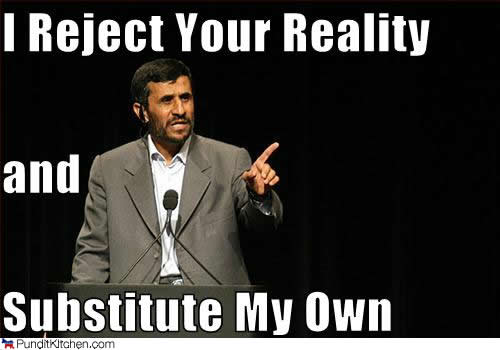
“I reject your reality and substitute my own!”
It is clear in a variety of ways that God’s mission for me right now is to focus on my job. He is blessing in me in that realm through agent interest, independent contracting, further education, increased job responsibilities, and possibly a new position. I’ve been a complete fool to overlook the ways that God is blessing me in this area.
And while I’d love to become a mother, it’s clear that’s not what God wants for me right now. While it makes me sad and it’s okay for me to grieve over the death of this dream monthly, I need to press forward with the mission God has charged me with rather than trying to run away in an opposite direction, causing grief to those around me. Am as I happy about my mission as Jonah? Probably, since I’ve been hoping for my mission to come to fruition for a while. But I’ll try to accept where God has me and what He wants me to do before I become a mother (should that ever happen).


 Let’s work on closing out Chapter 4 of this book.



 Image from goldenspikelutheran.files.wordpress.com


 Image from
 This Journey Is My Own