Faith, religion, God.
 I’m currently reading Joel Osteen‘s latest book, “It’s Your Time” and annoying the Twitter world with my #ItsYourTime-related tweets. I subscribe to a brand of Christianity that does not subscribe to Osteen’s brand of Christianity. So why am I reading this book if I don’t agree with him? Several reasons actually:
- Curiosity. It’s fun to make fun of what we know of the guy but has the message changed?
- Legitimate criticism. I tire of Christians panning books they’ve never read and never intend to read. I want to legitimately pan–or extol (unlikely, though)–Osteen’s book.
- Amusement. His optimism amuses me. He’s easy to make fun of and his anecdotes are sometimes hilarious.
- Thought-provoking. In a twisted mode of thought, I enjoy finding verses and passages that are distorted or examples that are taken out of context. Makes me feel like a mini-theologian. 🙂
The trouble with Osteen’s book, however, is that there’s a lot of truth in it but there’s enough wrong to make it bad.
I’ve been assuming the majority of my readers are Christians who know about Joel Osteen in some way. Maybe you’re not a Christian or you’re simply not familiar with Mr. Osteen. Well, let me introduce you.
Osteen, in a nutshell, is considered by his supporters as “America’s voice of hope and encouragement” while his critics deem him as a proponent of the prosperity “health and wealth” gospel. Indeed, I can see truth from both sides.
Osteen writes in a very personable way, which makes it feel as though he’s speaking specifically to each reader. If a person is feeling discouraged, no doubt, Osteen has the gift of encouragement. (Even renowned evangelical Mars Hill pastor Mark Driscoll has said such!) Osteen is the ultimate optimist. (Sometimes, he’s so optimistic, it’s sickening.) I’m very much a cynic and a pessimist. I really have no business reading this book.
But there are scriptural truths that he does point out that I, as a pessimist, tend (and prefer) to overlook. For example, God tells us to ask Him for anything. (Matt. 7:7-11) And Osteen can even legitimately use Matthew 21:22 (“And whatever things you ask in prayer, believing, you will receive”) if he so desires. I’d argue in favor of Osteen if someone tried to tell me Matthew 21:22 wasn’t a straightforward verse. (Even taken in its context.)
However, where Osteen errs is by leading readers to believe that God will “fulfill all the desires of your heart.” (Psalm 37:4) If we look at the entire verse, which says, “Delight yourself also in the LORD, and He shall give you the desires of your heart,” it implies first “delighting in God.” When believers delight themselves in God (and the things He’s after), the desires of their heart will align with the desires of God’s heart, not the desires of our sinful lusts. James 4:2-3 again confirms this by saying:
You lust and do not have. … You do not have because you do not ask. You ask and do not receive, because you ask amiss, that you may spend it on your pleasures.
Christians sometimes have this fallacious belief that God does not answer prayer. Not so! God does answer prayer with a yes or no. Sometimes he doesn’t always answer right away but he does eventually answer our requests. Often, some people take a “no” response to really mean “no answer” because we keep hoping He’ll say “yes.” I can pray my little heart out to be as rich as Bill Gates one day. It’s legitimate to ask for it since I can ask for anything. However, I must also realize it’s legitimate for God to flat-out–or take His time in saying no.
Has Osteen’s book helped me to dream a bit bigger? Well, yes–cautiously.
Osteen has a pretty big God and I think Osteen’s critics sometimes view through the lens of cynicism and try to make God so much smaller than He really is. Truth is, no one can contain God–not you, not me, not Osteen, and definitely not Osteen’s book or sermons. Can God bestow much wealth and restore full health upon you? He sure can; I believe that. Will He? I don’t know but the likelihood of obtaining exceptional wealth is slim. (When I mean “wealth” here, I’m referring to the Americanized definition of “massive accumulation of wealth,” which is the language Osteen uses.)
And that’s where I have a problem with Osteen. Can God do anything? Yes. Will He do anything and everything simply because I ask Him to? No. God is not a magic genie we must rub the right way. This becomes a works-based, legalistic theology. People must obey God simply because He is God. He created all things and therefore gets to make the rules whether we like it or not.
But Osteen tells his readers if they believe they’ll receive whatever they ask for and have enough faith, it will happen. He can support this with Matthew 21:22, remember? How do you refute that?
Osteen’s book so far has challenged me to have more faith in what I pray for. Not some lackadaisical half-hearted faith (“Well, I’ll pray for it, but it likely won’t happen.”) but a real, bold faith that could position me for embarrassment if it doesn’t happen (“I prayed for it and have NO DOUBT it’ll come to pass!”). I’m challenged to pray with confidence, not expecting disappointment but with a realistic mindset that my prayers may not be answered exactly the way I’d like them to be. (I prayed fervently for an Italian husband and got NOWHERE CLOSE to that. But I wouldn’t trade my husband of Anglo-Sax/German heritage for any other man.) God’s ways and wisdom are so much higher than mine. He’s a better judge of good things that I could ever be.
Relationship with God.
Lately, I’ve felt like a Christian in name only (CINO). I hear all these stories of how Christians are told by non-Christians that they “are different” and that “there’s something special” about them they’d like to also have. That has never, ever happened to me. I’ve never been able to “lead” one person to the Lord. Does that make me a terrible Christian?
I know Christians are supposed to be “in the world and not of it.” I always got the impression that the life of a Christian would look different than that of a non-Christian–in a positive way. However, when I evaluate my life, I’m troubled that I can’t tell a marked difference than that of my neighbor who doesn’t go to church. And I don’t mean simply n a public level; I also take my private life into consideration. I don’t get on my knees by my bed to pray every night. In fact, my prayers are sometimes quick requests made in passing throughout the day. I don’t have consistent devotions daily. (There’s that lack of consistency thing again.) I can sometimes go days without talking to God or reading His word. I know my eternal salvation doesn’t depend on me (and thank God it doesn’t because I’m doing a lousy job right now) but James emphasizes “faith without works is dead” (2:17, 26). What good is the salvation I have if I don’t put it into action? My life in Christ needs to be alive and vibrant–and I’m at a total loss as to how to do that. (Remember my little problem with consistency and regularity?)
I want to be different for God. I want to be a God-honoring Christian. I want to put my faith in action. I want to have a close, personal relationship with God. I want to revere God better than I revere any celebrity but I also want to be comfortable with Him like He’s my “homie.” So comfortable I can cry, “Abba, Father, Daddy” (Rom. 8:15, Gal. 4:6) in the most personal and familiar of terms.
Until then, I feel as though I am back at square one like when I was Catholic 12 years ago–CINO. I am hungry and desperate for a savior. I want–perhaps need–to accept Jesus all over again. Maybe daily.
Isn’t consistency key?
—————-
Now playing: Sara Groves – Maybe There’s A Loving God
via FoxyTunes

 Image from goldenspikelutheran.files.wordpress.com
 Andromeda Galaxy image from apod.nasa.gov
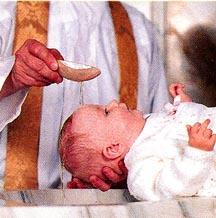 In the discussion of paedobaptism (aka infant baptism), I’ve debated in my head whether I find the practice to be Biblically justified. It’s not that I don’t want to understand how it’s a Biblical practice, I just don’t see how. For the past three years since becoming a member of the Presbyterian Church in America (PCA), I’ve read several articles and discussions at length and have listened to a full sermon on why a church says the practice is Biblical. The issue has gained theological steam in my mind as I watch several church members and dear friends baptize their infants. These events have me contemplating whether this is a necessary event I would like my family to participate in should I ever be blessed with a baby. (Heaven knows I won’t be up to the task of figuring this deep theological stuff out with pregnancy brain.)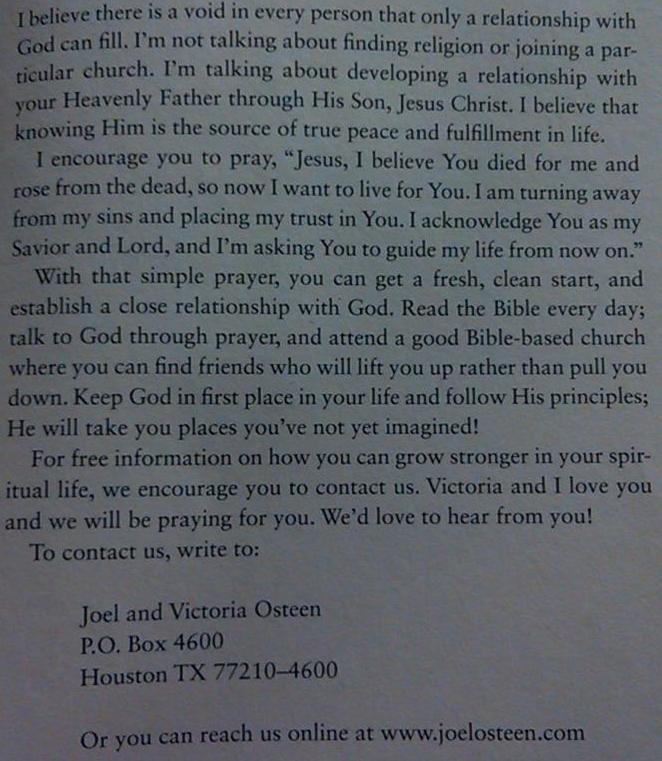

 This Journey Is My Own