Speechless, speechless, that’s how you make me feel… —Michael Jackson
If I could rewrite my very first blog post on this blog, I’d start out by quoting Michael Jackson’s song “Speechless.” Because, really, speechless is how that intimidating, blinking cursor makes me feel. I have nothing to say. No words come to mind. In fact, I originally wrote this post on paper and transferred it to the computer by typing it out. There’s something about the feel of a pen gliding across paper that puts me at ease and allows me to express my thoughts more freely.
So in the end, I guess I’m not so speechless after all, eh?
I’m not really into 10-step or how-to posts. It’s just not authentic coming from me. But after reading Michael Hyatt’s post on 10 Ways to Generate More Blog Traffic, I suddenly realized I could write a 10-step post on how NOT to get high blog traffic (mostly because it’s nearly anti-everything Hyatt proposes).
1. Market your blog among certain family members.
The main readers of this blog are my husband and mother-in-law. Everyone else is gravy!
2. Don’t comment on blogs unless you have something you really want to say.
I read a few blogs. But often I don’t have anything to say or add to a discussion. I’m not going to post on someone’s blog to add drivel just so I can drive traffic back to my site. But I am likely to like posts on WordPress.
3. Write posts on a variety of subjects. Don’t make your focus too specific.
Most of my content on this blog doesn’t help people; it’s simply an outlet for me to express my feelings and share experiences with others. Blogs like that have a difficult time getting high traffic. However, if your shared experience is beneficial in assisting others (as my depression introspection blog is), that blog has the potential for high traffic.
5. Don’t advertise your blog anywhere.
I do not include my blog URL on my email sig lines and no longer auto-post to Facebook (really because of technical difficulties). I have a link posted to Twitter, which probably doesn’t account for most of my traffic. When I comment on the blogs of others (outside of WordPress), I don’t always include a link back to my blog because I see that as pompously self-promoting (only for myself, of course). I do use tags in the hopes of garnering traffic here and there, but I don’t make a real effort to attract people to my site.
6. Post sporadically.
I auto-generated weekly posts to the site back in November and December but that will end sometime in February. After that, posts will crop up here and there as I feel led to post. It’s not very good for blog traffic, especially when you want readers to check your blog regularly for new content. They won’t return after a while if new content hasn’t appeared in 2 weeks. (Sometimes I post once a month!)
7. Draft average, uninteresting blog titles.
This blog post may be an anomaly in bland titles. Or it may simply be average because who knows how many people post on SEO Fail? I write posts on assorted ramblings, infertility, and how I got my name. The blog titles aren’t snazzy or captivating, and for me, that’s okay. I’m not trying very hard to capture the attention of others.
8. Shun search engine optimization tactics.
For depression introspection, I was rabid about employing SEO tactics before I even knew what they were: posting on comments on blogs everywhere, registering my blog in places like Technorati, and using pingbacks religiously. The most I’ve put effort into is BlogHer, and even I don’t keep up with that anymore. BlogHer is a-whole-nother beast.
9. Don’t offer your subscribers anything for subscribing.
I don’t have a free eBook at the ready for my loyal subscribers. And even if I did, I’m not sure what it would be about! It’s like having a guest over to your place and going, “Sorry, I got nothing to offer you but water.” It’s kind of bare. People like to get something in return for being loyal and dedicated. I wouldn’t even know where to begin do anything of that sort.
10. Post fluff and so-so content.
WordPress used to encourage me to write fluff posts courtesy of Plinky. (It doesn’t prompt authors for scheduled posts, only for published posts.) I put fluff posts out there because it’s something written each week, but I’m not really a fan of it because it’s not intellectually stimulating. But hey, it’s my blog! My thoughts won’t always be intellectually provocative, and as such, blog posts may follow suit.
So there are your 10 steps to avoiding high blog traffic. Anybody care to add any others? (Thanks for reading!)
Building traffic and revving up my SEO marketing sounds nice in theory, but I don’t have time for it. While I love writing, I am daunted by a blog’s need for content. It is always hungry, never satiated, always wanting more.
I don’t blog every day because, frankly, I have nothing of value to add each day. I don’t want this blog to become “I had a good day today because my family was here!” or “I had a horrible day today. Worst day EVAR!!!” I want this blog to be somewhat smart and interesting. I want to tackle topics that are important to me that other people don’t talk about. (Well, I could talk about poop but moms of newborns have that covered.) Okay, maybe I’ll tackle politics this year.
Posting to This Journey Is My Own is still fun. I don’t do it often, much of my posts are scheduled (thanks to prompts), and I blog when I want to rather than feeling like I need to (as with my professional blog). I also like that my readership is moderate despite that wacky 992 e-mail subscriber number. Continue reading “Blogging: I Love It and Hate It + Assorted Rambling”→
This post has probably been stewing inside of me for the past couple of years, and some women might find it offensive while other women won’t care while others might agree and others might disagree. I don’t care. This is how I feel. Continue reading “The Queen Bees of Social Media (It’s Only a Dream)”→
I’m still working on the post in the Love Wins book that’s probably the most controversial chapter but in the meantime, I started a new music blog called Pop! Goes the Music. It’ll be updated twice a week just so I can feed my pop addiction. If you’re a Pop! Diva like me,, it might be worth checking out.
Facebook and Twitter are two social media tools that feed into a person’s habit of self-absorption. (Blogs do a great job of that too.) For me, Facebook and Twitter feed into my delusion of self-importance, one I will attempt to curb. Continue reading “My Fight with Facebook and Twitter”→
You[r] posts are too infrequent. You haven’t posted in weeks. Or months. Like so many would-be bloggers, you started well, but you quit too early. I’m sure you have legitimate reasons, but I am tired of waiting. Nobody cares. Post or perish.
Your posts are too unfocused. One day you’re are blogging on this. The next day you are blogging on that. What is your blog about? Please remind me, because I am lost in the forrest [sic] of your eclectic interests. You’re not a renaissance man (or woman). You are undisciplined.
I am guilty of both infractions above.
Infrequent posts
I have not adhered to a regular posting schedule for this blog and am trying to do better for 2011 with at least one piece of content posting daily and perhaps a second at any moment or day I wish. I understand Mr. Hyatt’s frustration in this area. In the past, there have been a few blogs that I loved reading, but since they hadn’t posted in months, I stopped visiting their sites assuming they had abandoned their blog. Most readers understand if you’re enduring a busy or sick season and will wait for you if you inform them. But if you disappear without warning for an extended period of time, well… readers do get tired of waiting and leave. No sense in clogging up a perfectly good RSS feed with a blog that is rarely updated.
Unfocused posts
Unsubscribing for unfocused posts? Well, here’s where I stand up for the girl who feels like using her blog to ramble about her boyfriend, her ex-boyfriend, her cute little puppy, and that annoying co-worker who gabs on the phone all day. If you started reading her blog with this kind of content, expect more of this content: it’s called her life. She simply rambles on her blog about different aspects of it.
For 2 years, I put an immense amount of effort into maintaining a blog focused on one specific topic: depression. And when I was diagnosed with bipolar disorder, it shifted to a general mental illness blog covering different aspects of mental health. Then it grew and became a semi-pharma blog.
And one day, it became just too much to pour all my heart, soul, time, and energy into a keeping a blog topic-specific because I was growing. My thoughts and ideas were growing beyond mental health. I developed a passion for Christian theology. I wanted to ramble about politics. I wanted an avenue to challenge other people’s thinking with my posts on a variety of topics.
And so… This Journey Is My Own was born in June 2009 after taking a long break from regular blogging.
The majority of posts deal with some aspect of Christianity in some way. But those posts also heavily intersect with my life. I blog on anything that is near and dear to my heart—I don’t stick to posts about publishing or writing or mental health. I am so much more than that.
I don’t mind reading a blog that talks about a variety of topics from day to day. Not everyone is organized enough to have Mental Health Monday, Theology Tuesday, Weather Wednesday, Thought-Provoking Thursday, and Fitness & Health Friday. (Don’t worry, I’m not sure I’d even do those themes. Although having a regular Fail Friday on my old blog was really fun.)
I say people should blog about whatever they want to blog about on any given day. If you want to post about Buddhism on one day and then discuss Barack Obama’s health care plan the next, why not? Blogging is about your readers but it’s also about you. If you’re not getting paid to publish your content or if it’s not related to your job in any way, there should be no problem if your topics are all over the place as long as they’re engaging and concise.
Speaking of concise, perhaps it’s time for me to stop typing. And if you read this far, you either found this content engaging or you’re my husband.
This post is not brought to you by any sponsors like the ones pictured above.
For some bloggers, their content has evolved into nothing more than stealth advertising. Perhaps bloggers aren’t to blame so much as advertisers and marketers are—they’ve run a very slick marketing campaign. In the age of browser add-ons such as Ad Block and Ad Aware, companies have wizened up and now advertise around ad blockers: if ads can no longer be seen in sidebars, then it’s time to take advantage of the power of “word of mouth” and make it part of the content.
I know a lot of big events would never take place if it weren’t for sponsors, and I also know a lot of people would not be able to attend these big events without some kind of sponsorship. But if every time a blogger posts content I need to read that Southwest Air sponsored his trip to the LA Anti-Animal Cruelty Conference, that Hyatt is putting him up for a comfy three days, and that Kenneth Cole is dressing him from head to toe, I’m going to start feeling like I’m not reading the posts of a person but rather a mastermind behind a viral marketing campaign. Telling me once is enough. Telling me twice is sponsorship. Telling me three times is overkill.
I want my ad-free content back. I want someone to be able to genuinely say she loves Lands End clothing (which I do—no, I haven’t received a gift card from them and won’t be giving one away) without feeling like she was contacted by the marketing department to say it. If a guy wants to talk about how much he loves his Honda Accord or his Toyota Camry because it’s a reliable car and has lasted him 12 years, I don’t want it to appear as forced as a TV commercial. People drop name brands in their content from time to time but when a person starts gushing over how Lexapro is the greatest antidepressant ever because it relieves depression and has given them tons of joy back without any mention of side effects or negative aspects, I’ll know there’s something fishy going on.
If a person likes a brand and wants to tell the world about it, that’s fine. But if that person keeps pushing the brand repeatedly, I’m going to wonder whether he’s being paid and tune him out. The best kind of advertising is done in such a subtle way, a person has no idea he’s being marketed to; the worst kind of advertising is as repulsive as a pushy used car salesman.
I like reading what a lot of bloggers have to say. I don’t mind if ads appear in their sidebars, headers, or footers. But for heaven’s sake, keep the content AD-FREE.
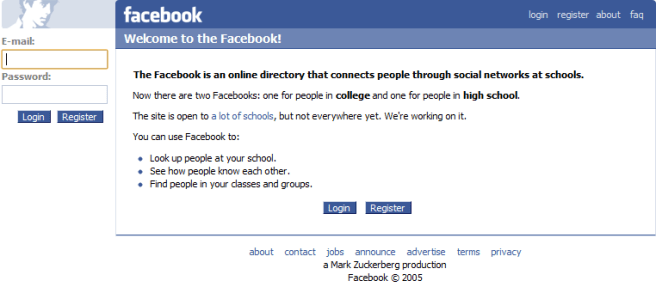
When I joined Facebook six years ago, it was a social networking site only open to college kids. When I joined, I had to have a .edu email address and join my college network. Networks were rather small and since I wasn’t really close to anyone at my school, I rarely used Facebook. Apart from status updates, the only other thing available was to join local groups such “I hate people who walk slowly over the Unispan!” or “I wish I had a girl’s superpowers so I could wear tight, revealing clothes in the middle of winter.” (Yes, these were real groups that existed.) Due to Facebook’s college students-only policy, MySpace was the dominating social network since it was available to nearly anyone with an email address (of any kind).
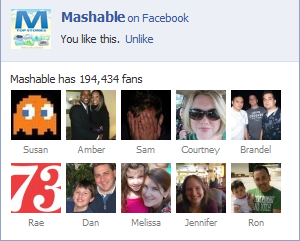
By “Liking” a brand or product on Facebook, you consent to your profile being used publicly on a product’s external site regardless of privacy control settings. (On Mashable, these profiles are clickable.)
I never dreamed that by the end of the decade, I’d be forced to choose between my desire for keeping my information private or having it broadcast — not only to my 200-plus Facebook friends but also to advertisers who want to fine-tune the ads they target at me or sites that want to let you know that I “Like” their brand or product.
Today, Facebook is open to anyone and currently boasts more than 400 million users globally. In addition to group pages, it now has features such as applications (FarmVille, ZooWorld), Like (formerly Fan) pages, Share, and Facebook connect to connect your profile page with other sites on the Web. What used to be a small networking site among college students is now a social behemoth that can broadcast nearly anything almost anywhere in a matter of seconds.
Some people will argue that once you post your information out on the Internet, in any way, you can’t expect it to be private. These people view the Internet as the information “town square” — in other words, the public information areana. In the past, I would have agreed with that to the extent of the information not being excluded from public searches (Google, Bing, etc.).
But to give the impression that a person’s information can be kept private while finding subversive ways to keep it public is misleading. In the six years I’ve been using Facebook, I’ve watched the social network giant cross that line time and time again. There are enough stressors and things to worry about in this world — Facebook’s complicated privacy controls shouldn’t have to be one of them. Continue reading “Is the idea of privacy simply a long-lost memory?”→
So the owners of Newsday have decided that beginning Wednesday, October 28, the majority of content on its website, Newsday.com, will only be available to subscribers of OptimumOnline (Cablevision‘s Internet Service Provider), Newsday, or those who are willing to pay $5 per week.
Although I have a mother and other relatives who live on Long Island, I’m not so desperate for online content about Long Island that I’ll be forking over $5 a week. How about you?
However, nonpaying customers will have access to some of newsday.com’s information, including the home page, school closings, weather, obituaries, classified and entertainment listings. There also will be some limited access to Newsday stories.
Newsday described the move as one that would create a “pioneering Web model,” combining the newspaper’s newsgathering services with Cablevision’s electronic distribution capabilities. About 75 percent of Long Island households are Newsday home delivery or Cablevision online customers or both, according to Newsday. Optimum Online customers total 2.5 million in the New York area, the paper said.
I’m not very business-minded so perhaps I’m missing something here. It seems that Newsday is essentially closing off most of their content to anyone who isn’t already funneling money into its parent company, Cablevision. A grandmother who lives in Des Moines, Iowa and simply *has* to know how her granddaughter’s lacrosse team in Patchogue is doing might be willing to pay for weekly access. Most people will see the prompt for payment as nothing more than a minor disturbance that can easily be rectified by clicking the X in the top right-hand corner of the screen or typing a new URL in the address bar.
We’ve seen this before, haven’t we? Remember the now-defunct TimesSelect?
If you don’t, let me refresh your memory. For 2 years, The New York Times wanted to take their revenue streams for a test drive and see if they could charge for some of their popular content such as op-ed columnists and any articles older than 30 days. Subscribers paid either $7.95 per month or $49.95 per year. Or one could pay to access a full, archived article. According to a 2007 Reuters article, TimesSelect generated $10 million in revenue each year. That’s certainly nothing to sneeze at. Especially when ad revenue is tanking. (And currently, circulation revenue is up above ad revenue for the Times.) So what happened that the Times was willing to forfeit $10 million in annual TimesSelect subscriber revenue?
During the TimesSelect years, site traffic plunged to new lows. Unique visitors plummeted. The people who needed access to TimesSelect (ie, students and media professionals) already had access to it. But the average consumer wasn’t willing to pay for it. Especially when aggregate sites such as Drudge Report and Yahoo! News would link to sites that offered similar content for free. The earlier-reference Reuters article summed it up beautifully:
The move is an acknowledgment by The Times that making Web site visitors pay for content would not bring in as much money as making it available for free and supporting it with advertising.
But let’s take a step away from the Times‘s dilemma now and back to Newsday whose content is much more focused and much more local. Newsday‘s target is to people who are either on Long Island or are interested in Long Island happenings. Since at least 75 percent of people on Long Island will already likely have subscriber access to Newsday.com through OptimumOnline or their Newsday subscription, I suppose Newsday is hoping the other 25 percent will be willing to fork over the money to access their content or sign up for one of the two subscriptions. (I feel pretty safe saying OptimumOnline practically holds a monopoly for IS providers on the Island and only recently has Verizon FIOS begun slightly breaking into their market. But not by much. The triple-play deal [cable, phone, Internet] has given Islanders an incentive to stick with Cablevision.)
Media industry analysts will be eyeing Newsday.com’s subscriber model with a careful eye. Newsday.com hopes to be a model of the future but I’m afraid it’s simply a repeat of TimesSelect’s past. Newsday.com will make money during this period; that I don’t doubt. But they’ll find that their number of unique visitors will drop so low that the subscriber model will begin to render itself worthless and Newsday.com will be forced to make its content free (with ad-supported revenue, of course) for all once again.
Until media companies figure out a way to generate decent revenue from web advertising and consumers decide what’s valuable enough to pay for, I have a funny feeling we’ll all be stuck in this ad-supported free content limbo for a while.


 Building traffic and revving up my SEO marketing sounds nice in theory, but I don’t have time for it. While I love writing, I am daunted by a blog’s need for content. It is always hungry, never satiated, always wanting more.
 Image from blog.sevnthsin.com

 If you don’t, let me refresh your memory. For 2 years, The New York Times wanted to take their revenue streams for a test drive and see if they could charge for some of their popular content such as op-ed columnists and any articles older than 30 days. Subscribers paid either $7.95 per month or $49.95 per year. Or one could pay to access a full, archived article. According to a
  This Journey Is My Own