In search of an identity… Christianity.

CrossWho am I… as a Christian?

As a Bible-believing Christian, this topic could be endless.

Under the banner of Christianity,  I am a number of things:

  • a sinner (Romans 3:23)
  • lost without Christ (John 14:6)
  • redeemed and forgiven of all my sins (Colossians 1:13-14)
  • God’s child (John 1:12)
  • bought with a price (I Corinthians 6:19)
  • a citizen of heaven (Philippians 3:20)
  • God’s workmanship (Ephesians 2:10)

The list goes on. But what does that mean for me as an individual?

I read God’s Plans For You by J. I. Packer in the hopes that I’d get some kind of divine revelation as to who I’m supposed to be. Nothing of the sort happened. Although I did gain some further insight as to what kind of individual God wants me to be.

An erroneous thought circulating in Christian circles is that, above all things, God wants us all to be happy. Above all things, God wants Christians to be holy. Achieving that apart from the guidance of the Holy Spirit is no easy task. What does the pursuit of holiness mean? (Another good book for me to read.) It means going after the things that are pleasing to God and pursuing the fruits of the Spirit: love, joy, peace, patience, kindness, goodness, faithfulness, gentleness and self-control (Galatians 5:22-23).

Here’s where God has led me in my Christianity so far:

That’s about as individual as it gets right now. There’s nothing profound or earth-shattering in this post. It’s simply an attempt to get me to figure out who I am as a Christian.

In search of an identity… (continued)

I tend to be of the mindset that in order to be pleasing to God, I have to do something big, something that leaves an evident footprint in the world. I think deep down I know this isn’t a true philosophy, but when I just live everyday life, I feel useless.

I feel exactly that way. Check out this great post from my friend Sizzledowski.

In search of an identity…

Who am I?
What is my purpose?

questionThose two questions run through my mind at least once a day. (I’m probably providing a conservative estimate on that front.) Well, here are the basic answers to each question:
1. Who am I?
First and foremost, a Christian female; an adopted child of God bought with a price and a joint-heir with Christ.

2. What is my purpose?
To glorify God, and to enjoy him for ever. (Westminster Shorter Catechism, Q1)

Those are the general things, applicable to a wide variety of Christian women. But specifically, who is the person that I’m supposed to be—the person no one else can be? What is God’s individual purpose for my life? Let’s start with a list of things that make up who I am:
Who I am
  • Christian
  • Female
  • Daughter
  • Wife
  • Cousin
  • Niece
  • Black
  • Writer
  • Friend
  • New Yorker
Really, is there much more to it than that?
Some of who I am is pretty straightforward in my opinion and does not need to be pursued much further, ie, female, daughter, wife, cousin, niece, friend. However (for me), it can get complicated when one of those things becomes a noun and the other becomes an adjective: What does it mean to be a Christian female? Or a Christian wife? Or a Black Christian? Or Black female? Here are the main topics I struggle with regarding my identity:

Christianity: What does it mean to be a Christian?

Race: What does it mean to be black in America, especially since I am first-generation American and am also married to a white American male?

Career: What kind of a writer am I? How do I pursue this, namely in a dying profession such as print journalism?

Location: My heart longs to be in no other place than New York but I’ve become content to live in Philadelphia. Am I still a New Yorker? Can I call myself a Philadelphian too now?

After exploring the main topics that plague my identity, I’ll try to address the issue of what my purpose in my life. I have the scary feeling, however, that the task will be much more difficult that trying to figure out who I am.

Painting Pictures of Egypt

Lady LibertyA friend I have went to NYC recently and met up with a few friends. She explored the city, took lots of pictures, and seemed to have a blast.

Then I found myself thinking, “Why don’t I still live there, Lord? Why am I not there?”

Of all things, I wasn’t jealous because she was spending time with people she cared about nor was I jealous that she had a good time.

I was upset not because she was in New York but because I wasn’t.

How pathetic is that?

In recent months, I’ve been struggling with the issue of identity:

  • “Who am I?”
  • “Yes, I’m a Christian and need to find my identity in Jesus but what does that mean? It sounds so theoretical and abstract.”
  • “What does it mean to be Black in America?”
  • “Does race matter?”

I thought I’d let the New York thing go. It was a big struggle when I moved to Kentucky considering how much I hated Kentucky but I’ve been content in Philadelphia. So why do pictures of Manhattan and Brooklyn get me nostalgic for the days of going to NYU and attending my old church in the quaint section of Brooklyn Heights? Why? Would I trade what I have now (a husband who loves and cares for me) for what I had back then (single, depressed, no one)?

I’m a fool so I struggle with this.

I suppose what makes things harder is that the prospect of living in New York ever again is about as likely as the prospect of living in Kentucky again. Zero. I never loved Kentucky, I never grew up in Kentucky, Kentucky was never my home.

Sara Groves talks about “Painting Pictures of Egypt” and “leaving out what it lacked.” Perhaps I’m doing that with New York. When I think of living at NYU, I don’t think of the time I wandered dark alleyways at 2 or 3 am in the morning, hoping I’d get raped or murdered. I don’t think of how I frequently walked the Manhattan streets alone and lonely, eyeing couples and friends with jealousy because I possessed neither of those things. I simply think of the exhilarating feeling I’d get when I walked to class near Washington Square in the winter while flurries dropped just because I lived in New York.

  • I got high off of living in Manhattan. I love the city. Sure, it smells like pee but it’s a place I loved to call home.
  • I’m proud to tell people that I was born in Brooklyn and raised there for the first five years of my life.
  • I have a love for the Yankees that runs deep. No matter how bad they suck, they’re always World Champs in my heart. (On the contrary, I have a hatred for the Red Sox that runs deep.) 😉
  • My family, namely my mother and grandmother, live in New York and I miss them all so dearly.
  • I have friends from middle school that I talk to infrequently but still care about and miss spending time with.

If you asked me which city was the best in the world, I’d tell you New York. I just love that place.

However, I feel terrible because my friend was having a wonderful time visiting places and friends and the main emotion I could muster was jealousy. And like the fool I am, I had no words for her other than “I’m jealous.” Those words started out as a figure of speech but then evolved into actual jealousy. She didn’t warrant that. My sin and identity issues shouldn’t be her problem.

So it’s back to the drawing board yet again. For all my nostalgia, I’m putting my primary identity in the wrong thing. My primary identity is not native New Yorker. My primary identity is Christian. And whenever anything or anyone dethrones Christ; it’s wrong and it’s sin. And I need to repent.

This Used To Be My Playground

I used to be so smart. I used to want to do things that required thought like research and compiling informative blog posts. Now, I have no brain energy for that. A few people have told me they miss my posts. I just feel too stupid to continue. I’m tired. I can’t do this anymore.

Michael Jackson ‘a tortured, tortured soul’

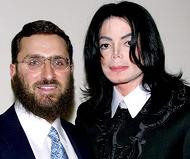
Rabbi Shmuley Boteach and Michael JacksonCampbell Brown recently interviewed Rabbi Shmuley Boteach, an Orthodox rabbi who used to be friends with Michael Jackson. Back in 2004 after Jackson was cleared of the molestation charges, he expressed worry that MJ’s life would be “cut short like Janis Joplin, like Elvis.” (See CNN’s 2004 article here.) I think Campbell’s recent interview gives some insight into Michael Jackson’s sad and lonely world.

Brown: Thank you for being here. I want to ask, you were so concerned by what you saw of Michael Jackson’s drug use that all the way back in 2004, you told CNN you thought he’d die young.

I mean, what did you see that made you feel that way?

Boteach: Well, there was no one around to stop him. … People … are not going to interfere with what Michael was trying to do. And what he was trying to do was curb pain.

Michael always thought that he had ailments of the body. He always had a neck that hurt, a foot that was twisted. Really, he had an affliction of his soul. He was extremely lonely, he was extremely unhappy. He felt purposeless, he felt lethargic. And the way he dealt with that pain — and he was especially afraid of evasion, of that perhaps his best years are behind him.

And instead of reinventing himself and entering a new phase, he decided to medicate away his pain. And no human body was going to — would be able to sustain that kind of assault. This was inevitable, it was shocking, it’s tragic. But it could have easily been averted.

Brown: You — we’ve heard people talk about his use of Demerol, of OxyContin.

Did you talk to him about his drug use? Did you ever tell him you were worried?

Boteach: Are you kidding me?

–snip–

Michael — you know, we think that he wasn’t afraid of crowds but as I said, I think because he gave the public a key to his own self esteem, because he substituted love for attention, he was. This was always an issue before he went in front of crowds.

And I would say to him, “This is poison. This is killing you. You need to be razor sharp, Michael.” And he knew that it was bad for him. …

Brown: So, that’s amazing to me. That he would get high and then he would be medicated before he would perform, essentially, in front of a crowd. Was he under the influence of drugs around his kids, also?

Boteach: Well, let me make something absolutely clear: I never saw Michael before a concert. I never saw him in a concert.

I’m speaking specifically as the years went on, I think Michael lived with a profound fear of rejection. And Michael told me once — and this is a heartbreaking conversation between us — “Shmuley, I promise I’m not lying to you,” he said. “I’m not lying to you.” He said that twice. “But everything I’ve done in pursuing fame, in honing my craft” to quote his words, “was an effort to be loved because I never felt loved.” And he used to say that to me all the time.

And you can imagine if you’re trying to get love from the crowd and you’re not sure how they’re going to react to you because time is going on, they [call you] “wacko-jacko,” — you’ve become a tabloid caricature. You live in phenomenal fear. And I think that a lot of this — the prescription drugs — was used to address and alleviate the anxiety. And it was just tragic to watch.

And a lot of questions need to be asked about who facilitated this. …

Brown: You talk about the people around him and that that needs to be followed up on. Who were the good guys? I mean, was his family trying to get him help? I mean, obviously you talked to him but what could have been done?

Boteach: Well, let’s be honest. If we in America want to have an honest conversation about Michael Jackson — who the good guys are.

Look, Michael brought out some of the worst qualities in all of us — in the media, in good people.

Very few people are around that level of attention. And to be around it … [it]made you feel special. And you could see a lot of good people who started with Michael and little by little the corruption just grew. So even people who were good guys didn’t necessarily remain that way.

If you look at the media circus, we’re not even mourning the death of man anymore. We’re just sort of thinking about an icon. So all of us are conflicted in this if you want to be honest about it.

So, but the good guys? I tried to be one of the good guys. Being a good guy meant if you had to risk your relationship with Michael, that you had to put your relationship on the line — you had to look him in the eye and say, “Michael, you are killing yourself,” or “Michael, you have — there’s no normality in your life,” or “Michael, you have lost spiritual anchor.”

Brown: So what did he say — when you confronted him, when you said these things to him, how did he react to you?

Boteach: Well, for a year he listened to me and used to tell me how much he loved me and cared about me and we were very close.

I mean, I cannot begin to describe the degree of friendship that existed between us. I tried to be a Rabbi to him. But after a year — and I believed there was a lot of progress in that year. You know, Michael came with me to synagogue. He was never going to become Jewish but he needed some sort of spiritual base. He used to come for regular Sabbath dinners at our home.

But after a year he really began to see me almost as a nuisance. I would speak to him and I could see a complete difference in body posture. He would begin to cringe. He would almost curl up, evolve into an embryonic position. He was unaccustomed to hearing any kind of criticism.

And — but then he would get his managers to sort of try to stop me and it came to a head one day in his hotel room. We went to give out books to parents of low-income families in Newark, New Jersey.

And on the way back I could see Michael was angry at me, although he never had a temper so he wouldn’t show it, but he was withdrawn. So, I said, “What’s wrong?” So, his manager says to me, in front of him, “Shmuley, you want to make Michael accessible and normal. Don’t you understand he’s famous because he’s not normal? And then I understood the full tragedy of his existence. Michael was terrified that the moment he became average that the public would forget him.

And that was the end of our relationship. I knew I could not help him and I — there was no choice but to sever the relationship.

But at that stage — you asked who the good guys are — you have a choice. You can either hang on as a hang-along, or you can move on. Because the orbit of a superstar is just too great to be in there partially. It’s an all or nothing sum game.

Brown: Rabbi Shmuley, I mean, there have been so many rumors with regard to this story. What’s the one thing that you’ve heard that you want to clear up about Michael Jackson? What should the public know?

Boteach: More than anything else, I want people to understand as they read all of these very unfortunate stories about Michael. And let’s face it, Michael may have — I don’t know — but may have been guilty of very serious, serious crimes.

I want people to understand that even if it were true and I have no idea if it is or it isn’t, that this was a tortured, tortured soul, who from the earliest age did not know love because he felt that he had to perform to earn love. He lived in permanent insecurity. He was one of the most tortured souls I ever came across.

After all the fame and fortune there was a part of him that we almost could not reach and I would hope that the public, in judging and assessing Michael Jackson, would do so … knowing that that child star suffered these terrible, terrible things.

That’s why all you parents out there, when you’re sitting with your kids and they show you their report card and it’s not an A, please don’t say to them immediately, you could have done better. That’s what happened with Michael. And so he always had to perform and that’s what ultimately killed him.

Campbell, honestly, when they announced these concerts I thought the end was near. He was in no state to do 50-odd concerts. Not a psychological state, emotional state. Michael was burned out. He was just going to get more medication to deal with his inability to live up to his former glory of self and the outcome was going to have to be tragic.

Michael Jackson is the true epitome of a people-pleaser. No one can ever be happy that way.

Will You Be There?

I’ve been feeling really sentimental lately with all these celebrity deaths. As a result, it’s gotten me thinking of my father who passed away in 2001. I was at PCC and he died on Sunday, December 9. It was the week of finals and my family (mother and my dad’s two sisters) thought it’d be better to let me finish up my finals without distractions so they didn’t tell me until they were driving me home from the airport on Saturday, December 14. I got 104 (extra credit) on Mr. Zila’s History test and knew my dad would love to hear that since he loved any grades that were 100+. Instead, I suddenly found myself preparing a eulogy for my father’s funeral on December 17.

Most of you know by now that I’m a huge Michael Jackson (MJJ) fan. Well, you can thank my dad for that. Back in 1992 around the time the Free Willy movie came out, MJJ came out with a song called “Will You Be There.” My father loved that song TONS and back then said he wanted it played at his funeral. Well since I had no hand in funeral preparations (and I was still in the clutches of IFBism), it was never played. It’s something I regret not fighting for. To make up for it, I chose to walk down the aisle to “Will You Be There” as a tribute to my father.

All that to say that 8 years later, I still miss my dad. I’m over the bitterness about my family not telling me my father died sooner because I know they did it in my best interest. (Apparently when my uncle died of AIDS in the early ’90s, they had to give me a sedative to get me to calm down because I was so hysterical. They figured if that’s what happened with my uncle, I’d be ridiculous upon my father’s death. I wasn’t.) I talk to my husband about him but I feel like I’m talking about some imaginary person who never existed. (BTW, I know that’s a redundant phrase.) I don’t know how to keep his memory alive. What makes things worse is that I really lost my dad a long time ago. My father struggled with schizophrenia/paranoia and so the father that I had at 12 was radically different from the father I ended up with when I was 16. He passed away from a heart attack when I was 19. My mom said she watched his eyes fly open and gasp for air. He started foaming out the mouth and couldn’t breathe. She watched him die on their bed in their bedroom. She couldn’t bring herself to talk to me about his passing until a few years later.

Many of the memories I have of my father are fading and that scares me. We used to go to the park and toss around a football even though I was hopelessly nonathletic. (I still enjoyed it immensely.) One Christmas when all my parents could afford was one gift, he found out which CD I wanted the most that year and got it for me (Alanis Morissette’s Jagged Little Pill). When MJJ’s Live in Bucharest concert was being played on VH1 (wow – remember when they used to play music videos?!) after we first got cable, he called me in from my bedroom because he knew I’d love to see it. (His “Smooth Criminal” choreography always amazes me but I found out he stole it from Fred Astaire.) I’m writing this out, hoping it stays with me.

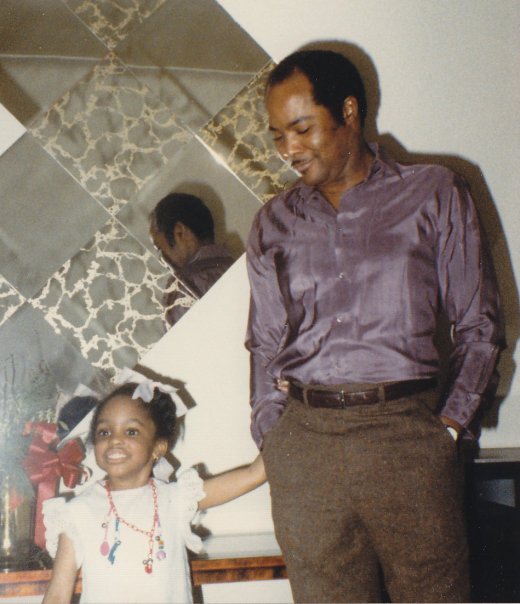
Me and DaddyAnyway, I wrote all that as a partial vent and also to ask how do you keep the memories of your loved ones alive. My husband will never know my father on this earth. My kids (if I ever have any) will think of my dad only as some kind of fairy tale. Pictures of him are limited but here’s one I found and scanned into my computer. I just try to think that he’s still looking down at me and smiling—whether I’m perfect or not.

This Journey Is My Own

So the name of this blog is “This Journey Is My Own” based off of a song by Sara Groves of the same name. Its accompanying sub is “Attempting to live and breathe for an audience of one.” I’m amused by the tagline since this a public blog. In the end, however, what I do and chronicle on here is ultimately for God so no holds barred anymore.

I have another blog, Depression Introspection, currently hosted at Typepad but am working on moving it to WordPress. You can find what I’ve got so far here: http://depressionintrospection.wordpress.com.

Depression Introspection was begun as a blog to focus solely on various aspects of mental illness: depression, bipolar disorder, suicide, schizophrenia, psychotropic medications, among other topics. Now I feel like I’ve outgrown the site. Continuing to post there would put me in a psychological box. Depression Introspection was created specifically for address mental health issues and I don’t want that to be the sole focus of my blogging.

I’m also at a point where I need a place to rant and vent about life in a teenage-like style. I avoided that for the most part on the blog, which was also informally titled deepintro. I intend to rant and rave as much as I like here.

I started out under the pseudonym of Marissa. Now I’m posting under my nickname Kass because I’m tired of trying to hide who I am. It gets tiresome. It gets old. I used to blog about my job. For the sake of employment, that’s probably the one topic that will remain off this blog.

I selected “This Journey Is My Own” as the name of my blog because I think the song expresses so much of what I struggle with. Groves sings poignantly of the issues of people-pleasing, one of the greatest sins in my life. You can read the lyrics to the song here and listen to the song here.

I hope to blog on a variety of topics including mental health. We’ll see what happens.