Between First and Third

Red, white, and blue
Colors of my former country
Pump through my veins
Allegiance to my new country

Independence from oppression
Freedom from depression
Bound to liberty
Shackled to opportunity

Legal immigrant
Flag unfurled
Now American citizen
Flag waving

Paradise lost
House abandoned
Currency gained
Home retained

Little life
Tiny cries
Never knowing
Stench of death

Baby powder scent
Not burning bodies
Bustling industry
Not stagnant water

First-world comforts
With third-world mind
First-world country
Leaves third world behind

God bless America
Land I now love
Hope for prosperity
Through tenacity

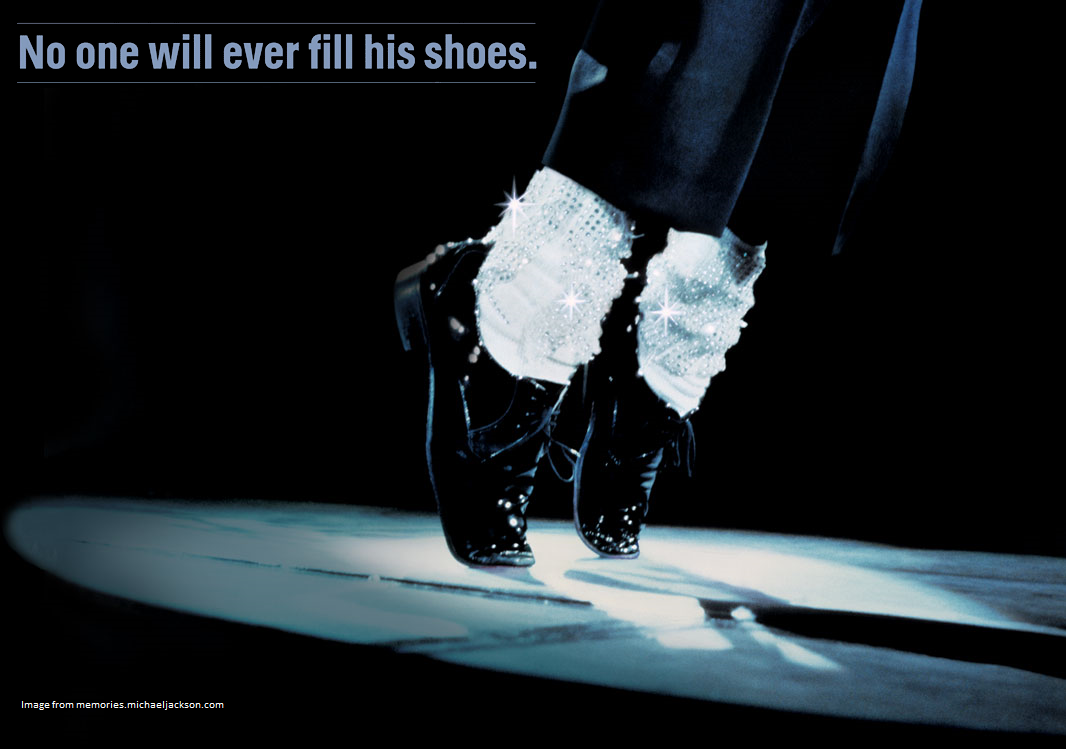
The Cult of Michael Jackson

On the one-year anniversary of Michael Jackson’s death, I must admit that I’m part of the Cult of Michael Jackson (MJ).  (I will be playing his music ALL DAY tomorrow.) The immediate news of MJ’s passing crippled the Internet for hours and went on to dominate the media for weeks on end. What is the draw/appeal of Michael Jackson in both life and death?

I. The Freak Show

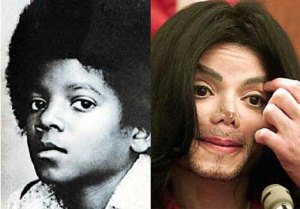
Anyone born before 1981 remembers what MJ looked like naturally. Anyone born before 1986 remembers what MJ looked like with relatively dark skin. Anyone born before 1994 remembers when he was still of musical relevance. Anyone born afterward probably cannot disassociate MJ from allegations of child molestation. The fact of the matter is that MJ was the train wreck we all loved and hated to watch. His nose frequently changed. Then there was the sudden lightening of skin color. Rumors of hoarding the Elephant Man’s bones, spending time with his monkey friend Bubbles, and sleeping in a hyperbaric chamber. He seemed so normal then suddenly became… so weird — “Wacko Jacko.” The moonwalk was a cool dance move; the crotch grabbing… eh, not so much. It’s always easier to make fun of the person who stands out and seems a little off rather than express care and concern.

II. The Magic

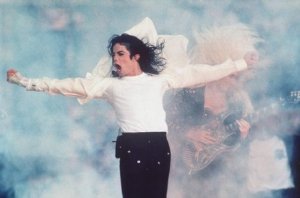
In spite of the freak show status that surrounded Jackson, the Elizabeth Taylor-dubbed “King of Pop” infused new life  into entertainment. Jackson was a creative genius, a brilliant mind who is emulated by many R&B stars in song and dance today and helped solidify MTV (for a little over a decade anyway) as the place to turn for innovative music videos. His concerts were nothing short of amazing and nothing was too over-the-top to be used on stage. *NSYNC, Madonna, Lady Gaga, Britney Spears, and Xtina (to name a few) have all taken cues from his spectacular ability to put on a mind-blowing show.

III. The Madness

Jackson grew up in front of the spotlight, working hard as a child star. When most boys were outside running around or playing with trucks and toy soldiers, Jackson was running through rehearsals or performing in front of audiences. As a child, all he did was work — he was never able to have a childhood. Once he grew up and established solo success, he craved the childhood he’d been robbed of. He founded children’s organizations, created Neverland, and loved to play childish games. At a point where most adults had matured and accepted the responsibilities of adulthood, Jackson reverted to a childlike mind with juvenile mannerisms. In American society, such behavior is not tolerated or accepted and shunned. And it’s this behavior that would unfortunately bring him legal trouble and rumors of child molestation, tarnishing his reputation forever.

A year after Michael Jackson’s passing, he still has devout fans (of which I am one). These fans loosely comprise a cult which will rival that of Elvis Presley’s. Why is this so? Continue reading “The Cult of Michael Jackson”

There’s a place for my novel…

… somewhere. But who will publish it? And who will read it?

The main protagonist is a 16-year-old girl. There’s no romance. Lots of conflict. I’m not Karen Kingsbury or Janette Oke and I’ll never be.

Maybe I should be if I’d like to get paid. Or maybe I should find another day job. In my idealistic world, I hope to impact someone’s life in getting this novel published. I’m not sure how that will happen. Or if it will. But I’d like for it to be someone unrelated to me.

Desperately seeking local female friend who loves Jesus, Justin*, and John**

A ramble/rant/possible form of incoherence.

I am trying to reconcile who I am with who God wants me to be as a married woman living in the Philadelphia area. More than that, I think, I struggle with trying to reconcile who I am with what I think Christianity expects or wants me to be.

I’ve written before about how I see differences between myself and other women. I am currently struggling with my role as a Christian woman within the church. I’m 28, married, and currently childless. I’m a minority at my church. Moreover, I’m suddenly starting to feel like a minority in my phase of life. I am having a difficult time accepting that I’m in the stage of life where many of my friends are married and having children and parenthood is not a place God has called me to yet.

I am also struggling with the idea of a glass ceiling in the church: how much can women serve and is that glass ceiling really ordained by God or by power-hungry, chauvinistic men hanging onto an archaic rule that served its purpose for that time and that culture? (My husband warned me that I sound all Brian McLaren with those thoughts, but I happen to think he’s a little biased considering he’s a guy and all.)

I spent the day crying (partially about what I don’t have but also) about what I like: social media; reformed theology; discussing mental health issues; writing fiction; blogging about topics that don’t include fashion, kids, or TV shows; pop music; and going to concerts. I am grieved by the superficial — apart from my faith, I share very little in common with the women of my church.

I whine about the days when I used to be able to call up a buddy and say, “Hey, want to go to a concert with me?” and she’d say, “Sure! Time and date, please!” and we’d just go. Perhaps it’s because I don’t have children that I still feel that kind of freedom. But even if I did, I’d hope that I’d still be able to go. (I attend concerts once or twice a year.)

I feel the need to live two different lives: a life with Christians where I act all Christian and do whatever Christian people do and a life with non-Christians where we share similar interests but nothing that unites as deeply as spiritual things do. Is it wrong for me to want the two worlds to collide? To want the crazy friend who dyes her hair pink and purple, loves music, literature, and Jesus just as much as I do (if not more), and would go to Hershey with me to see Justin Bieber? To want that friend who can say, “You wanna hang out on Saturday and find a place in Philly where a local band is playing?” or “I’m in a really dark place right now in my life. Could you come over, talk, and pray with me?” Perhaps it’s never too late to develop imaginary friends. Or, slightly less creepy, put an ad up on the Philadelphia craigslist. (Maybe imaginary friends are safer, though. Hmm…)

I have friends all over the United States who I connect with on different levels, but in suburban Philadelphia, an area I’ll likely call home for the rest of my life, I still feel lost. I still see myself as the freak loser even though I’ve never gone to school here and have never had anyone tease me here. I have lots of local friends, but when I’m depressed, upset, and hurting, I don’t have that “one” friend I feel comfortable calling. Mostly because I know they’ve all got their kids and their husbands, and hence their busy lives that have little room or space for me.

I keep wondering how to rectify the situation. How to find my crazy Christian friend who loves Jesus, loves pop music, lives within 20 minutes, and can educate me on the greatness of Proust and Faulkner.

Or maybe I’ll just stick to this solitary life of writing novels and keeping hoping and wishing that I had different so I didn’t feel so immature, so isolated, and so alone.


How is a Christian woman supposed to act? In the novel I’m currently working on, my protagonist gets a brief lesson on being a Titus 2/Proverbs 31 (Biblical) woman. I’m feeling about as flummoxed as my character. The Biblical woman is ever working, ever busy, ever faithful, ever diligent. Striving to be like the woman the Bible outlines is striving for perfection — a goal I’ll surely never attain. Why bother at all?

I struggle with ambition. I am an ambitious woman. I don’t know what I want to do but I want to do something. But all I can do is write. There’s not much of a need for that in my local church.

I could go on and on but the rest of my thoughts are a jumble, I’m feeling tired and depressed again about how I’m doomed to live with a 16-year-old mentality in a 28-year-old body and a New York mentality in suburban Philadelphia, and how I have no kids and probably too much time on my hands. I need to get involved in something in which I can utilize my talents regularly but I’m not sure what.

*Justin Bieber
**John Piper

Is the idea of privacy simply a long-lost memory?

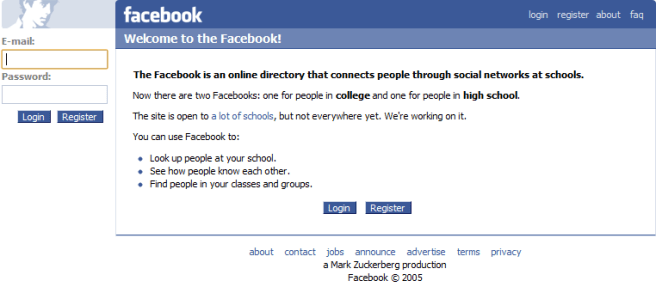
When I joined Facebook six years ago, it was a social networking site only open to college kids. When I joined, I had to have a .edu email address and join my college network. Networks were rather small and since I wasn’t really close to anyone at my school, I rarely used Facebook. Apart from status updates, the only other thing available was to join local groups such “I hate people who walk slowly over the Unispan!” or “I wish I had a girl’s superpowers so I could wear tight, revealing clothes in the middle of winter.” (Yes, these were real groups that existed.) Due to Facebook’s college students-only policy, MySpace was the dominating social network since it was available to nearly anyone with an email address (of any kind).

By “Liking” a brand or product on Facebook, you consent to your profile being used publicly on a product’s external site regardless of privacy control settings. (On Mashable, these profiles are clickable.)

I never dreamed that by the end of the decade, I’d be forced to choose between my desire for keeping my information private or having it broadcast — not only to my 200-plus Facebook friends but also to advertisers who want to fine-tune the ads they target at me or sites that want to let you know that I “Like” their brand or product.

Today, Facebook is open to anyone and currently boasts more than 400 million users globally. In addition to group pages, it now has features such as applications (FarmVille, ZooWorld), Like (formerly Fan) pages, Share, and Facebook connect to connect your profile page with other sites on the Web. What used to be a small networking site among college students is now a social behemoth that can broadcast nearly anything almost anywhere in a matter of seconds.

Some people will argue that once you post your information out on the Internet, in any way, you can’t expect it to be private. These people view the Internet as the information “town square” — in other words, the public information areana. In the past, I would have agreed with that to the extent of the information not being excluded from public searches (Google, Bing, etc.).

But to give the impression that a person’s information can be kept private while finding subversive ways to keep it public is misleading. In the six years I’ve been using Facebook, I’ve watched the social network giant cross that line time and time again. There are enough stressors and things to worry about in this world — Facebook’s complicated privacy controls shouldn’t have to be one of them. Continue reading “Is the idea of privacy simply a long-lost memory?”

How I see it: paedobaptism (aka infant baptism)

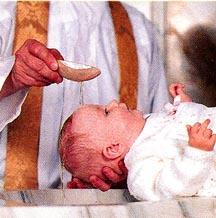
In the discussion of paedobaptism (aka infant baptism), I’ve debated in my head whether I find the practice to be Biblically justified. It’s not that I don’t want to understand how it’s a Biblical practice, I just don’t see how. For the past three years since becoming a member of the Presbyterian Church in America (PCA), I’ve read several articles and discussions at length and have listened to a full sermon on why a church says the practice is Biblical. The issue has gained theological steam in my mind as I watch several church members and dear friends baptize their infants. These events have me contemplating whether this is a necessary event I would like my family to participate in should I ever be blessed with a baby. (Heaven knows I won’t be up to the task of figuring this deep theological stuff out with pregnancy brain.)

After much thought, prayer, and deep discussion with my spouse, I’ve decided I do not support the practice of paedobaptism. While I wouldn’t leave my church over it (I joined knowing this) or rail on anyone who administers baptism to infants (I’m so past those days), it’s a practice I disagree with until I can be convinced otherwise. (My husband is also against the practice, if you’re wondering.)

Here are my reasons why I do not support infant baptism: Continue reading “How I see it: paedobaptism (aka infant baptism)”

Job’s comfort

My mood swings at the end of the month have me crazy and I think it may be better to go back on psychiatric medications than to be driven crazy by my own mind.

* * *

I’ve been told a lot that the moment I let go and stop worrying and fretting, good things will happen.

It’s much easier to dole out advice than to take it.

I won’t articulate myself here well. Not as well as I’d like to. And I’m going to be a broken record about the following subject because I’ve written on it before but since it’s my blog and I can be repetitive if I want to, I’ll do just that.

My biggest pet peeve about Christians, Christianity, and many Christian churches is how they treat gays. It’s a very big pet peeve of mine.

The majority of Christians will condemn what Fred Phelps of Westboro Baptist Church does. I don’t know a single Christian in my life who likes him and applauds what he does. And I’d gladly boot out anyone out of my life who thinks it’s okay to subscribe to his brand of hate.

But in practice, Christians have a long way to go in distinguishing themselves from hating sin and loving the sinner.

In my first encounter with “born-again Christianity” in an IFB church on the border of New York City, I listened to my pastor rail against the really important sins. You know, the high-profile, shocking ones: the pervert in the White House and the cross-dressing mayor that will parade on the street with a bunch of homosexuals. My pastor especially had lots of vitriol saved up for Greenwich Village, which was particularly interesting to me considering I wanted to attend NYU.

When I made a public profession of faith in Christ in July of 1998, I was willing to accept all of the Bible as an authority over my life. What I struggled with, however, was what I read in Romans 1.

Before I quote Romans 1, I continually ponder why my heart has always been sympathetic to gays and how Christians treat them. It’s something that I explored in my previous post on this issue, and I conjectured that perhaps it’s because I had an uncle who felt the need to hide his sexual preference from everyone to the point where he contracted HIV then eventually died of complications from AIDS.

But perhaps there’s another reason, one that probably goes a bit deeper than I’d ever thought about and it’s probably the real reason why I am so sympathetic to gays.

For several years throughout my schooling (elementary into high school—all different school), I have been accused of being a lesbian. (The worst of it actually occurred at an all-girls school; I ended up leaving the school after one year since I couldn’t make any friends.) I don’t know what I did to make a bunch of different people think I was gay.

Not particularly an earth-shattering admission, right?

Well, think about this: for years, despite all of my protests to the contrary, my classmates vilified me as if I were a member of the gay community. I was teased and bullied on same crazy notion that I was gay. This began as early as fifth grade. Unfortunately, I still remember it like it was yesterday.

Up until I was about 14, I’d spent my life living in apartment complexes. When I was about 9, a girl (maybe a year or two younger) would come visit her grandmother, our next-door neighbor, on the weekend. My parents allowed us to play together.

One day, this girl wanted to play “House.” She wanted to be the dad and I could be the mom. Perhaps I was a naive little girl, but I never saw any trouble with game. Until she told me that mommies and daddies kiss.

Hrm. She was right. I reluctantly agreed.

So she and I kissed several times while playing “House.” As an underdeveloped 9-year-old, I didn’t find kissing her sexually stimulating, however, she seemed to enjoy it more than I did. (I think the chick got as far as second base before I objected. Yes, I know it’s TMI but I think you’ve got the idea that I’ve had a lesbian experience at some point.) So I went along for the ride. I can honestly say “I Kissed A Girl” but I didn’t care for it.

So even that young, perhaps there was this deep-seeded fear that my classmates might have been right about me. Maybe I was a lesbian and just didn’t know it yet. Despite the fact that I had an affinity for smart, funny, fat, white boys, maybe they knew me better than I knew myself.

When I finally got my first kiss from a boy at 16, I was no longer a “lesbian” but a “freak.” I just couldn’t win no matter what I did.

So finally, after all these years of being accused of (and treated like) being gay, I likely found myself forced to identify with a group of people with whom I did not belong.

This set me down a path of “putting myself in the other person’s shoes.”

I didn’t wake up one day and decide that wanted to like a boy; I just did. In fact, despite my first kiss coming from a girl, my mind automatically rejected it as something I did not want. For the most part, I am not sexually attracted to women. (I have weird obsessions with actress Angelina Jolie and  model Marisa Miller that I repent of.)

I’d venture to say that most gays don’t wake up one day and think, “I’m going to make a conscious decision to reject being attracted to the opposite sex and willfully choose to be attracted to the same-sex.” Knowing all of the hate and rejection that comes with such a decision, who would want to choose to face that?

Just like most heterosexuals are naturally attracted to the opposite sex, homosexuals find themselves naturally attracted to the same sex.

It is here where the breakdown begins between me and other Christians.

Mr. A meets Miss B and the two become friends.  Mr. A sees that Miss B is a really cool gal and sexually attractive to him and Miss B thinks Mr. A is an awesome guy and sexually attractive to her so the two begin a romantic relationship. After a few years, Mr. A loves Miss B and wants to spend the rest of his life with her so he proposes to her. Miss B, who also loves Mr. A and wants to spend the rest of her life with him, accepts his proposal and the two soon are happily married.

Miss X meets Miss Y and the two become friends. Miss X sees that Miss Y is a really cool gal and sexually attractive to her and Miss Y thinks Miss X is an awesome gal and sexual attractive to her so the two begin a romantic relationship. After a few years, Miss X loves Miss Y and wants to spend the rest of her life with her so Miss X proposes to Miss Y. Miss Y, who also loves Miss X and wants to spend the rest of her life with her, accepts Miss X’s proposal and the two are soon happily married in the state of Massachusetts.

Some people get this idea that gays are nothing more than a bunch of sexual creatures who merely lust after the same sex, looking for the next best orgy. I don’t think people take the time to view gays as people who have an inclination to be attracted to the same-sex.

That being said, if we look at Scripture, the Bible has harsh words for people who in engage in same-sex acts. (That would include me at one point.) The Bible also has similar harsh words for adulterers, fornicators, liars, gossips, hypocrites, and legalists.

So here’s the fact of the matter: homosexual or heterosexual—we’re all sinners. And no matter our sexual orientation, once we accept Jesus Christ as the savior from our sins, we are freed from that sin and are ushered into grace and forgiveness. Romans 10:9 says, “If you confess with your mouth Jesus as Lord, and believe in your heart that God raised Him from the dead, you will be saved.”

It frustrates me that Christians act like the gospel is for everyone but gays. As if Jesus Christ and his saving grace is too good or above those who are in same-sex relationships.

When I read Jennifer Knapp’s interview in Christianity Today and she said that she was not attending a church, I knew exactly why. Christianity has no place for gays who are in a loving, committed relationship.

The wrath of God is being revealed from heaven against all the godlessness and wickedness of men who suppress the truth by their wickedness, since what may be known about God is plain to them, because God has made it plain to them. For since the creation of the world God’s invisible qualities—his eternal power and divine nature—have been clearly seen, being understood from what has been made, so that men are without excuse.

For although they knew God, they neither glorified him as God nor gave thanks to him, but their thinking became futile and their foolish hearts were darkened. Although they claimed to be wise, they became fools and exchanged the glory of the immortal God for images made to look like mortal man and birds and animals and reptiles.

Therefore God gave them over in the sinful desires of their hearts to sexual impurity for the degrading of their bodies with one another. They exchanged the truth of God for a lie, and worshiped and served created things rather than the Creator—who is forever praised. Amen.

Because of this, God gave them over to shameful lusts. Even their women exchanged natural relations for unnatural ones.  In the same way the men also abandoned natural relations with women and were inflamed with lust for one another. Men committed indecent acts with other men, and received in themselves the due penalty for their perversion.

Furthermore, since they did not think it worthwhile to retain the knowledge of God, he gave them over to a depraved mind, to do what ought not to be done. They have become filled with every kind of wickedness, evil, greed and depravity. They are full of envy, murder, strife, deceit and malice. They are gossips, slanderers, God-haters, insolent, arrogant and boastful; they invent ways of doing evil; they disobey their parents; they are senseless, faithless, heartless, ruthless. Although they know God’s righteous decree that those who do such things deserve death, they not only continue to do these very things but also approve of those who practice them. (v. 18-32)

No one knows how many times I read this, shaking my head in anger and frustration, wondering why God would say this about people. For several months, I didn’t want to believe this passage or acknowledge it. I finally chose to accept it only with reluctance.

Twelve years later, this reluctance is coming back to haunt me. But not only do I see gays being condemned here, I see idolatry and sexual impurity (sex outside of marriage, basically) being condemned here as well. Not only that, Paul goes on to give a lists of sins of wickedness against God: envy, strife, murder, deceit, malice, gossip, slander, God-hating, insolence, arrogance, boasting, disobedience, senseless, faithless, heartless, ruthless.

Former IFB still in recovery…

I don’t talk much about my short stint in Independent Fundamental Baptist (IFB) Land but the scars are still there. So much that I feel compelled to write a book (fiction) about it. I don’t know if there’s a Christian publisher out there crazy enough to publish it but I see it as a story that needs to be told. (I like to think Matthew Paul Turner‘s publisher might be a good place to start…)

For the first 16 years of my life, I grew up Roman Catholic. I went to Catholic schools throughout my entire primary and secondary education. I was baptized into the Catholic Church, received communion, and was even confirmed. (My confirmation name was Kateri Tekawitha.)

My uncle and aunt on my dad’s side began attending a church on the border of Queens and Nassau County, Long Island and soon my father began to go to church with them. I later joined my father and was immediately introduced to born-again Christianity. The first time I heard of hellfire and brimstone was the very day that I raised my hand and went forward during the altar call hoping I could avoid eternal damnation. I don’t think I became a “believer” that very day but it was a turning point for me in my Christian spirituality.

As a Catholic, I found that the one thing keeping me from committing suicide was the teaching that if I killed myself, I’d be plunged into an eternal hell. As a born-again Christian, I found the one thing that kept me alive was the teaching that Jesus loved me so much and died in my place to keep me out of hell. Perhaps this is why I gladly left the Roman Catholic Church for a Protestant one. (Although IFB preachers shun the term “Protestant.”)

The main character and protagonist of my novel, Ms. Montez, is based off of me. I’m careful not to make her exactly like me but the similarities are evident and many of the events affecting her and surrounding her are based on my personal experiences.

Ms. Montez is a 16-year-old Hispanic female who suffers from depression and frequently sees suicide as a viable option after struggling with being teased at school, the abandonment of her older brother, and the absence of real-life friends. But just like most people who attempt suicide, Ms. Montez does not want to necessarily die—she wants to be freed from the pain of depression; Ms. Montez is on a quest for inner peace.

When Ms. Montez visits an IFB church that her aunt goes to, she expresses an interest in knowing more about Jesus. She is drawn in and “sold” on born-again Christianity when it sounds as though she is promised freedom from depression, loneliness, and suicide through the cross of Jesus Christ.

There is more to the story but the book goes on to address issues that are common not just in IFB churches but in many Christian churches today: mental health, hypocrisy, greed, gossip, adultery, and legalism. If taken the wrong way, I firmly believe the book could be read as a condemnation on Christian churches, but it is not meant to be so. The book is about a young girl’s struggle to find and maintain a relationship with God in the midst of this messy, broken-down world of sin—the church not excluded. Continue reading “Former IFB still in recovery…”

Here, There, and Everywhere

“To lead a better life, I need my love to be here.”


I have a bunch of things I feel like writing about but they’re not topically related so here’s my mishmashed post.

Music.

I am enjoying listening to Danger Mouse’s new group, The Broken Bells. Hat tip to Derek Webb on that one.

Theology.

Up on The Resurgence blog this week:

Question 74 – Should infants, too, be baptized?
Answer – Yes. Infants as well as adults belong to God’s covenant and congregation. (Gen. 17:7; Matt. 19:14) Through Christ’s blood the redemption from sin and the Holy Spirit, who works faith, are promised to them no less than to adults. (Ps. 22:11; Is. 44:1-3; Acts 2:38, 39; 16:31) Therefore, by baptism, as sign of the covenant, they must be grafted into the Christian church and distinguished from the children of unbelievers. (Acts 10:47; I Cor. 7:14) This was done in the old covenant by circumcision (Gen. 17:9-14), in place of which baptism was instituted in the new covenant. (Col. 2: 11-13)

I seriously struggle with the idea of infant baptism also known as paedobaptism. I am a member of the Presbyterian Church in America (PCA) and appreciate that I do not need to agree with the concept of paedobaptism to be a member of the covenant community. I’m not even fully convinced that I hold to covenant theology but that’s too broad of a matter to tackle within the subject of paedobaptism.

The best case I’ve seen for infant baptism has been presented by Greg Bahnsen here. But again, it’s not that I’m not open to viewing infant baptism as scriptural or that I am adamantly opposed to it per se but I find that there is a clearer Biblical case for believer’s (or as some have called it, “professor’s”) baptism.

Perhaps, however, if I fully subscribed to covenant theology and saw baptism as a replacement for circumcision, then infant baptism would make logical sense. As a Christian who previously subscribed to dispensational theology, the jump to covenant theology is not easy. (Here’s a chart for a comparison between the two. However, I did stumble upon this, and from a quick glance, it would seem like I agree more with New Covenant Theology.)

Scripture.

Relevant Magazine had an article on the most misused verse in the Bible:

Jeremiah 29:11 that says, “‘For I know the plans that I have for you,’ declares the LORD, ‘plans for welfare and not for calamity to give you a future and a hope.”

I thought the article had great insight, especially given that as humans, we have a tendency to look at God as a vending machine: pop our prayer request in the coin slot and wait for our requested result. The author expounds on the context surrounding this oft-quoted verse which shows this verse is not telling readers that God will give us whatever we desire.

Stay-at-home dads.

Matthew Paul Turner at JesusNeedsNewPR tweeted a link to Nicole Wick’s post about Mark Driscoll who bashed stay-at-home dads.

The video is a little old but I was surprised to hear this view from Driscoll given the fact that I usually agree with him. The fact that he was only willing to make “rare exceptions” for men to stay at home to take care of the family was rather appalling to me. In this economic climate and culture, it’s possible for wives to have a better-paying and steadier job than their husbands. In that case, the right way for a husband and father to provide for his family is to let his wife bring in the necessary income for them so that he can be at home rearing the children. (We are assuming in this scenario that the parents have decided they will live off of one income so that one of the parents can be home to raise the children.) An ideal situation would be for a mom to be at home with her children (should she choose to do so) but that is not always the case and I don’t believe that it must always be the case. Driscoll is way off the mark here.

Miscellaneous.

I think there’s more a-brewin’ in my head but the words are all jumbled and I can’t get them out coherently. Some other things going on:

  • I’ll begin editing on my novel soon so that will be quite a challenge. (See hard copy mess in right photo.)
  • I’ll be leading the women’s weekday Bible study during the summer so that’s another exciting thing on the horizon.
  • I’ll also be part of a book club in which we’ll we reading Ed Welch’s When People Are Big and God Is Small. I read through it for the third time last year but highly enjoy the book and find that it’s chock full of wisdom to the point where I don’t mind reading through it again.
  • My husband and I may be going on a trip to Cancun during the summer with my paternal cousins, which I’m highly looking forward to so that I can establish solid relationships with them.

Perhaps you didn’t care to know all that but it made me feel better to type it out.

Food for thought #6: A New Kind of Christianity

The God Question

McLaren starts out this section by—what seems to me—as apologies for God’s atrocities:

Now, I am in no way interested in excusing or defending divine smiting, genocidal conquest, or global quasi-geocidal flooding; I’m just saying that even if these are the crimes of Elohim/LORD, they are far less serious crimes than those of Theos. (p. 99)

Then McLaren starts in on explaining how God isn’t actually violent but since people see God as violent, they act out how they see God. (Conversely, if we all saw God as loving, we’d all be loving to one another.) He uses an analogy of math concepts revealed in textbooks during the course of a person’s schooling as an example of how humans understand God: at first we learn very basic concepts since we are so immature but then we learn very complex concepts because humans have matured in their understanding of God. And as icing on the cake, McLaren takes a cheap (and distasteful) potshot at Christians who eat meat, subscribe to a just-war theory, and use fossil fuels. (For someone who talks a lot about being humble and mild-mannered, his snark and disdain for Christians who think differently than him is quite apparent in this book. I’ll admit, however, I am guilty of the same toward him now.)

The more I read McLaren’s theories, the more I cringe. The God of the Bible is loving, merciful, gracious, and slow to anger. But the God of the Bible is also a just, righteous, and jealous God. He is not McLaren’s caricature of a bloodthirsty “Theos” but McLaren’s happy-go-lucky description of Elohim is neither the full picture. McLaren often attacks Christians in his book, painting them as fundamental extremists or right-wing Republicans. It’s like saying all Democrats are treehuggers. It’s tough to be open-minded to other people’s opinions or “new” ideas when they brand you with a scarlet letter just for identifying yourself with the same religious group. I am neither a fundamental extremist nor a right-wing Republican yet McLaren often makes me feel as though my view of the Bible makes me part of that group. He couldn’t be more wrong.

I’m easily getting tired of McLaren now. He worries that Christians will use the story of the flood (Noah) to justify genocide [insert eyeroll here] then comes up with this:

Yes, I find a character named God who sends a flood that destroys all humanity except for Noah’s family, but that’s trivial compared to a deity who tortures the greater part of humanity forever in infinite eternal conscious torment, three words that need to be read slowly and thoughtfully to feel their full import. (Endnote: For this reason, I would grimly prefer atheism to be true than for the Greco-Roman Theos narrative to be true. And for this reason, I joyfully celebrate the narrative centered in Jesus as a better alternative to both.) (p. 99, 272)

[insert facepalm here] The ironic thing about the “narrative centered in Jesus” was that Jesus is the one who introduced the concept of hell, or “eternal conscious torment,” as we know it today. What Bible is McLaren reading? (Is he reading one at all?) Continue reading “Food for thought #6: A New Kind of Christianity”

Food for thought #5: A New Kind of Christianity

The Bible Authority Question

Not too long ago, I wrote this:

I’m excited about reading through A New Kind of Christianity. I have an open mind about this and am totally willing to transform my Christian faith and live it in a new way with only one caveat: it must remain true to the Bible. If McLaren argues something that goes against what the Bible says, I’ll point it out. We know very little about Jesus apart from the Bible. And we would know nothing about Jesus’ teachings without the Bible. So holding McLaren and his questions and responses to a Biblical standard is neither unreasonable nor unfair since he is talking about the the Christian faith.

In Part II of McLaren’s book, he attempts to address the kind of authority the Bible should have in people’s lives. Considering the Bible is the standard I’m holding him to, I wanted to see how he’d address this issue. First, he addresses how the Bible has been misused. He lists three problem areas:

1. Scientific Mess

Fundamentalism… again and again paints itself into a corner by requiring the Bible be treated as a divinely dictated science textbook providing us true information in all areas of life, including when and how the earth was created, what the shape of the earth is, what revolves around what in space, and so on. (p. 68)

He goes on to say Christians constantly end up “on the wrong side of truth” because of this and talks about how Christians who use the Bible as their scientific standard were wrong in Galileo’s time (heliocentric theory), were wrong in Darwin’s time (evolution), and are even wrong now (climate change/”ecological crisis”). [Note: In a sense, I agree with McLaren—the Bible was never designed as a science textbook and to treat it as such, I think is wrong. I believe what the Bible says on how everything was created but beyond that, the Bible doesn’t get into scientific specifics and to try to deduce things that aren’t there isn’t wise.]

    2. Ethical quandaries

    The Bible, when taken as an ethical rule book, offers no clear categories for many of our most significant and vexing socioethical quandaries. We find no explicit mention, for example, of abortion, capitalism, communism, socialism, schizophrenia, bipolar disorder, obsessive-compulsive disorder, autism, systemic racism, affirmative action, human rights, nationalism, sexual orientation, pornography, global climate change, imprisonment, extinction of species, energy efficiency, environmental sustainability, genetic engineering, space travel, and so on—not to mention nuclear weapons, biological warfare, and just-war theory. (p. 68-69)

    He goes on to say that Christians have misused the Bible to support unethical positions such as segregation and preventing interracial relationships. [Note: The Bible is not a socioethical rulebook nor I do believe it is intended for that purpose. However, the Bible is very much a moral book—it gives people basic rules to live, clearly saying what should and should not be done. Moral standards influence ethical decisions, hence, why some people refuse to tell even a “white” lie (because God says “do not bear false witness”).]

    3. Trouble relating to peace

    Basically, McLaren paints a broad brush of Christians generally being more hawkish and too eager for war. [Note: I’d actually agree with him here.]

    We must find new approaches to our sacred texts, approaches that sanely, critically, and fairly engage with honest scientific inquiry, approaches that help us derive constructive and relevant guidance in dealing with pressing personal and social problems, and approaches that lead us in the sweet pathway of peacemaking rather than the broad, deep rut of mutually assured destruction. (p. 70)

    In an attempt to show how Christians have radically misused the Bible to support unethical positions, McLaren takes his readers through a historical account of slavery quoting sections of pro-slavery books defending the practice of slavery. While my heritage is not directly tied to American slavery, I found the quotes McLaren used to be painful to read. One or two passages might have sufficed to prove his point, but he devotes more than FIVE pages to pro-slavery writing—something I found needlessly excessive. Why does McLaren have to search so hard to justify his points by quoting idiots? I’m sure there were abolitionist books that quoted the Bible too but that would weaken McLaren’s argument so there’s none of that here.

    Then in Chapter 8, readers discover how McLaren really views the Bible:

    At every turn, we approach the biblical text as if it were an annotated code instead of what it actually is: a portable library of poems, prophecies, histories, fables, parables, letters, sage sayings, quarrels, and so on. (p. 79)

    There can be no argument with McLaren here—he’s made up his mind about how he views the Bible. To him, the Bible is nothing more than a beautiful piece of literary text. He thinks that the Bible should not be seen as an inflexible constitution or rule of law but rather as “a library of culture and community.” (p. 81) Continue reading “Food for thought #5: A New Kind of Christianity”

    New Steps

    Bonnie Gray, who serves up daily shots of faith over at Faith Barista, issued an invitation for bloggers to write about the hamburger of renewal and new steps. I gladly accepted.

    The challenge to write about new steps is based on Ephesians 4:22-24 in which Paul writes:

    lay aside the old selfbe renewed in the spirit of your mind and put on the new self

    So I’m sitting here, wondering what aspect of my old self I should discuss casting off, what renewal would look like, and how to put on the new self and what that would look like. So here’s an aspect I’ve chosen to address:

    Perseverance. Continue reading “New Steps”

    Personality test: Melancholy Sanguine

    Update as of 11/8/11: It appears the link to the original personality test I took is no longer valid. A quick temperament test is found at writing.com if you scroll past the four temperament descriptions. I have provided the link to it here for your convenience: http://www.writing.com/main/quiz/item_id/1145443-Temperament-Test. Keep in mind: links don’t remain active forever so enjoy the link for however long it lasts. View my latest post on the DiSC assessment personality test here.

    So I took this personality test and it told me I was Melancholy (45%) Sanguine (23%). I found the strengths and weaknesses of the Melancholy personality (much more so than Sanguine) describe me rather accurately. I starred the things that I thought described me (I’m guessing on the parent part).

    Continue reading “Personality test: Melancholy Sanguine”