During the past few weeks, my husband and I have had discussions on and off about race in America, specifically brought on by my awareness of Black History Month.
I have been consistently debating with him on a variety of topics related to black culture in America, ie, the current need for Black History Month, affirmative action, racial quotas in the workplace, scholarships based on race rather than merit, the double standard for whites and other minorities, etc. Usually by the end of these discussions, I am frustrated and downright near livid that he can’t seem to understand my position and I cannot understand his only because we do not share the same skin color.
This is a repost on my thoughts on celebrating Black History Month from last year. I believe that once the American school system fully integrates—not only Black culture but also all other racial and ethnic groups into American history and American literature curriculums—will America be able to move forward in transcending racial barriers. As it stands, the election of a biracial president is simply not enough (even though many people thought and hoped it would be).
Noted Black American poet and writer Langston Hughes
February 28th marks the end of Black History Month for 2010—something I chose not to take part in this year. Not because I have any personal objections to commemorating Black American history or anything; I was simply preoccupied with other things like reading up and writing about the Emergent Church. I also read the hardcover version of Joseph C. Phillips’s book, He Talk Like A White Boy, and had hoped to provide a review sometime during February but upon receiving the paperback version, I discovered more essays were added so a book review on that has been put on hold for now.
For some time, I have been mulling on and off about the issue of Black pride. A counter in this discussion is often, “Why is it okay for people to have Black pride and if a White person has White pride, it’s White supremacy and racism?” While I can see that as a valid argument, I submit the idea that Black in America has evolved from a purely racial context to a mostly cultural context.
Many white people (or Caucasians) in America likely know their ethnic background based on their last name or some kind of genealogy. No one knocks Italian-Americans for having Italian pride or Irish-Americans for celebrating their heritage on good ol’ St. Patty’s Day. Americans who have an Italian or Irish background are, quite frankly, part of the White race but choose to emphasize their ethnicity rather than simply the color of their skin. Even those who are of white supremacy organizations are known as WASPs (White Anglo-Saxon Protestants). This WASP indication places them in the context of British, Germanic, and possibly even Danish ethnicity. I daresay most people don’t have a problem with Americans celebrating their Polish or Germanic heritage.
But when it comes to Black people, they are slammed for choosing to identify themselves as African-American: “Oh, you’re not really African-American. Look at Kwame over there. His parents are from Zimbabwe—he’s a real African-American.” So what are Black people in America?
Well, simply put, Black people in America are Black Americans. Should they choose to identify themselves as African-American, that is purely their prerogative even if the last ancestor that hailed from Africa was back in 1776. The fact of the matter is that most people who are considered Black in the United States are most likely of Sub-Saharan African descent.
But 1776 is a long way away from 2010. A Black American stepping onto African soil would feel strangely at home and strangely out of place at the same time. Joseph C. Phillips writes:
There is a romanticism associated with Africa that runs deep in the black community. … For me, the bloom fell off the African rose fairly early. Maybe it was when a soldier armed with an AK-47 boarded our bus on the way to the hotel. Or maybe it was when I realized Nigeria was so rife with corruption that cashing a traveler’s check was a major ordeal. The romance was certainly gone once we drove through the countryside and witnessed poverty like I have never seen before. … Alas, my visit to Africa proved less of a homecoming than an affirmation of my Americanness.
… Later in the trip, I had an opportunity to meet socially with several Nigerians. Among my fellow travelers there was a tendency to speak of American blacks as if we were Africans living abroad, everyday Africans did not share this view. They saw us as Americans, first and always. Even to the Nigerians I met who, by and large, were educated in the West we were as American as, well, George Bush.
… That’s not to say I did not feel the tug of Africa at all. I discovered that it is very difficult to be a black American and experience Africa purely as an American. Everywhere I looked, there were bits and pieces of myself.
Black Americans, like Italian-Americans, Irish-Americans, or Polish-Americans, are very much African but moreso very much American.
The estimated date for final importation of slaves from Africa is in the mid-1800s. That leaves a century and a half in which generational Black Americans are most likely to have had ancestors directly from Africa. Within two centuries, however, Black Americans have evolved from African culture and developed their own kind of culture relative to the United States alone. As a result, being Black in America is not simply a matter of race, it is also a matter of culture. Race and culture are now inevitably intertwined.
So when I think of Black pride, I don’t necessarily think of Black Americans taking pride in the color of their skin but rather who they are as a culture that happens to be connected to the color of their skin. I do like the way the writer of the wikipedia entry on African American culture put it:
For many years African American culture developed separately from mainstream American culture because of the persistence of racial discrimination in America, as well as African American slave descendants’ desire to maintain their own traditions. Today, African American culture has become a significant part of American culture and yet, at the same time, remains a distinct cultural body.
There is a style of worship, a style of music, a form of art, and a form of dance that is intrinsic to Black American culture. While some of it may be derived from Africa, it has evolved over the centuries to become uniquely Black American (or African-American, if you will).
But then I wonder whether if it’s sinful to have Black pride within a cultural context and I don’t believe so. Just like the ethnic pride of being Spanish, Germanic, or Swedish, I don’t believe pride in immutable, nonsinful qualities is wrong—it’s the way God made us! Where it does start to go wrong is when these groups use their ethnic position as a form of superiority, especially in order to oppress one group over another. Black supremacy is just as wrong as white supremacy, no matter what the context.
So when I think of Black History Month, and heading into March Women’s History (or Herstory, whatever you want to call it) Month, I don’t see such remembrances as an issue of superiority of one group over another (black vs. white or male vs. female). Rather, I see them as a way of celebrating and reflecting on the accomplishments of formerly oppressed groups that overcame significant obstacles to become thriving members of American society.
Since August 2009, I put my life on hold, hoping that our family would have expanded by now. As of February 2011, it hasn’t. And as of February 2011, I realized that I keep putting my life on hold for something that isn’t here and is nowhere close. So I’m moving forward with my life, come what may.
The more I try to plan my life, the more God messes with my plans. I had my life figured out at 18: get married at 25 and children at 30. I got married at 23, but I guess I’m on track for children at 30.
I’ve said before that I don’t adapt well to change. I also don’t really like for God to screw with my plans. (I know, it’s like a 5-year-old telling the 45-year-old, “My way or the highway!” It just doesn’t work.)
So for once, I’m going to try to go along with “the road map on the ground,” as Elizabeth Edwards liked to say. I had a planned road map but it didn’t match the ground so my ideal map needs to change to reflect reality.
I’m contemplating pursuing a Master’s in Library Science, specifically in the field of digital libraries. I enjoy my job at the library immensely and hope this is something I can continue to do at 65 or 75 when I’m old and grumpy. I’m going to take my GRE, apply for scholarships, and hope that I can start a Master’s in the Spring of 2012.
I’ll also plow ahead on my novel. I will rewrite it and revise it this year and begin submitting queries to agents by the end of the year. Just in time before I become swamped with fifteen credits of classes for nearly 2 years.
I am moving forward, adapting my map to match the ground, and open to God screwing with whatever’s in my head. (He does anyway; I’m just going to make a more concerted attempt to not resist Him anymore.)
I’m facing a ton of decisions right now, and I feel like my head’s about to burst. Instead of rambling, I’ll let Brandon Heath succinctly sing things out. Click on the image below.
On Twitter, there’s a semi-joke in which someone will mention a problem (usually trivial) in his or her life followed by the hashtag, #firstworldproblems, meaning that the problem is most likely to occur in a Westernized country, ie, “Ran out of coffee grounds; Gonna be a rough morning. #firstworldproblems.” I’d like to propose the idea, however, that Westernized Christians, typically Americans (as I am one), deal with #firstworldXtianproblems.
During the past few months, I’ve been mulling over the idea that American Christians do not face the same problems as early Christians, Christians in other parts of the world, or even American Christians of yesteryear. The challenges American Christians—who I’ll refer to as ACs from now on—face are unique to this era and country. In fact, the problem for ACs is that… there’s no problem at all. We are much too comfortable.
As I sit comfortably in my bed in the cushy suburbs of Philadelphia, I think of people suffering in growing Christian churches in places like China or Iran. The suffering they experience so much more real than wondering whether I should go to church today because I’m so tired. By admitting Christ and him resurrected, they put their lives on the line for their beliefs. (And their belief in Christ is so real that many of them are martyred for their faith.) I highly believe that 90% of ACs would crack under that pressure if put into the same situation. How real is our suffering? How real is our faith?
When Jesus calls his followers to suffer for him, to give up their lives for him, to follow him, American Christians often think back to the Christians of the early church who were martyred, became fugitives, or met together secretly. ACs (except foreign missionaries) know nothing about fearing for their lives because of their faith, needing to hide their faith from their neighbor or government due to physical repercussions, or meeting in secret because of widespread federal and/or societal persecution. Here are some of the problems ACs typically face:
I don’t like this pastor. I think I’ll find a new church.
No one talks to me here. I could go in and out of church on a Sunday unnoticed.
This church is too big; I want to find one smaller.
There’s not enough activities for my children here.
It’s a dying congregation! Everyone’s old.
No women pastors for me. I’ll find something else.
I don’t like praise and worship bands. This place is too contemporary.
I don’t like that boring piano and organ. Those hymns make me sleepy. I need to find something upbeat!
Ew! They use the NIV [or Bible translation said person doesn’t like] here!
Granted, there are some legitimate concerns ACs may have with churches, ie, if a church isn’t using a Bible as its main source text for the service and sermon, it’s not a real (or good) Christian church. But most of the issues ACs have are trivial.
So what does it mean to forsake all and follow Jesus as ACs? Does it mean not investing in 401(k)s (for future security) in order to donate to a charitable organization that will help others in the here and now? Does it mean giving up the dream of owning a home in order to adopt a child and transform that kid’s life?
As ACs, we face many trivial problems that in the grand scheme of things, aren’t really a big deal. What we consider to be suffering, in many ways, is really just our way of complaining that we’re no longer comfortable. (First-world response: “The heater broke in our church! I’m not going to go to church to freeze my ass off.” A better response: “The heater’s broken at church so we need to bundle up a bit more to ensure that we can stay warm during the service.”)
Any ideas on what true suffering for American Christians looks like? Or do ACs not know what suffering for the sake of Christ really is?
I have been very oversensitive lately and keen to my mistakes. I’m at a crossroads right now where I’m feeling overwhelmed. Considering a number of options and I’m not sure which way is right, first, well, or good. But I will trust God like I did at NYU. Put one foot in front of the other and hope God illuminates each step. (He’s very good about not illuminating the rest of the way.)
“Thy word is lamp unto my feet and a light unto my path.”
Because I’m not original for posts lately and like funny videos (especially FAIL videos), I’m showing a recent favorite by Rhett and Link about YouTube’s newest captions.
The library makes a cameo in the video below. See, kids? There IS a place kinda like Netflix and Blockbuster where you can rent books instead of having to buy them from Barnes & Noble or Amazon. What a revolutionary concept!
Black woman tip: She ain’t really sleepin’ if her hair ain’t wrapped.
Image from essence.com
For the first time in a long time, my mind is blank. I am in this odd space where I have nothing to say and no insight to provide. I am not witty, clever, or thoughtful today. I’ll eventually get back to my Enjoying God series but I’m not quite there yet.
You say you’ll give me eyes in the moon of blindness / A river in a time of dryness /A harbour in the tempest / All the promises we make / From the cradle to the grave / When all I need is you ~ U2, “All I Want Is You” ~
The past few days have been a bit strange. I’ve gotten the sense that even though I’ve tried to turn my back on God and walk away from Him, it’s like I’m in His hand and if I run to jump off the edge, He simply cups the other hand underneath to catch me when I fall so I’m still securely within His grasp.
Rinse and repeat.
I’ve been angry, indifferent, frustrated… a variety of emotions that have me “shaking my fist at God,” so to speak. I try to say, “Look, God, don’t want You, don’t need You, go away” as He’s patiently listening, letting me think I’m escaping for a bit when I suddenly realize that He’s still there, right behind me. In a sense, it’s frustrating.
But on the other hand, rather liberating.
Because as I struggle through this spiritual depression, He’s made it very clear to me that He’s still near. In this odd time of feeling faithless and reading the Bible on and off, I’ve got the oddest assurance of salvation through Jesus Christ. (Considering that assurance of salvation is something I struggle with, this is no small feat.)
My pastor, counselor, and friends have challenged me in my faith and through this struggle, for which I am very thankful. I am still stressed and overwhelmed, but am very much getting the sense that God is here—somewhere—with me.
I haven’t blogged for two days because other pressing matters took my attention on Thursday and then Friday, I was simply too exhausted. But my atheism pretty much ended on Thursday after I nearly got into accident and went into “Thank You, Jesus” mode for being spared. (Mini Coopers should NOT be on the roads!)
In any event, my atheism ended that day, and I decided that I’d probably slowly get back into Christianity. The odd thing is, once I decided that, I haven’t done my devotions or prayed since because I stopped actively thinking about how to avoid God and became a passive Christian again.
I grew no closer to atheism today. Perhaps my life is fully entrenched in Christianity. Tomorrow certainly won’t be any better as I start off my morning by meeting with my church pastor.
Talked to a Christian friend who I haven’t spoken to in AGES, which really blessed me and lifted my spirits for a bit
Spoke to a good friend from church who I consider my sister-in-Christ/accountability buddy and she always—and I mean ALWAYS—sets me straight when I’m feeling lousy and sorry for myself
Received encouragement from an online friend through comments and email
Promised to pray for continued success for a friend NEXT WEEK (somehow this strikes me as funny—delayed prayer)
Said “Praise the Lord” again when a slowpoke driver finally got off the one-lane road
I could go on and on about the things I didn’t do but since I’m supposed to be an “atheist” this week; it doesn’t matter, right? For this week, no, it doesn’t.
If only I could cut myself this much slack as a Christian. While a Christian should care about the things he or she does for God each day, something’s wrong if that Christian obsesses about it. (Something I tend to do.) More of Mary and less of Martha.
Maybe I should be a Christian atheist for a little bit longer… but I can’t resist thanking God for a somewhat enjoyable birthday.
So far, atheism FAIL for me. Seriously. The em-phah-sis has decidedly been put on the Christian aspect so far. (Also, I have no issues splitting infinitives in case you didn’t know.)
The ironic thing about trying to live as if God doesn’t exist is that my mind has decidedly shifted to constantly thinking about God. For example, I catch myself doing “Christian” things when I don’t want to:
Reading my daily devotional and trying to decode some secret message from it (it’s just text, really)
Saying “praise the Lord” during a particular upbeat moment of the day (what atheist praises God?!)
Purchasing the following (Christian) books for my birthday gifts:
These certainly are not the actions of someone who wants to be an atheist or even thinks atheistically.
One could argue that I’m just following habits and that habits, including Christian ones, are hard to break. But why am I developing Christian habits once I’ve decided to try and abandon my faith for a week?
Or perhaps, a likelier scenario: these habits have been here all along and I’ve been so consumed with perfectionism in the Christian life (trying to “do” things on my own) that I’ve never noticed them.
One of my struggles as a Christian has always not been doing enough for God. I’m always frustrated by how I’m not doing the MAJOR things in life, ie, converting masses of degenerates to the praise and glory of God!!! (Sorry, I couldn’t resist the fundy Baptist term “degenerates.”)
On a more realistic, practical level, I am frustrated that I haven’t accomplished the following:
Organizing seminars and workshops through my church that ministers to the practical needs of women in the community, ie, shortcuts and tips to navigating a computer; 30-minute meals (or 15 for when the kids are screaming); audiobooks & e-readers: why use them and how?
Setting up a breakfast/soup table on a Saturday in a poorer area to minister to the people of that community
Spearheading events for women who need monthly fellowship to relax, unwind, or discuss issues that are weighing on their hearts (à la “Mental Health Anonymous”)
Those are a few practical ideas I have in mind (inspired by library events) that I think could be a good part of church outreach. Perhaps they’re middle-class-ish, but I don’t think too many women would be put off by prayer at the beginning and end of a seminar if they can walk away with some useful and valuable tips that make their lives easier or more enjoyable.
These are things I haven’t done and want to do. As a result, I constantly count my missteps rather than my steps:
Didn’t do devotions today!
Didn’t pray today!
Didn’t bless a Shih Tzu today!
Didn’t do the sign of the cross while driving past St. Katherine’s today! (Oops, wrong denomination.)
You get the point. I’m so busy focusing on all the things that I don’t do as a Christian that I begin overlooking the things that are good and right and noble and all those nice things that are somewhere in the Bible. (And because I’m a demi-atheist, I am not looking up the chapter and verse which is probably somewhere in Philippians 4:8.)
And perhaps—just maybe—some Christians trying to live as atheists for a day may improve their relationship with God (as mine seems to be slowly doing; ugh!). Maybe by actively avoiding God, some Christians will be drawn closer to Him instead of trying to passively grow closer to Him.

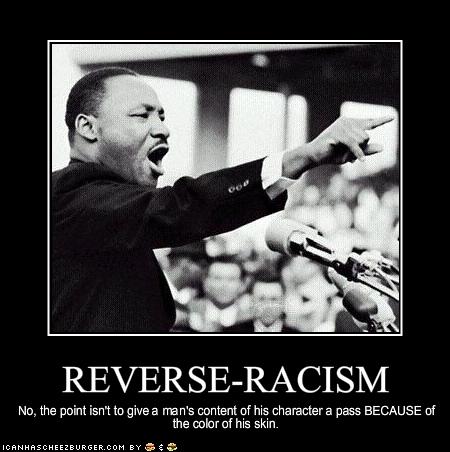 Image from cheezburger.com

 Image from maps.google.com
 On Twitter, there’s a semi-joke in which someone will mention a problem (usually trivial) in his or her life followed by the hashtag, #firstworldproblems, meaning that the problem is most likely to occur in a Westernized country, ie, “Ran out of coffee grounds; Gonna be a rough morning. #firstworldproblems.” I’d like to propose the idea, however, that Westernized Christians, typically Americans (as I am one), deal with #firstworldXtianproblems.

 This Journey Is My Own