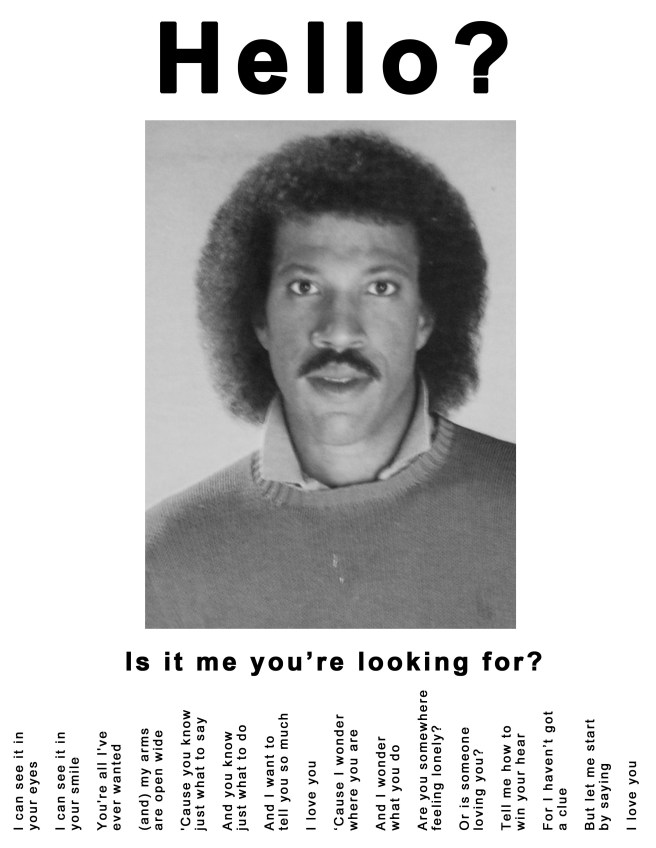
My love for Lionel Richie’s sappy ’80s songs is immense. So I simply needed to share the current Internet meme that has gone viral with those of you who may not have seen it. (That, and I’m currently hurting for original blog material.)
And if, for whatever reason, you don’t get it, it means you don’t know the song so you don’t get the joke. Listen to it below:
I’m trying to institute the discipline of praying consciously every evening. I really suck at regularly praying: praying for myself and for others so I’ve reverted to the basics—“Our Father” also known as the Lord’s Prayer.
Our Father in heaven, hallowed be your name. Your kingdom come, your will be done, on earth as it is in heaven. Give us this day our daily bread, and forgive us our debts, as we also have forgiven our debtors. And lead us not into temptation, but deliver us from evil. —Matthew 6:9-13
I grew up in the Catholic Church for the majority of my youth and I attended Roman Catholic school from K through 12 so the ending phrase, “For Yours is the kingdom and the power and the glory forever” is not easy for me to remember or natural to me since it was not taught. Depending on what feels comfortable and genuine, I either give the addition to the Lord’s Prayer a shot (which I inevitably screw up) or leave it out.
But the Our Father is so second nature to me (and many others with a Christian background), it could be vain repetition. I could easily recite this prayer without putting any thought into it. But I’m trying really hard not to. I’m doing my best to consciously say the Our Father while thinking through what I’m saying. Another good way to do this is to paraphrase a few lines (without the Message Bible!).
And Jesus says to “pray like this,” not necessarily “this is the definitive answer on what you should pray.” He encourages us to pray along these lines addressing the following:
To whom we are praying
Where this God is
An important attribute of this God
A promise from this God
Something that prevailsfrom this God over us as humans
Where this God’s kingdom extends
Request to provide for our daily needs (not wants)
Repentance with God
Repentance with others
Request to exhibit one of God’s attributes (such as remaining holy and pure)
Request to avoid Satan or evil deeds
I’m confident there’s more to the Lord’s Prayer than that, but I’m not a Bible commentator. I’m just a layperson trying to force myself to first establish the discipline of speaking to God daily with words I can speak subconsciously before moving on to crafting thoughtful, original prayers. Daily prayer goes against my nature, but especially when engaging in spiritual battle, it’s extremely necessary.
I am able to active think about what I pray even though it could be rote.
I do this task at least once a day. (Usually before sleep for me.)
I pause with each phrase to let the words fully sink in and make sure I understand what I’m saying to God before continuing on with my prayer.
At the end, I will tack on requests for others that I remember. Maybe even include a request for myself.
Establishing discipline is not easy, especially when it comes to prayer—a habit that is not natural to most people. But for many people, mindful, daily recitation of the Our Father is a good place to start.
I’d love to hear other people’s thoughts on establishing the discipline of daily prayer, especially for those new to the faith or uncomfortable with prayer.
I am ADHD central. If you check out my sidebar, you’ll see I’m reading several books at once. I’ll read a few pages in one book then read a few pages in another before jumping to another book. It takes me a long time to finish books this way but it satisfies the variety of information my attention span craves. (I suppose that says I have little to no attention span.)
So I’m not up for reading particularly long Bible passages on most days. In fact, I’m usually averse to it. (The Bible can be so dry and dull in some areas!) But what I do each day—and any Christian can do this—is read one Bible verse. A full sentence. I use YouVersion’s Top Verses to Memorize reading schedule plan for this. Or you can flip open to any book in the Bible. Or go chronologically. Your choice.
I usually find that I’ll read a few more verses to get a proper context and then be done. Some chapters are very long and that often discourages me. But one Bible verse, one simple nugget from God’s word counts as Bible reading and don’t let anyone tell you any different.
If people can read five chapters in a day or the Bible in a year, good for them. Maybe you’re like me—you’re lucky to even crack the holy book open. But just one verse can do it.
But don’t do it mindlessly either. Make that verse count. Read it and think about it. If it’s an odd verse about dashing your enemy in pieces or so-and-so begat so-and-so that doesn’t resonate with you, flip to another verse that makes sense to you. (The Psalms and Proverbs are always good for this.)
Image from my.opera.com (user: yulenka)
When you read about the heavens declaring the glory of God (Ps. 19:1), think about how awe-inspiring it is to see the heavens from the cabin of an airplane. Or the rays of sun floating above the clouds at 40,000 feet above ground. When you read Jonah, see if you find yourself needlessly angry (as he did) or neglectful of any duties you’ve been assigned to. The Bible isn’t mindless and a brief reading of it doesn’t need to be either.
One way I’ve been able to get Biblical truth is by reading books based on Scriptural truth. It’s nice and it’s helpful, but it’s not the Bible. Reading snippets of Charlie Sheen’s recent crazy quotes are comical and (yes, even) awesome, but when you watch the context those snippets came from, the quotes are actually sad. Original context changes everything so one really needs to go straight to the source instead of relying on quotes elsewhere that have the potential to change the meaning.
Just one verse a day: available on BibleGateway.com, Bible.com, Christianity.com, and a whole host of other Bible-based sites. Make a conscious effort to get into the daily habit of reading one verse. You may read more but read at least one verse actively and meditate on it afterwards.
Just like savoring a really delicious, decadent dessert can be more satisfying than scarfing down a burger and fries on the fly, understanding one Bible verse is better than mindlessly flying through the Bible in a year.
Again, to belabor my point:
read one verse,
meditate on it,
then digest it (allow it to affect your life somehow).
For the first time since 2003, I let my LiveJournal Paid account status expire. It’s sort of an end of an era for me because I’d bee paying for and using LiveJournal shortly before I began dating my now husband.
My car that I purchased in September of 2003 is also breaking down. It’s really on its last legs, and I need to get a new one, like, yesterday.
While I’m sad about those things, I’m happy to say that my husband (who appeared in my life around the same time as LiveJournal and my car) is still very much active in my life and showing no signs of leaving me anytime soon or reverting to “Basic (unpaid)” status. (At least, he better not!)
It’s just a small reminder to me that while material things are nice, they all come to an end at some point. Only God and people really matter.
Facebook and Twitter are two social media tools that feed into a person’s habit of self-absorption. (Blogs do a great job of that too.) For me, Facebook and Twitter feed into my delusion of self-importance, one I will attempt to curb. Continue reading “My Fight with Facebook and Twitter”→
Taking a detour to more lighter-hearted fare, I wanted to add a bit of insight into Things You Probably Didn’t Know About Your Public Library. Dale Spindel over at “Hey, There’s a Dead Guy in the Living Room” posted two wonderful posts about misperceptions at public libraries (see first post and second post).
Spindel hits the nail on the head on some of these. I began working at a library last summer and absolutely love it! I love helping people find what they need and providing quality customer service to every person. (In fact, I am considering going for a Master’s in Library Science next year as a result.) I’ll probably reiterate a few points Spindel had but also add a few of my own: Continue reading “12 Things You Probably Didn’t Know About Your Public Library”→
(Clockwise L-R) Freezepop, Kanye West, September, Christina Aguilera, Lady Gaga, Madonna, Timbaland, La Roux, Beenie Man, Lynyrd Skynyrd
I’m trying to get back into the habit of exercising regularly at the gym. There are a few tunes that are the perfect tempo to get me warmed up, keep me at an energetic level, and help me to cool down. These are my tried and true (so far) that I keep going back to every time I fall away from the gym and come back… again.
1. We are not stupid. We know when you are gaming the system. We know when you are trying to be deceitful. And we will monitor you if you raise suspicion or seem consistently dishonest.
2. When you come to the checkout counter (aka circulation desk) with more than 5 CDs at time, we pretty much know you’re burning these CDs on your machine but it’s not our job to police you.
3. We would really, really appreciate it if you stopped using that big floppy disk that has virtually nil storage capacity compared to a tiny flash drive that has tons of storage. In this case, bigger is not better.
4. It’s almost always not a stupid question.
5. We know that you swear on your dog’s life that you returned that book and returned it on time, but if we can’t find it on our shelves, we’re pretty certain it’s still in your possession in some form, most likely under a seat in your car. Please check and double-check under the seats in your car before adamantly insisting that you’ve returned an item.
6. You are responsible for a borrowed library item in your possession. As a result, we will hold you responsible if it is returned damaged or missing in any way (eg, water damage, cracked CDs, missing DVDs from a set, an unidentifiable sticky substance we do not want to touch without using a biohazard suit).
7. We love talking to our patrons and spending time with them at the circulation desk, but be conscientious of others. Sometimes lines quickly and quietly form behind right behind you and it’s not pleasant for another person to be kept waiting because you want to keep talking. If you really want to keep talking, at least move to the side so we can speedily assist the next person but really everyone would prefer it if you saved the conversation for a less busy time.
8. Please do not shelve things yourself. You’ll most likely put it back in the wrong place and cause undue distress to others because it can’t be found. If you pull any library item off a shelf and choose not to check it out, please ask the staff where you should place it. In some libraries, there are carts for depositing items you do not want. If this is not the case, leave the items on an empty table or (even better!) bring it to the circulation desk and tell the staff you don’t want the items.
9. We are not tax advisors. Do not get huffy when we cannot offer tax advice beyond the location of your tax forms. (Actually, some librarians might be cheeky enough to tell you this.) Some libraries have third-party tax assistance that comes in and helps patrons with tax inquiries; ask your local library whether this is a service it offers. In addition, do not get huffy with us if we have run out of tax forms. We do not poop out these documents on site and we are not intentionally withholding them from you; they are provided to us by the government who would prefer that you file electronically by walking into H&R Block or using Turbo Tax. Blame them, not us.
10. Using the library is a privilege. If you rack up fines, pay them. If they’re extremely excessive, you may be able to negotiate them down some by speaking to the person who oversees circulation. If the fines are constantly excessive, we lose patience and sympathy. Take care of the items that are loaned to you (remember rule #6!), return them within the allotted time frame (or pay promptly if returned late), and be courteous to staff.
If the library is your primary source for books and other media, then you need library staff to be your “friends.” Being a nice, courteous patron goes a long way and staff will go out of their way to make your visits pleasant and satisfactory. Be a consistently rude or difficult patron… well, don’t be surprised if all your library experiences suddenly become harrowing.
God commissions Jonah to preach repentance from sin to the town of Nineveh (or else God will bring calamity upon the town). Jonah, an Israelite, hates the Ninevites who are enemies of Israelites. Jonah’s not really happy about this commission from God because He knows God won’t act ruthlessly against these people so he runs.
He flees. He does all he can to get away from God and the mission he’s been sent to do.
After causing grief in the lives of some sea men who are caught in a tempest, they throw him into the water where he gets swallowed up by a whale for three days and three nights. Jonah repents of his attempt to escape God and his mission and the whale vomits him out on to land.
Jonah, eager to get his mission over with, completes a three-day journey to Nineveh in one day. He walks into the city crying, “Yet forty days and Nineveh will be overthrown.” From what readers can tell, Jonah does not elaborate on this statement; he only repeats that Nineveh’s doomed in 40 days.
And what Jonah expected to happen happens. The Ninevites repent and turn to the God of Israel, asking for forgiveness from their wicked ways.
How frustrating for Jonah. This turn of events makes God spare the lives of these people.
In the last chapter of the book, Jonah sits outside of the city waiting for what he knows will not happen: the destruction and complete annihilation of Nineveh. He rants at God angrily for having the following attributes:
Being gracious
Being merciful
Being slow to anger
Abounding in steadfast love
Relenting from disaster
Jonah hates the fact that God extends these attributes to people he can’t stand and begs for death. God answers him and challenges him:
“Do you have good reason to be angry?”
At first, Jonah doesn’t answer. God leaves it alone.
Then the sun and scorching heat bear down on Jonah and God allows a plant to grow over him to give him some relief. This makes Jonah happy.
Then God allows a worm to kill the plant overnight, leaving Jonah back in the sun and heat again. Again, Jonah puts his life back on the table, begging to die. God calmly asks:
“Do you have good reason to be angry about the plant?”
Jonah rages now: “Yeah, I got good reason to be angry. So angry I want to die!”
God declares checkmate against Jonah, challenging Jonah’s care of a dead plant that he did not labor to produce against God’s care for the people and animals of a big city that He created.
That’s the end of the chapter. No further response from Jonah. My supposition is that either Jonah was probably too pissed off to continue writing what occurred after or that Jonah was too embarrassed by his subsequent reaction that he didn’t record it. Perhaps God, in His loving compassion, didn’t require him to.
In the reading of this chapter, I discover that I am very much like Jonah. I run and flee from God. I don’t like the tasks He’s put before me and I’d rather do something else. And Tuesday night, I was angry—angry unto death.
Like Jonah, I need to accept what God’s mission is for me (job) rather than the mission I want to create for myself (motherhood). To quote Adam Savage from the hit TV show “Mythbusters,” I’ve been telling God:
“I reject your reality and substitute my own!”
It is clear in a variety of ways that God’s mission for me right now is to focus on my job. He is blessing in me in that realm through agent interest, independent contracting, further education, increased job responsibilities, and possibly a new position. I’ve been a complete fool to overlook the ways that God is blessing me in this area.
And while I’d love to become a mother, it’s clear that’s not what God wants for me right now. While it makes me sad and it’s okay for me to grieve over the death of this dream monthly, I need to press forward with the mission God has charged me with rather than trying to run away in an opposite direction, causing grief to those around me. Am as I happy about my mission as Jonah? Probably, since I’ve been hoping for my mission to come to fruition for a while. But I’ll try to accept where God has me and what He wants me to do before I become a mother (should that ever happen).
It should be no secret to anyone on this blog that I suffer from bipolar disorder (formerly manic depression), although more along the lines of the depressive spectrum. I’m pretty positive that this affects my outlook on nearly everything and how I deal with life sometimes.
I can be a real downer. For days, perhaps even weeks, at a time. I am not a sparkling ray of sunshine 365 days a year although you’d never know it if you met me at my job. I’m pretty much Bubbly Betty or Cheerful Charlene.
For a lot of people, it’s disconcerting to meet someone who’s constantly down on themselves and their lives when they’ve got so many blessings and things to be thankful for. But let’s face it: we all have our own problems and our own sinkholes to patch up. Some are a bit more expressive than others.
I am none of those things tonight. I have none of those things tonight. I am empty. I will press forward with life as I struggle to understand how God fits into the every day of life and namely, where He specifically is in mine.
Walking the path of orthodox Christianity is not easy. Yet somehow, every day this is what I inadvertently choose.
I am either a damned fool or bloody brilliant.
All my plans fell through my hands,
They fell through my hands.
All my dreams,
It suddenly seems,
It suddenly seems…
Empty.
“Growth in character and changes in behavior occur in a gradual process after a person becomes a Christian. The mistaken belief that a person must “clean up” his or her own life in order to merit God’s presence is not Christianity. This means, though, that the church will be filled with immature and broken people who still have a long way to go emotionally, morally, and spiritually. As the saying has it: ‘The church is a hospital for sinners, not a museum for saints.'” —Tim Keller, “The Church is Responsible for So Much Injustice” from The Reason for God, p. 55
This quote really spoke to me when I read it. It was one of those quotes in which I sat back and thought, Wow. This is revolutionary. This is why Redeemer Presbyterian in New York City has been so successful. This statement is virtually contrary to what I experienced when I became a born-again Christian.
I entered Christian fundamentalism at 16. One of the key things stressed upon my conversion was repentance. I needed to immediately turn away from my sins and turn to God.
And I think this is one of the key things about Christianity that keeps many people away: not only do they not see a need to turn away from their sins, but even if they did, fundamental Christians capitalize on emotional momentum and force them to “make a decision.”
What I like about what Mr. Keller says here is that full repentance—turning away from sin and to God—is a gradual process. Is it a requirement to be sorry for one’s sins and living in disobedience against God upon conversion? Absolutely. But to expect instantaneous change from a new believer is wrong. If instant change happens, that’s nice but no expectation of immediate change should be placed upon the new believer (which is something that happens all too often). The new believer should be discipled and bathed in the words of the Bible to be able to come to an understanding on his or her own of what God requires. Out of that understanding, through God’s love, and the leading of the Holy Spirit, will a new believer be able to gain ground to turn away from sin. While mature believers should counsel younger ones in the faith in love and according to Scripture, no one likes to be told what to do from someone with a smug and judgmental attitude.
Overall, Mr. Keller’s chapter on “The Church is Responsible for So Much Injustice” in The Reason for God gives great insight into why Christians seem to suffer from gross moral failings opposed to their irreligious counterparts. (A trend I’ve noticed but have always wondered about.)
During the past few weeks, my husband and I have had discussions on and off about race in America, specifically brought on by my awareness of Black History Month.
I have been consistently debating with him on a variety of topics related to black culture in America, ie, the current need for Black History Month, affirmative action, racial quotas in the workplace, scholarships based on race rather than merit, the double standard for whites and other minorities, etc. Usually by the end of these discussions, I am frustrated and downright near livid that he can’t seem to understand my position and I cannot understand his only because we do not share the same skin color.

 And if, for whatever reason, you don’t get it, it means you don’t know the song so you don’t get the joke. Listen to it below:

 Image from
 Image from blog.sevnthsin.com
 Temecula Public Library (Calif.) image from
 Image from acuratedlifestyle.blogspot.com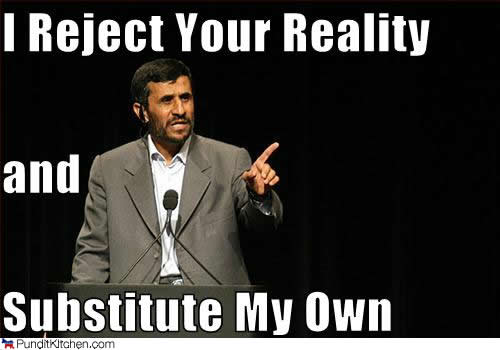


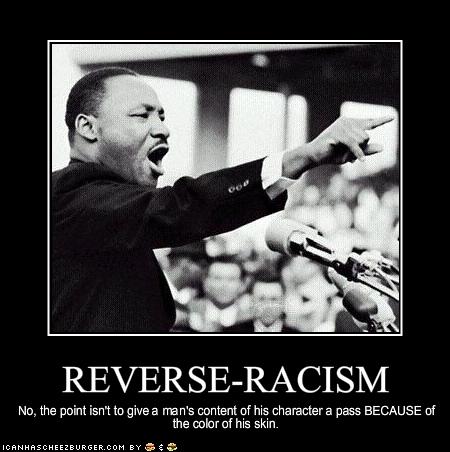 Image from
  This Journey Is My Own